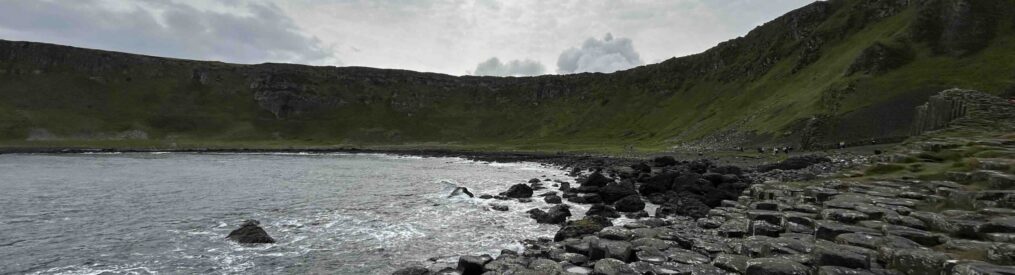
Goodbye for Now – Kailey’s Reflection

From the last-minute decision to apply for this program on the day it was due, to experiencing the rich culture, people, and history of Northern Ireland, sometimes it’s those risky choices that we’re scared to fully commit to that end up being the most rewarding. I’ve always loved history, and yet I never knew much about the events of the Troubles. With this intensive 2-week course, I feel as if I’ve learned so much and have a thirst to know more. Oftentimes, when studying conflict, peace, or communication, we’re given textbook examples that may talk about tragic, traumatic, or violent means that can hit you to your core; however, it’s a rare experience in itself to be able to physically see, feel, hear, taste, touch, and speak with the people who lived what’s in the books we read. 
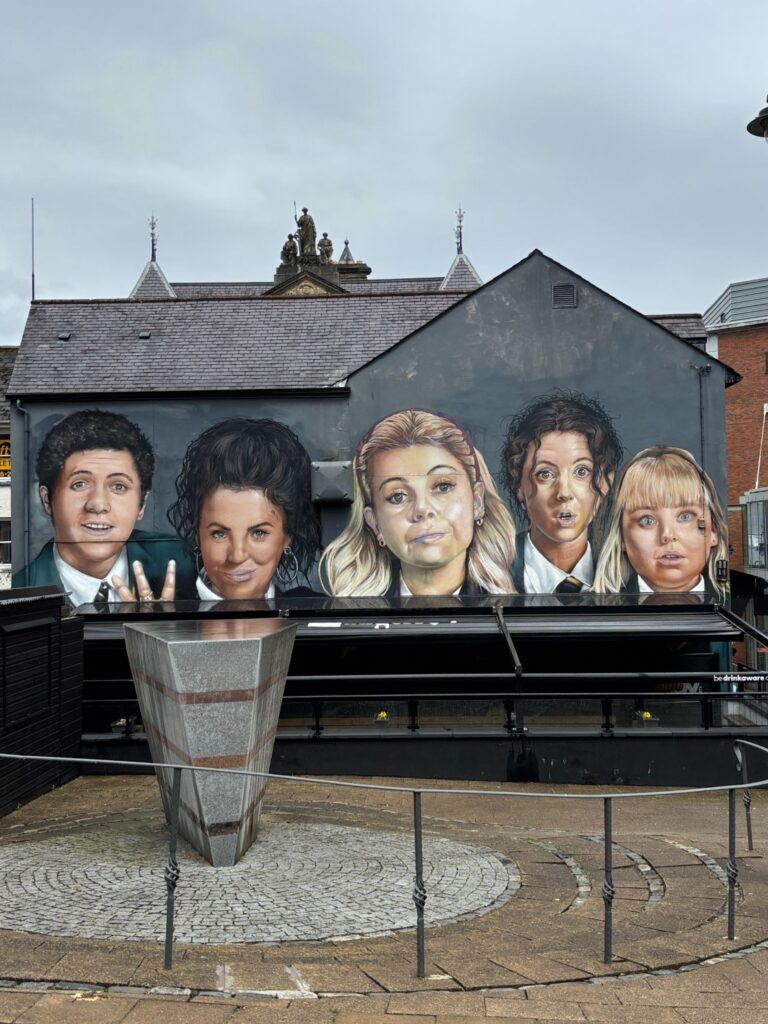
*”Derry Girls” show mural in Derry (on Netflix)

As I’ve only recently gotten into studying Communication, I’ve heard the common spiel that Communication classes are easy and that it’s useless to study something so “soft” compared to more “difficult” fields. However, anyone who invests themselves in political peace processes, policy-making, or creating posters and murals is engaging in a form of communication; all of which are methods still used in Northern Ireland today. Communication is essential for bridging historical divides among communities toward peace and for spreading messages, such as encouraging people to vote in the upcoming elections or to join clubs or social groups. Communication is what keeps people together, and not just for advertising purposes. From having the privilege of listening to the stories of so many individuals from all sides of the conflict, I have come to see that communication can be a form of healing, power, and immense difficulty. With a culture of silence being religiously bred and followed for many years, putting trauma into words, especially for the digestion of an audience, is no easy feat. 

Further, witnessing so many individuals put so much effort into revitalizing the Irish language through programs like Turas, playing lively traditional Irish music with the Ballycastle Trad Trail, and working tirelessly to give victims a voice and access to mental health services is so inspiring. It reminds me that even small changes can be instrumental in a person’s life, and makes me want to work in diplomacy, study international affairs, or become a lawyer to be the voice and change for those who feel powerless. 
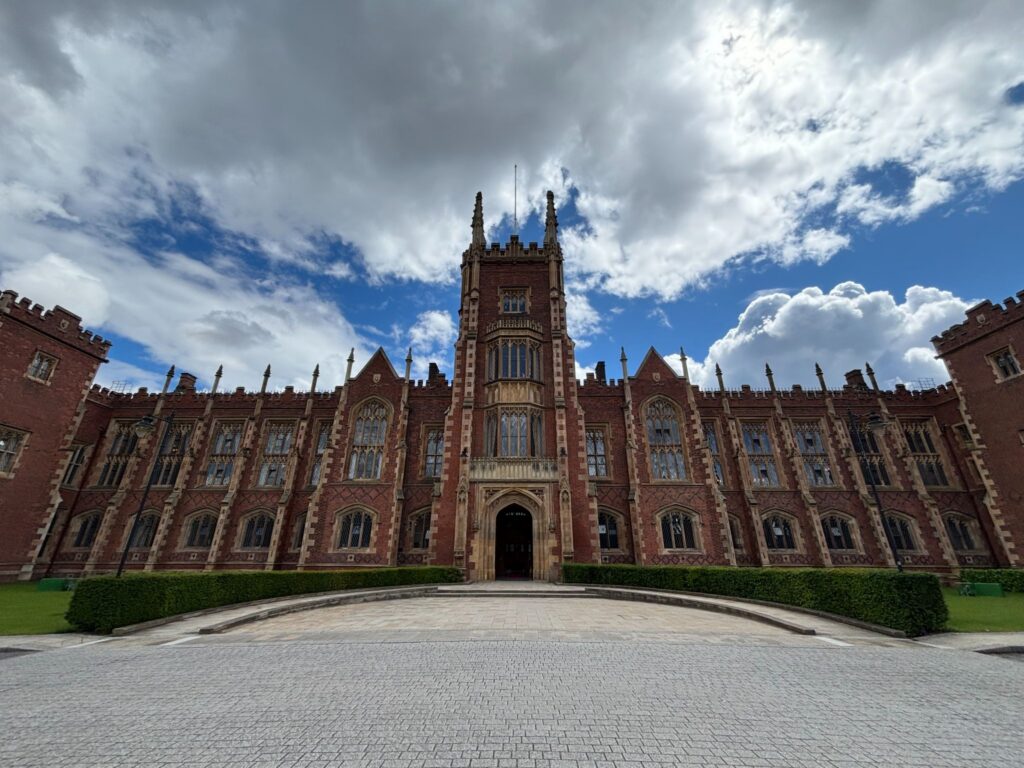
*Queen’s University Belfast

While this trip was filled with excitement and learning, the intense schedule definitely challenged my attention span, especially since so much information was crammed into our brains. While I expected the academic workload, I was surprised by how much the emotional weight of the stories lingered with me. I spent a lot of time later thinking about the stories that were told and what certain facts meant, and I still think about how to piece the puzzle together for the bigger picture weeks afterward. Homesickness, amid being tired and in a place so new to me, did affect me at times. Especially traveling back home alone on international flights was something that I had never done before, and I was nervous that I might end up stuck somewhere. I did make it back home safely and smoothly, but the challenges definitely helped me to grow as an independent individual. 
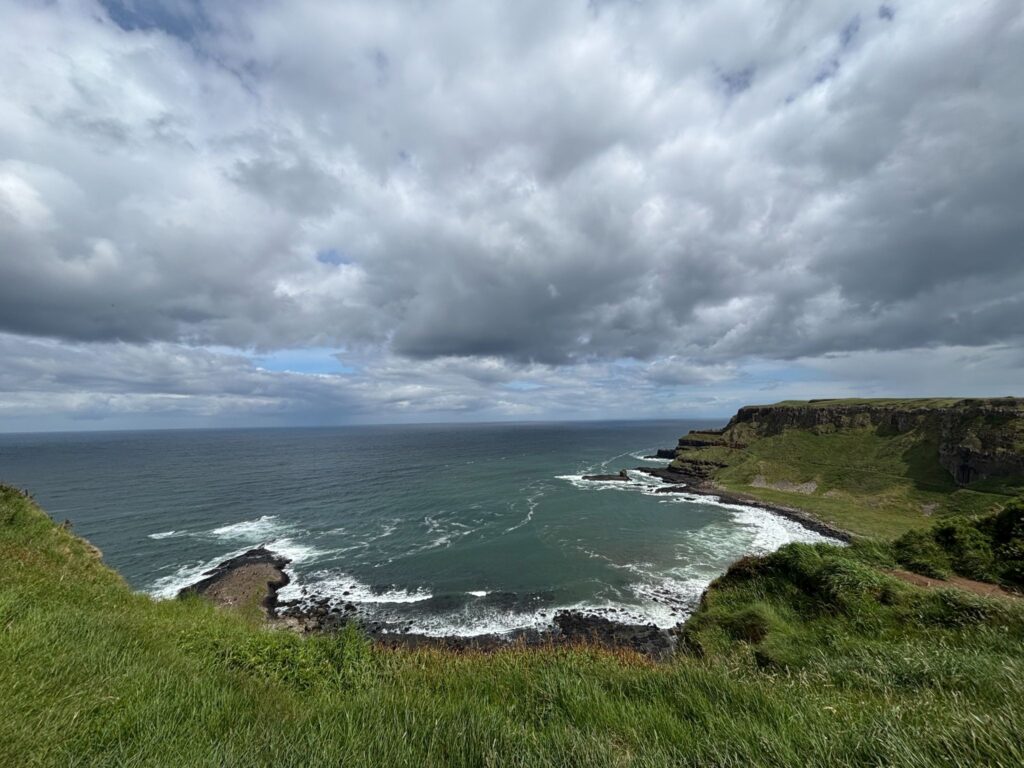
*View of a lookout point of Giant’s Causeway

Some of my favorite highlights included the stunning ocean-view landscape at Corrymeela, learning to Irish dance, singing with the Ballycastle Trad Trail, and visiting a UNESCO World Heritage Site, the Giant’s Causeway. Corrymeela provided that warm, fuzzy sense of being home away from home, with the nostalgic feeling of being at summer camp. The competitive and strategic game we played of picking either “Blue, Red, or Green” stuck with us all, as it gave us an in-time lesson on how complicated communication, trust, and peace negotiations can truly be. Going on an Irish music trail hit me in the feels with how beautiful Irish music is and how it can transport you to beautiful places upon simply closing your eyes. Learning how to Irish dance with everyone was so much fun, I didn’t want to stop. Giant’s Causeway’s beauty (and our luck of having a beautiful, clear day with no rain) made me so happy to soak up the coast’s liveliness, and learn about the legends of Giant’s walking between Scotland and Ireland. 
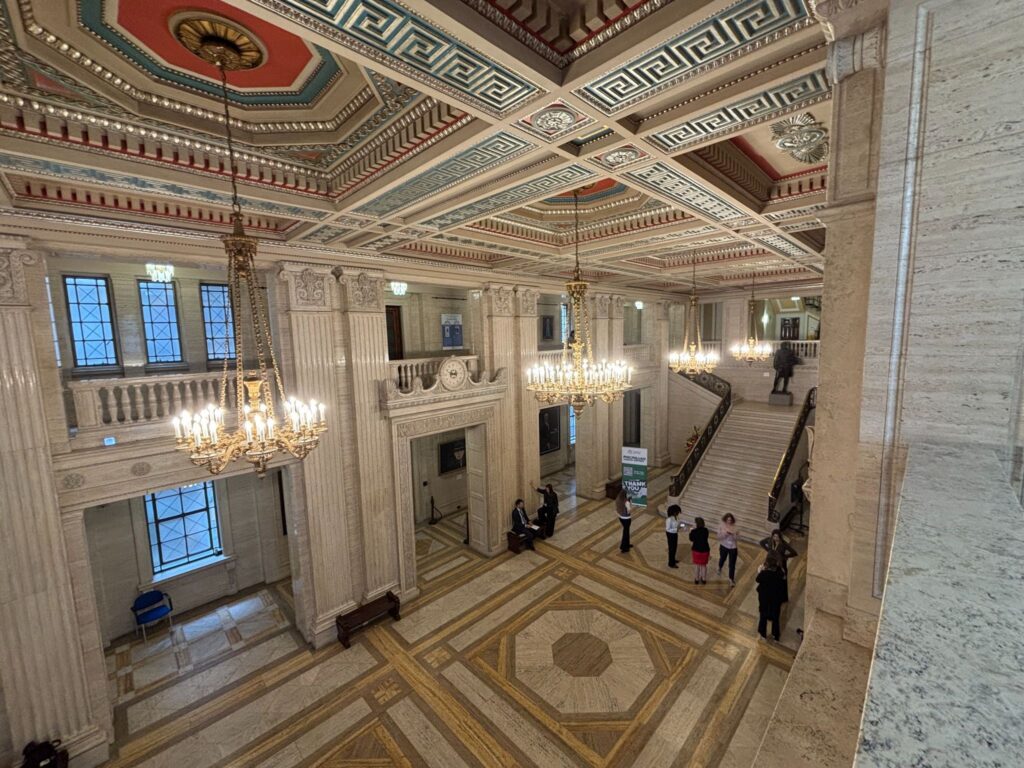
*Inside Stormont – Northern Ireland’s Parliamentary building

Everyone has something to say, no matter what side they may be on. I’ve learned that conflict is always complicated and never just black-and-white, good-versus-bad guys, but full of shades of gray. While listening to personal narratives can help paint a vivid picture of the Troubles era, bias is still an important element embedded in these stories that should be noted when analyzing them. History is also written with bias, often by the winner, so the real truths and the gathering of memories can be flawed due to human nature. Peace is also precarious, as I’ve learned that even when conflict is deemed over, tensions may still linger, and grudges are still held. Overall, I’m eager to see how Northern Ireland develops culturally, socially, and economically, potentially creating that “New Ireland.” 
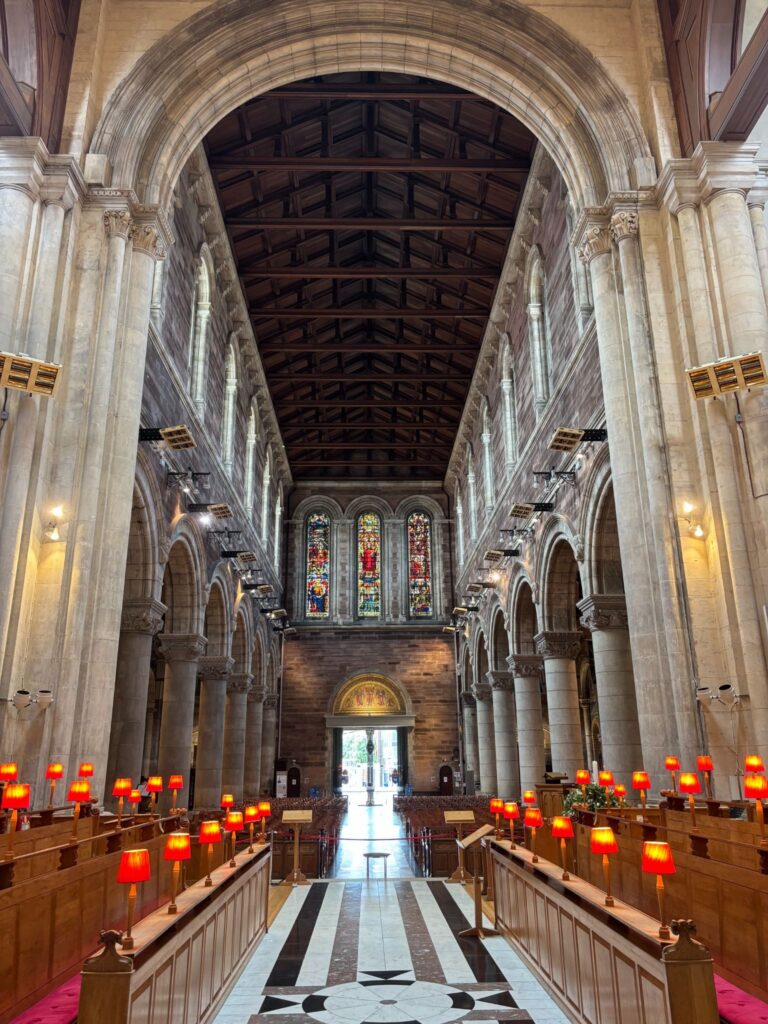
*Left: Interior of St. Anne’s Cathedral in Belfast *Right: Picture of Travel Course students with our animated bus driver, Buzz/Séamus

Being able to connect with my ancestral culture, developing new friendships, and life experiences through this trip have been invaluable. Ireland has stolen a piece of my heart, and I aim to return to it.  
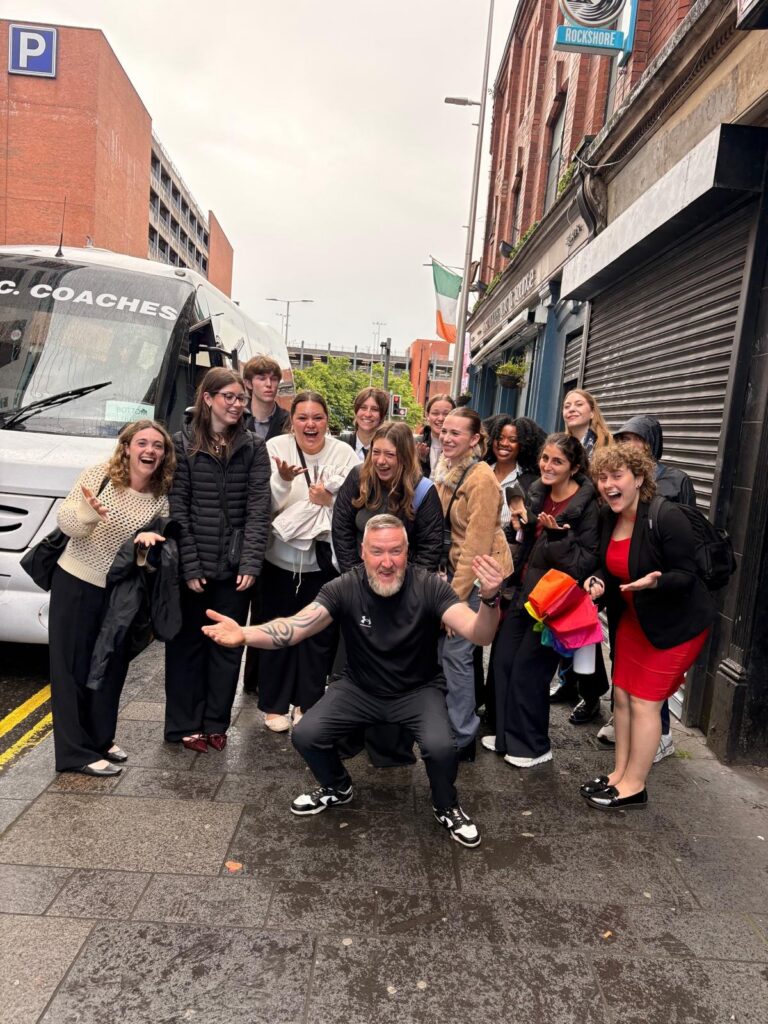
Afternoon of June 6th – Derry

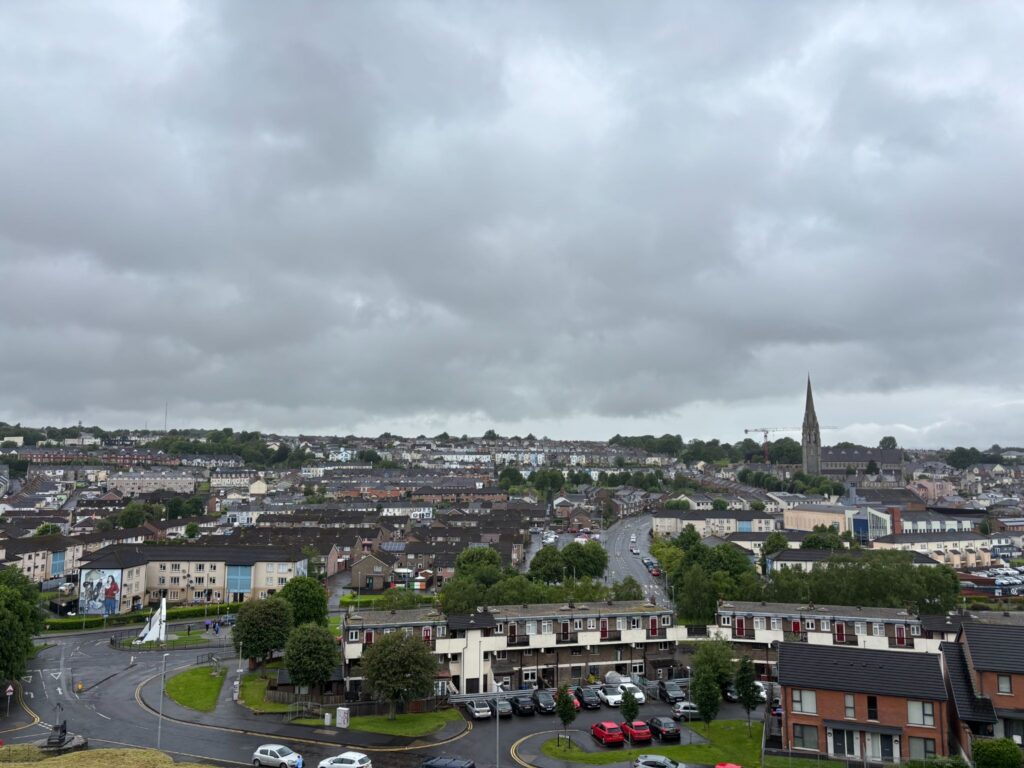
Beginning our afternoon with a Tour of the Fountain Estate, our lovely tour guide, Glenn, described the deep social divisions between Loyalist and Republican areas, revealing certain tells of which side you were on. Ranging from the type of clothes you wore to what instrument(s) you played, early memories of Glenn growing up in a Protestant family and in high conflict areas were marked by running into his Grandma’s house with the sound of gunfire in the background, to looking underneath his Dad’s car every morning for a “box” (aka a bomb, considering his Dad was a member of the UDR and was a common target for the IRA). 

Although there is only one serious peace wall in the area, gates that would be shut during curfew can still be seen; the walls are entirely open and fully walkable, as contrasted with Belfast’s gates still closing every night. The estate itself is built with a defensive architecture, with houses facing inward in a circular fort, symbolizing the metaphorical idea of “your backs to the rest of the world” (Glenn, Personal Communication, June 6, 2026). In this sense, there is a safety in ignoring what was going on outside the gates and the peace wall, bringing forth a childhood of gates, fences, and no-go areas. This, combined with the constant British symbols and paintings in Protestant communities (such as the red, white, and blue on sidewalk curbs), represents a claim to the territory.

Following the tour, in an interview with Glenn, topics such as removing the peace wall, politics, music, and Northern Ireland’s representation globally were discussed. However, the discussion on music in particular reminded me of Social Identity Theory (SIT). Social Identity Theory proposes that individuals define themselves partly through the social groups they belong to, using group membership to understand their place in the world and to achieve a positive sense of self (Tajfel and Turner, 1986). Music at the time was a subculture deemed completely separate from the ongoing violent conflict between the two communities, and was a way for individuals to shed a dominant social mask. Music was separate from reality, offered as a distraction that let you be whoever you wanted to be. While the common social identities of being either Protestant or Catholic, Unionist or Loyalist, and British or Irish commonly developed many individuals’ sense of purpose, the actions they took, and the communities they belonged to, music offered a rare space that existed outside of those rigid categories. In a society where identity was so heavily policed, literally and socially, the ability to step outside of your assigned group, even temporarily, was significant. This complicates a straightforward reading of SIT. Rather than simply reinforcing this idea of in-group belonging, music served as a form of resistance to an individual’s dominant social identity when the stakes of that identity felt too heavy to carry. 

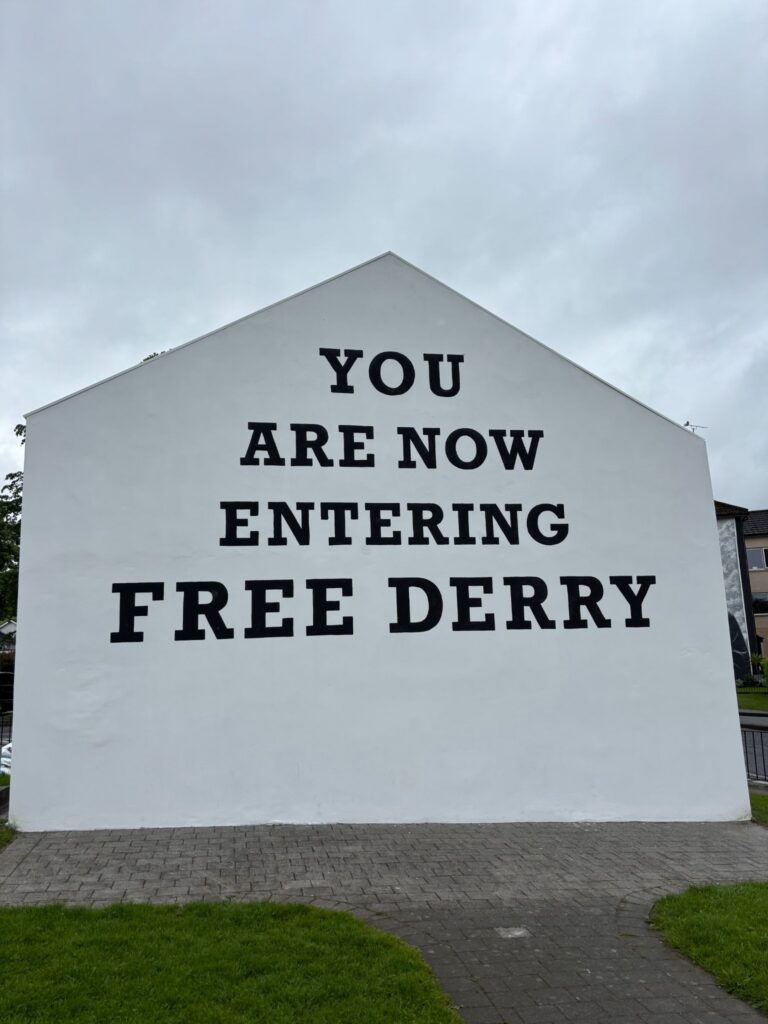
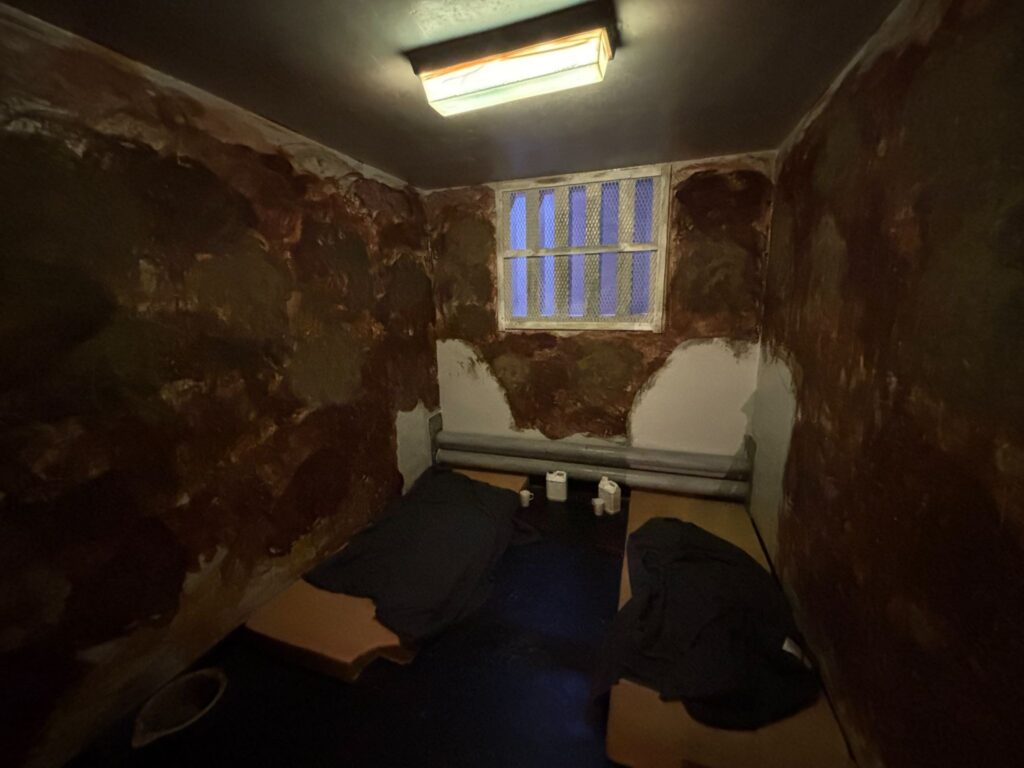
Taking a look into the Peacebuilder Exhibition (housed in the Gasyard Centre in the Bogside), this museum traces 30 years of conflict, community resilience, and the long road to peace in Northern Ireland, told largely through the lens of 3 Derry men: John Hume, Martin McGuinness, and Mitchel McLaughlin. The story the museum tells begins on August 1, 1972, the day after Operation Motorman, when thousands of British soldiers invaded Free Derry, dismantling the barricades that had turned the Bogside, Creggan, and Brandywell into a self-governing no-go zone since 1969. From there, insight into political conflicts with the British government, the intense hunger strike strategy for political prisoner status (March 1981), the development of Sinn Féin and its growing political status, the 1994 ceasefire, and the eventual road toward the Good Friday Agreement in 1998 was displayed. 

*A recreation of what a prison cell would’ve looked like during the “Dirty Protest” lasting from 1978-1981 in the Peacebuilder Museum

After finishing up exploring the exhibit, we then had an insightful conversation with Glenn and his wife, Aiveen, at Gasyard. Being a mixed couple, Glenn from the Protestant community and Aiveen from the Catholic community, their insight into growing up with violence and prejudice established a struggle for identity, the social pressure to remain divided (or be ostracized), and frustrations over how Northern Ireland is represented to others. While the Troubles/Conflict is an important aspect of history to be reviewed and remembered, Glenn and Aiveen shared how hundreds of years of Ireland’s overarching history and culture should be more recognized. Further topics, such as “trauma tourism” and the exploitation of violence for revenue, showed how identity in Northern Ireland becomes simplified to a 30-year period in time. Additionally, Glenn and Aiveen’s hopes for further investment in the arts and wider accessibility for creation and expression, the idea of reunification and the creation of a “New Ireland,” as well as paving a new path for their daughter amidst a struggling economy and the region’s “up in the air” future, allowed our group to deeply reflect. If culture is continuous, how will it develop in Northern Ireland? 

References

CAIN Web Service. (n.d.). Conflict and politics in Northern Ireland. Ulster University. https://cain.ulster.ac.uk

CAIN Web Service. (n.d.). The 1981 hunger strike. Ulster University. https://cain.ulster.ac.uk/events/hstrike

Gasyard Centre. (n.d.). Home. https://www.gasyardcentre.com

Hume, J. (1998). John Hume — biographical. Nobel Prize Organisation. https://www.nobelprize.org/prizes/peace/1998/hume/biographical

Peacemakers Museum Derry. (n.d.). Home. https://www.peacemakersmuseumderry.com

Sinn Féin. (n.d.). Home. https://www.sinnfein.ie

Tajfel, H., & Turner, J. C. (1986). The social identity theory of intergroup behavior. In S. Worchel & W. G. Austin (Eds.), Psychology of intergroup relations (pp. 276–293). Nelson-Hall. https://christosaioannou.com/Tajfel%20and%20Turner%201986.pdf

UK Government. (1998). The Belfast Agreement. https://www.gov.uk/government/publications/the-belfast-agreement