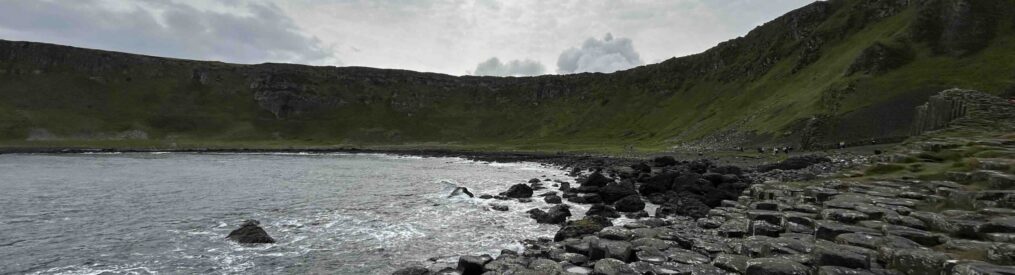
Welcome to Day 3!
June 3rd, 2026
Hi! My name is Kaite Clark, and I am a 4th-year Psychology major, with a minor in Women’s and Gender Studies. I am so excited to share what our class was up to on Wednesday, June 3rd, in Belfast, Northern Ireland.
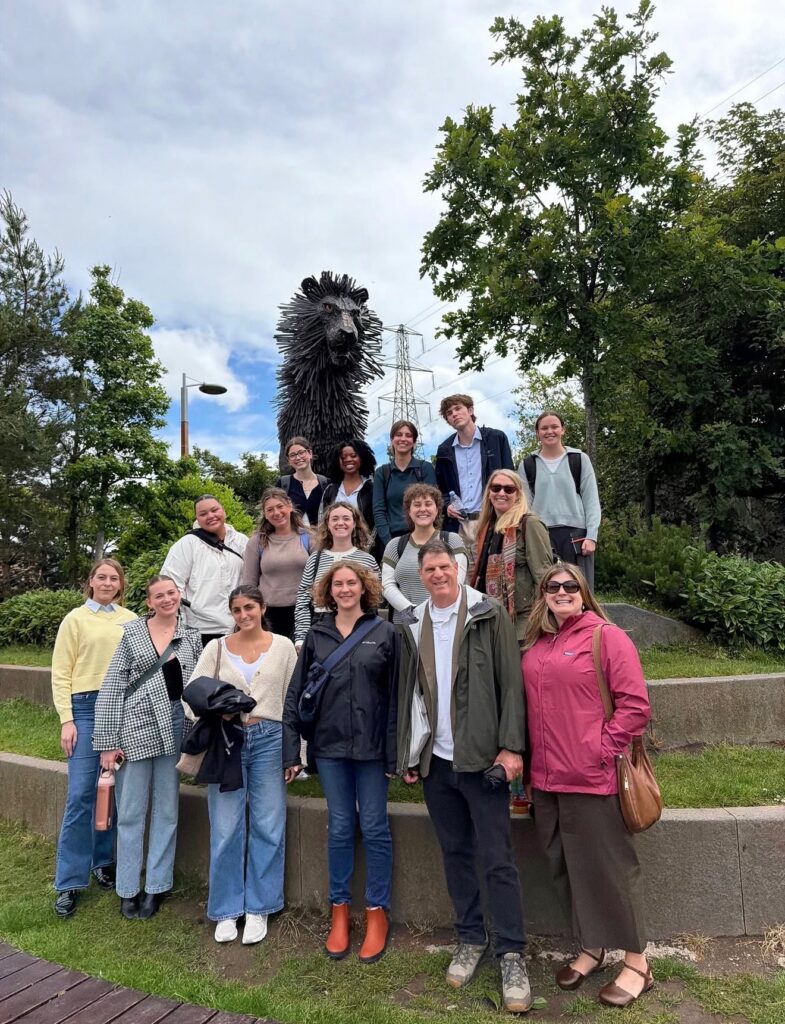
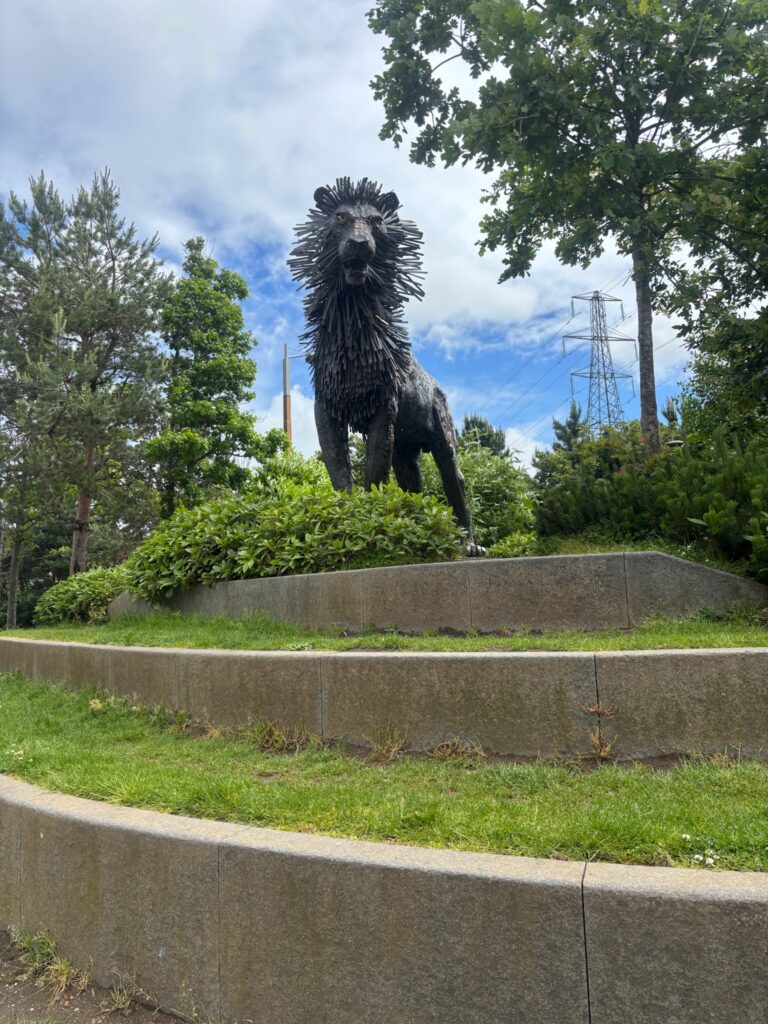
After our visit to Langan College, we walked through C.S Lewis Square, a park that commemorates the work and literary masterpieces produced by C.S Lewis throughout his lifetime, specifically The Chronicles of Narnia. Within this area of East Belfast, you were able to find many Loyalist banners and flags to represent the locals’ support of the British government and paramilitary groups. It was shared with our group that the Irish movement was born within the area, and a place where you can find integrated schools that teach the Irish language.
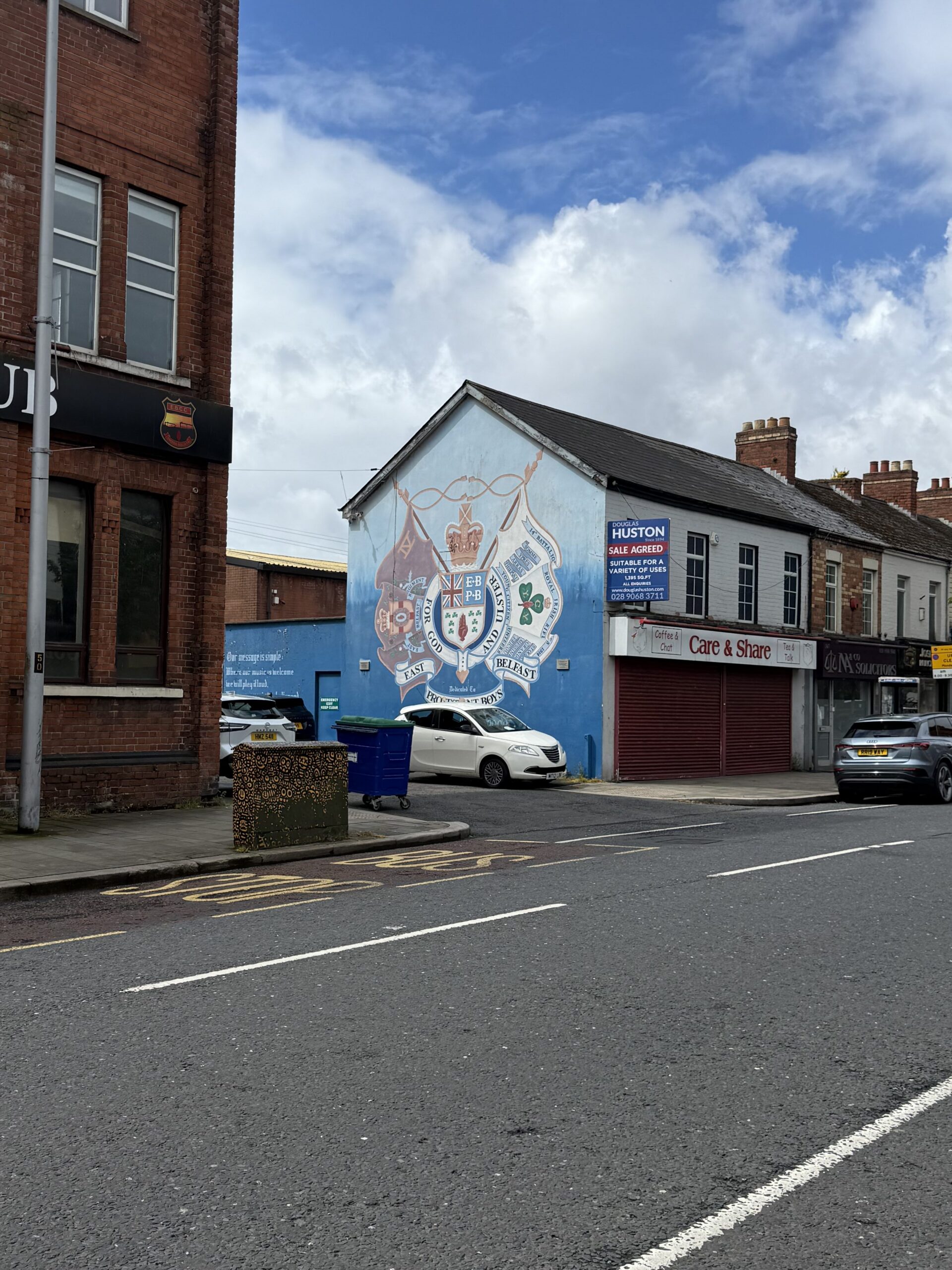
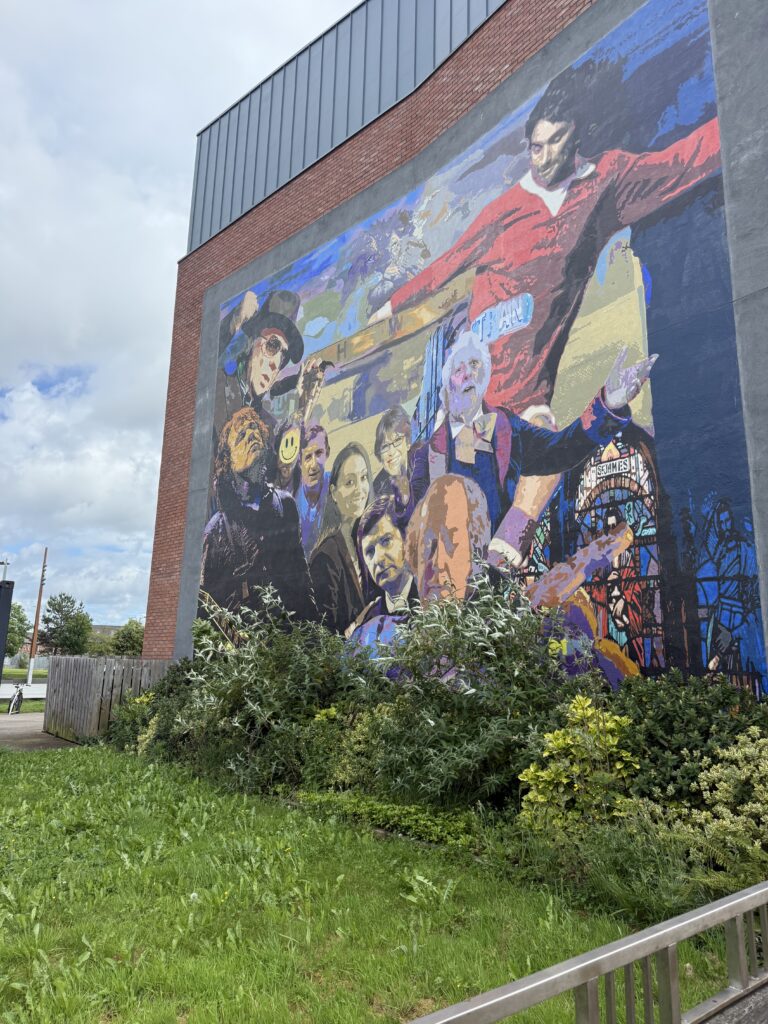
One of the murals we walked past in East Belfast!
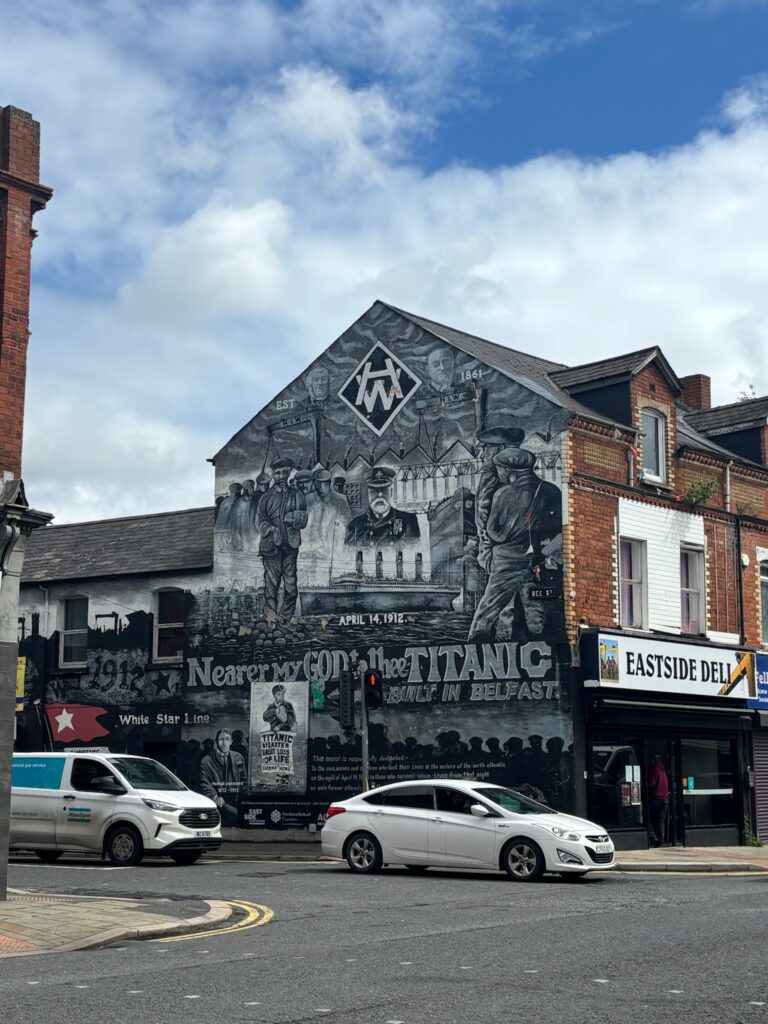
As we navigated East Belfast, we passed through historic shipyards that were operating up until the 1960s. The community wanted to commemorate the working class history, so they preserved a large yellow crane to recognize the labor industries that have shaped Belfast. This crane is known as the Samson and Goliath Crane at the Harland & Wolff shipyard. Notably, it is also the shipyard that produced the Titanic, which at the time in 1912, was the largest passenger ship and designed to carry wealthy travelers and emigrants from England to New York.
We then met with Linda Ervine, “an activist who has campaigned for the de-politicisation of the Irish language by supporting cross-community healing through provision of and access to Irish language lessons in majority Protestant/Unionist areas” (extraORDINARYwomen, 2026). During her presentation, “The Miracle that is Turas,” she discussed the mission she started in 2012 that supported and advocated for the preservation of the Irish language, and made its education accessible to all. Ervine stated, “This is our journey of reconciliation. Every word spoken in Gaelic is another brick in the bridge that unites us as people living on this island” (Ervine, 2026). She also spoke on the support from grassroots organizations for the integration of learning spaces in programming, such as Turas, as well as local schools. With this, she did raise awareness and concerns around the lack of funding for her program, and how politicians tend to shy away from programs that don’t involve military action. Within the politics of it all, her courage to combat those who marked her as a “terrorist” or “radical” was admirable. She gave us a small perspective into the threats, danger, and fear that have followed her since the beginning of her mission, but she also spoke of her ‘why’ behind fighting it all.
Linda Ervine is a remarkable woman, who embodies that of a modern, inclusive way of living and teaching. The way she spoke about initiative was inspiring to say the least. Not only was she able to recognize the conflict between the people of Northern Ireland, but understood it from an empathetic lens, for both sides. With this recognition came a want and need for inclusive education that was hopeful for a future that represents all personalities and backgrounds present in Northern Ireland, specifically Belfast. We loved getting the opportunity to talk to Ervine, ask questions, and leave knowing that there are strong female leaders sharing the gift of education and culture daily, even in the midst of complex times.
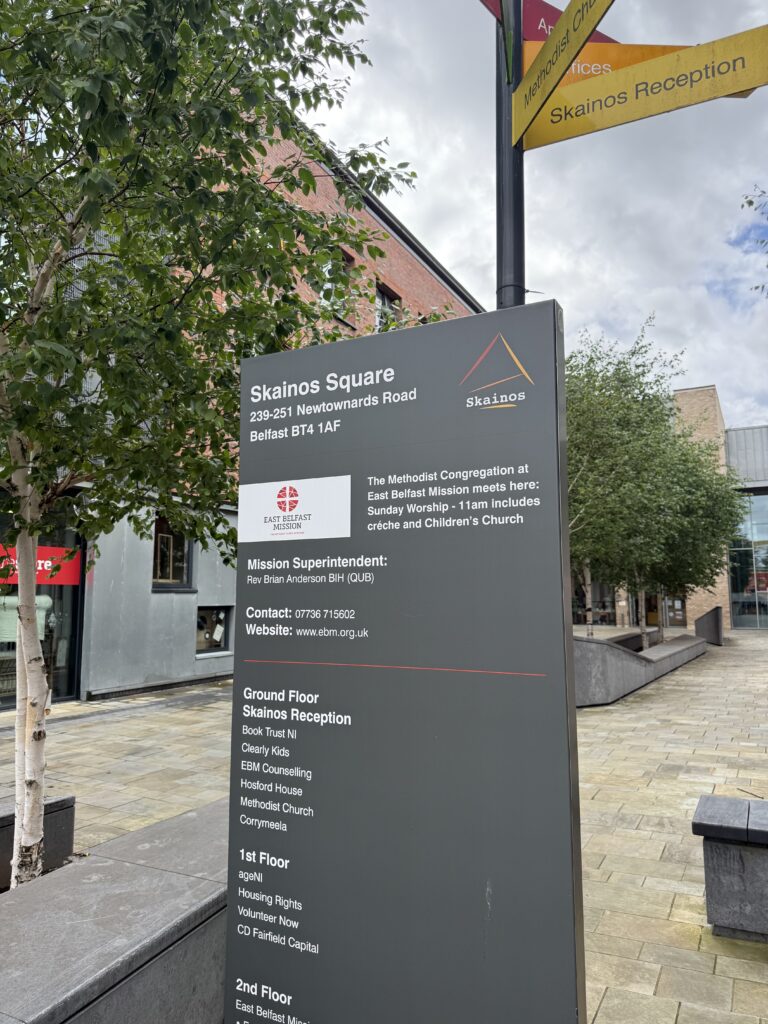
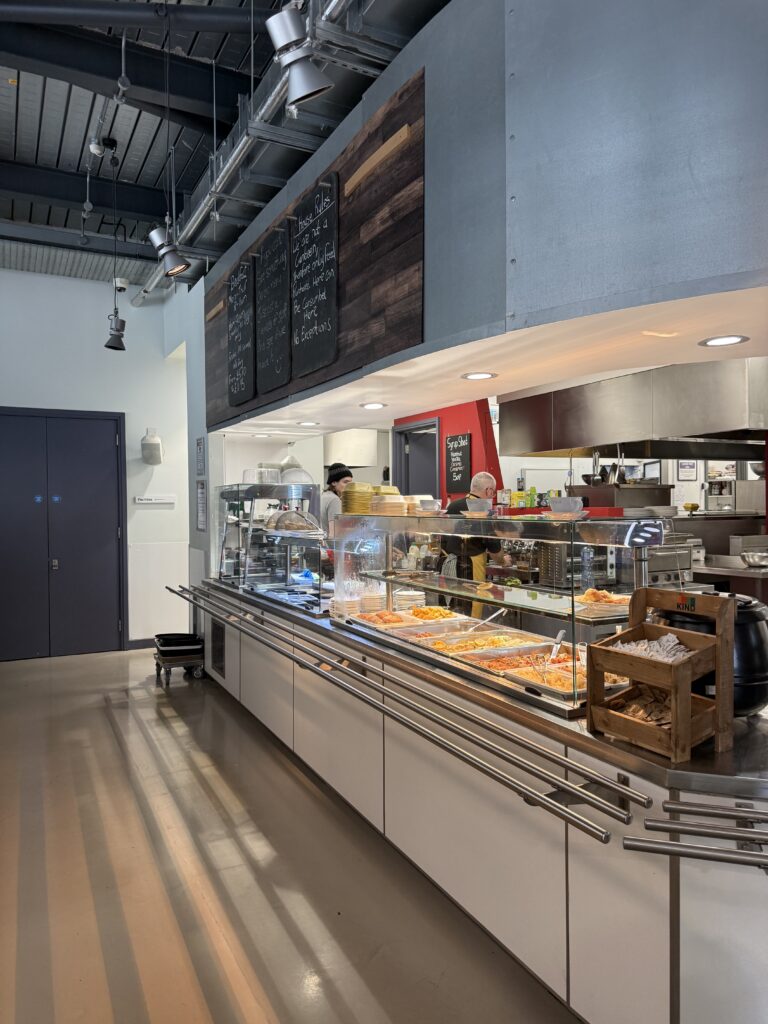
Afterwards, we stopped and got lunch at Refresh Cafe in Skainos! Yum.
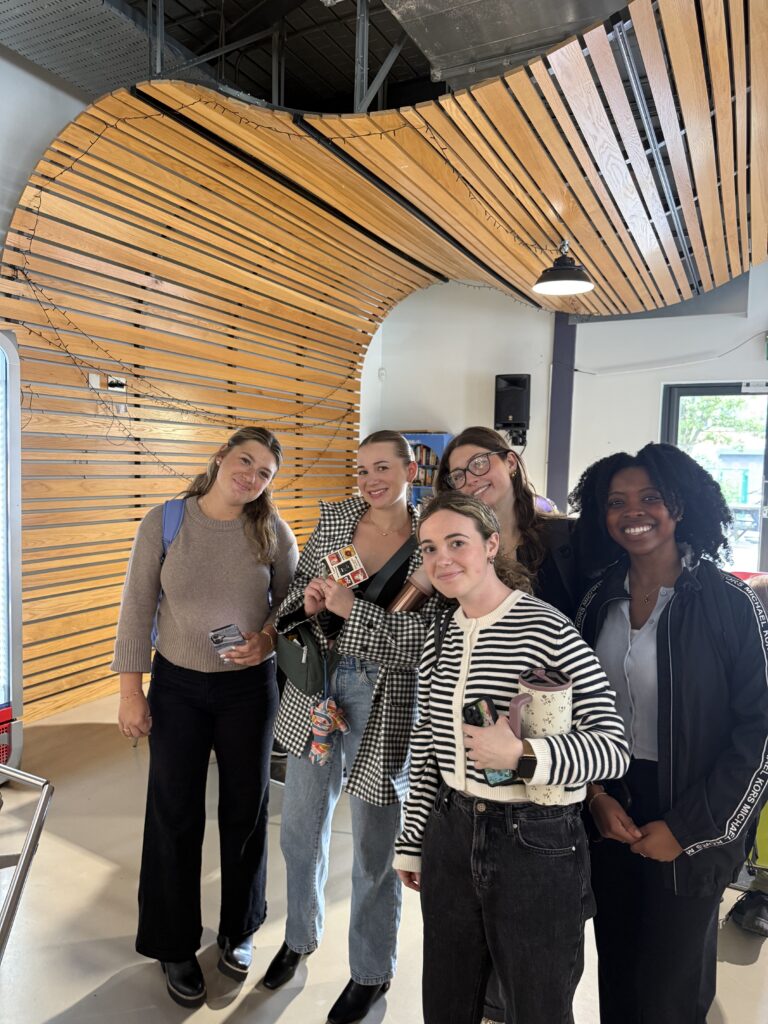
In the afternoon, our class attended a meeting with the Chairman of the RUC Foundation, Stephen White (bio), at the Royal Ulster Constabulary (RUC) Memorial, along with two of his colleagues, Allan and Ernie. We gathered in a small office within the memorial building and had the opportunity to learn more about the perspective of the RUC/Police Force during the Troubles. Firstly, Mr. White was extremely charismatic and very open to sharing his experiences/opinions with our class, and did so in a way that was both educational and respectful to all parties involved. Mr. White shared his extensive knowledge and background in serving the RUC for more than forty years, continuing a multi-generational familial legacy, which is also continued by his son.
Although he talked much about the conflict and his experience within it, he focused much of his time in having our class understand the true problems seen during the time of the Troubles, and why the conflict was such a distressing and emotional time for both sides. He didn’t push politics on us at all, but encouraged us to take on a considerate mind to further understand just how distraught the situation came to be. He shared his own personal fears and experiences with our class, and also his connection with those whom he was “fighting against.”
One of his main focuses was paying tribute to the men and women who lost their lives due to the Troubles. He took the time and care to lay the foundation of the Troubles, explaining both the religious and civil conflicts it brought about. He expressed that both sides were wrong in their execution of ideas, beliefs, passions, and frustrations. White and his colleagues later explained that, “it is a gradual process in achieving a post-conflict, peaceful society, especially when the police force has been dehumanized and polarized from civilians. Community relations is the utmost important part of the job… we are the community” (White, 2026). They later shared that there were 4-5 murders daily during the Troubles, including both civilians and police officers.
Other important statistics to note is that women in the police force weren’t armed until 1994, and the average age of officers in 1980 was 25 years old, and only 10% of the force was Catholic-Nationalist, 90% being Protestant-Loyalist.
Another few aspects of Mr. White’s talk was what successful, good policing does look like. He showed us a 6 point model: accountable, open and transparent, representative, impartial and free from partisan control, respect for and protection of human rights, community service oriented, and effective. He also shared the key checks of reform: leadership, political will, legislation, and time and security.
He related these structures to the Troubles, but also to what we are currently seeing in the United States. Mr. White posed the question, “What comes first, the state or the police?” I think this comparison of the two situations was vital for our understanding of the gravity of the Troubles, and how the encouragement and continuation of sectarian violence does nothing but cause true harm to communities and those living within. He also spent time discussing the notion of depicting the police as military troops, and its reinforcement hierarchy and fear.
Because of the conflicts seen in Belfast and largely Northern Ireland, the Police Act of 2000 was proposed and passed as a new generation of safety, security, and trust, as a result of the Good Friday or Belfast Agreement. Mr. White further explained that, “maximizing public trust was the most important piece coming out of the agreement deal” (White, 2026). He also spoke on the current status of the perception of police in Belfast, and that it has been a slow, gradual process in making amends, but one that officers are dedicated and hopeful about achieving in the future.
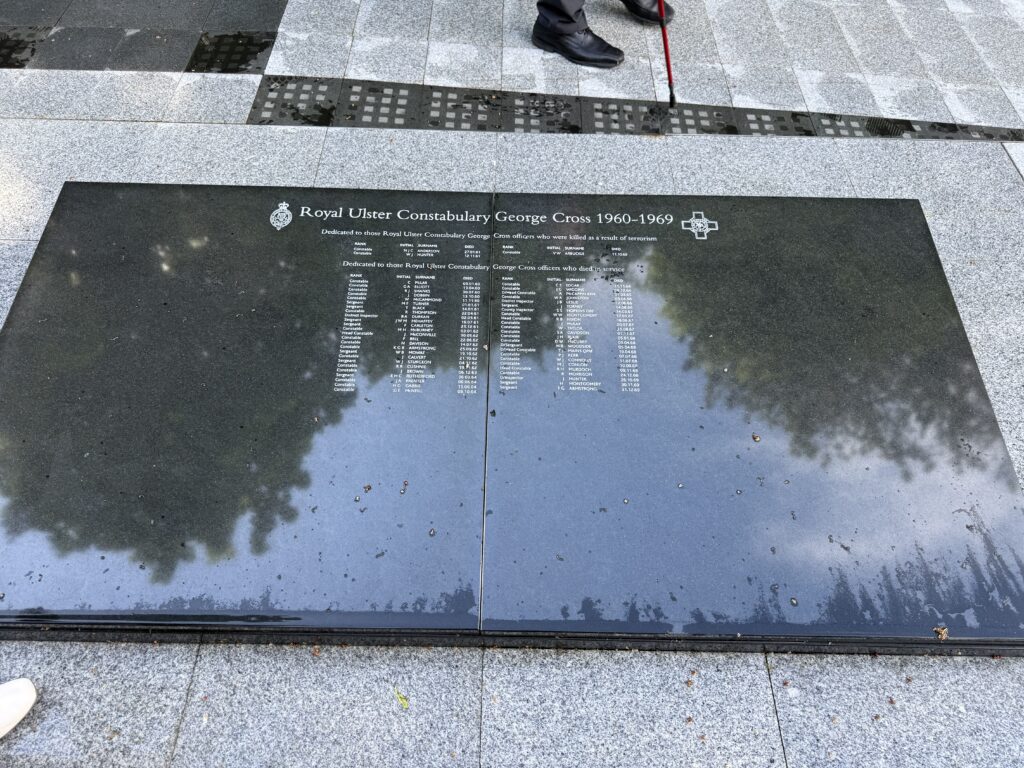
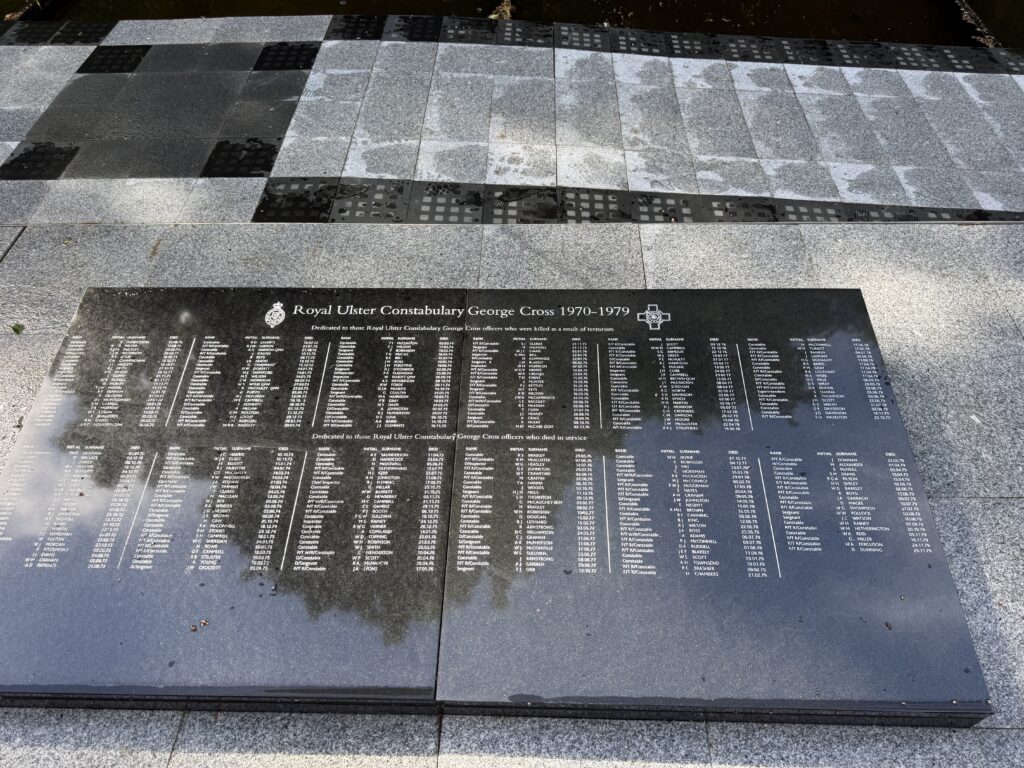
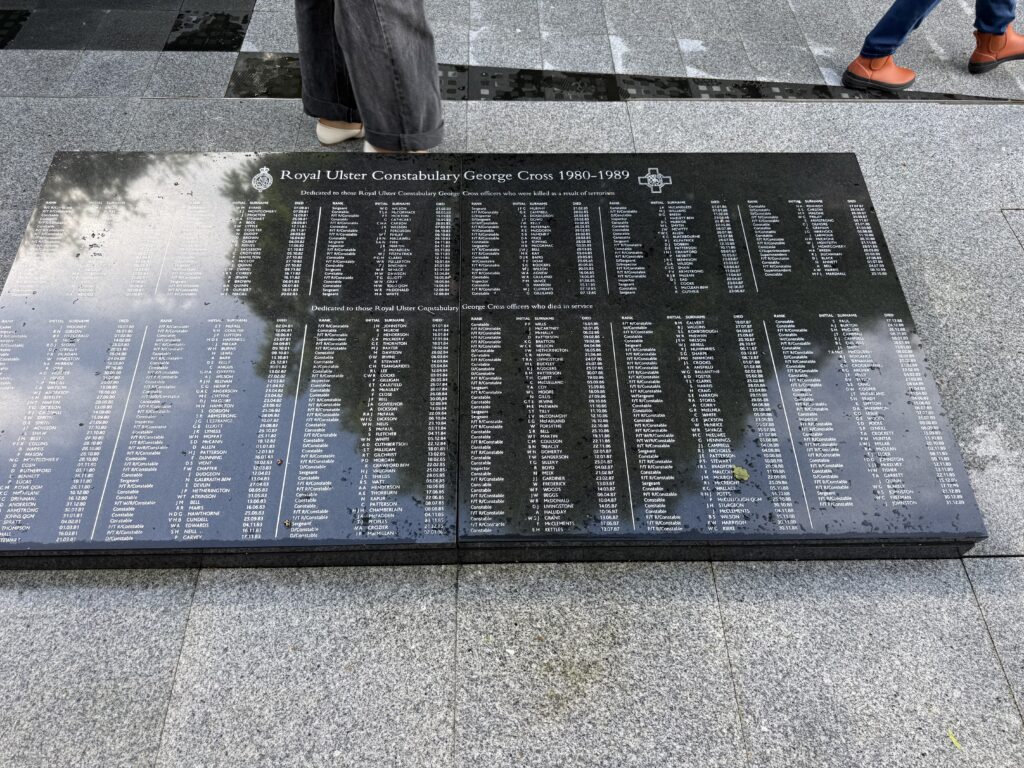
After our meeting with Chairman White, his colleague Allan took us on a rainy tour of the Memorial Garden, a place of tribute to the 312 men and women who lost their lives during the conflict. More information in regards to background and purpose can be found on their website. During his time as a police officer, Allan specialized in crowd control and protest management. On our tour, he shared that he knew many of the officers who had been killed. His vulnerability in sharing his story with us was deeply appreciated, and helpful in understanding a perspective that we wouldn’t normally focus on during a polarized conflict such as this. With this, in the garden, there is a trail parallel to the walkway that is a “windy road” that represents the epitome of life, and its unpredictability. The memorial was made to acknowledge the grief of the past, while not glorifying it. It represents how costly conflict and violence truly can be, especially when misunderstanding and misrepresentation are involved.
All of the following pictures were taken by me, Kaite Clark (6/3).
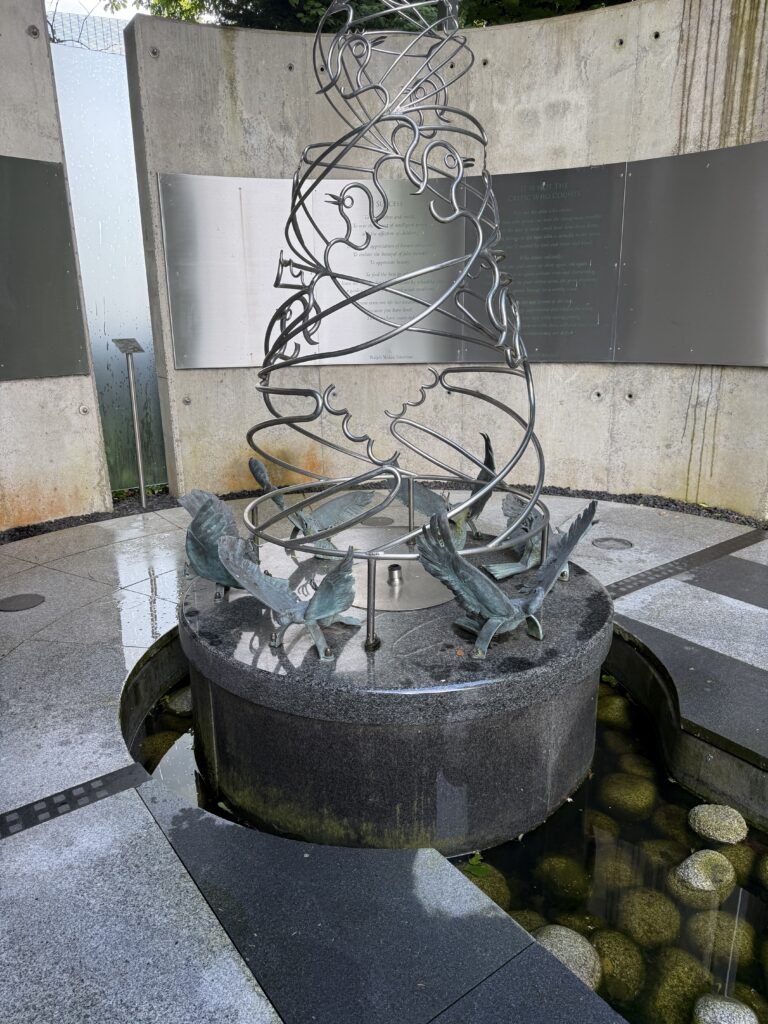
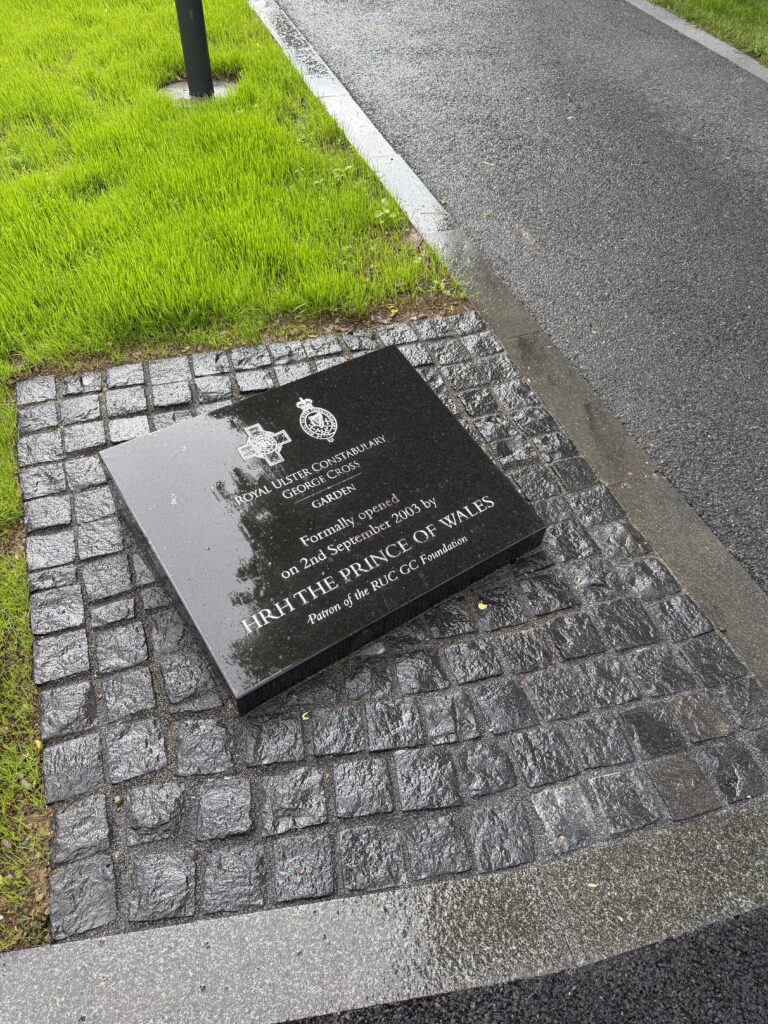
Note the quantitative difference in the listed deaths in the following images.
A major theme that we saw during Day 3 was framing and the power that specific narratives, when pushed by the right people, have in shaping the interpretation and education of a conflict. In the research article authored by Rafferty (2020), understandings of conflict absolutely influence how society interprets historical events and reconciliation efforts, much of what we heard Ms. Ervine speak during her explanation of the mission of Turas and Mr. White’s breakdown of the polarization between civilians and the police force during the Troubles. Although they approach the conflict from different perspectives, they both also sought to reframe assumptions and encourage an educational dialogue across communities. Rafferty (2020) reinforces the notion that the ways in which we approach history impact how individuals become engaged in the reconciliation efforts, which is why it needs to be the most accurate.
For example, Linda Ervine’s use of framing allows for a more inclusive, nuanced understanding of language and how its teaching does not need to include political undertones. With this, Mr. White allowed our class to take on a more educated approach to understanding the violence and collective policing efforts used during the conflict. Rather than presenting and forcing a “correct” version of history, our speakers challenged us to consider experiences that have been misunderstood or never considered before. Peacebuilding, according to Murphy et al. (2021), means straying away from the rigidness that often comes alongside identity and grief.
One strength of framing, when held in an inclusive and educational context, is that it encourages the creation of shared space and understanding of lived experiences, rather than a competitiveness of victimhood and rightness. Framing is a great tool that, when used appropriately, can bridge communities for a more peaceful life for future generations.
After our tour, we had dinner at the hotel, reflected on our days in groups, and had free time to explore the city! It was an honor to learn about integrated schools, inclusive and progressive learning, and the importance of consideration and empathy during troubling times.
With gratitude,
Kaite Clark
References
CAIN Web Service. (2026). RUC (Royal Ulster Constabulary) George Cross Garden. Ulster University. https://cain.ulster.ac.uk/victims/memorials/static/monuments/414.html
East Belfast Mission. (2026). Refresh Café. https://ebm.org.uk/refresh-cafe/
Ervine, L. (2026, June 3). The Miracle that is Turas. Peace Communication in Northern Ireland Study Abroad Program, Belfast, Northern Ireland.
extraORDINARYwomen. (2026). Supporting communities 1965–today. https://www.extraordinarywomenni.com/
Lagan College. (2026). Lagan College. https://lagancollege.com/
Murphy, J., Denyer, D., & Pettigrew, A. (2021). The role of framing mechanisms in explaining system-wide change: The case of the Northern Ireland conflict and peace process. British Journal of Management, 32(2), 322–341. https://doi.org/10.1111/1467-8551.12393
Navantia UK. (2026). Harland & Wolff. https://navantia.co.uk/harland-wolff/
Rafferty, R. (2020). Conflict narratives, action frames, and engagement in reconciliation efforts among community activists in Northern Ireland. Peace and Conflict: Journal of Peace Psychology, 26(1), 9–21. https://doi.org/10.1037/pac0000398
Royal Ulster Constabulary George Cross Foundation. (2026). Royal Ulster Constabulary George Cross Foundation. https://rucgcfoundation.org/
Turas. (2026). Our story. https://turasbelfast.com/about/
White, S. (2026, June 3). Policing Northern Ireland: A Story of Service and Sacrifice. Peace Communication in Northern Ireland Study Abroad Program, Belfast, Northern Ireland.
White, S. (2026). Stephen White OBE. Northern Ireland Human Rights Commission. https://nihrc.org/about/who-we-are/our-people/stephen-white-obe