As the peace communication class embarked on our first in-depth exploration of the city of Derry, I couldn’t help but notice the sheer differences between this historical hub and the bustling city that’s Belfast, not just by appearance but marked by complex respective healing processes effectively rethreading the fabrics of their communities in a now modern, post-conflict setting. Derry struck me as both progressive and truthful, a society that had shifted into robust cooperation between previously unwavering and polarized identities, while platforming narratives that don’t seek to hide too much grit and accountability, leaving the wires exposed. Starting the day off observing murals scattered around the city, I began to understand the significance of their murals. Where Belfast’s murals primarily served as a means of pushing political messaging and agendas, Derry’s murals seemed to lack (or at least be more discrete with) those undertones and instead preserved history. The majority of the murals are historical documentation, serving to preserve stories and moments from The Troubles, telling stories that were left untold, and immortalizing its victims. I found so many of these murals to be quite moving, especially the newest mural ‘Goodnight Sisters’ (https://extramuralactivity.com/2025/03/24/goodnight-sisters/) which highlighted the stories of women that often were erased and untold during the conflict. This mural in particular spotlights the Irish Women’s Liberation Movement and Nell McCafferty, a powerful female figure having worked as a journalist, writer, and activist. Another mural called ‘Bernadette’ (https://extramuralactivity.com/2017/08/21/bernadette/), showing metal bins used as a warning system during the conflict, was very interesting to me, as it included female narratives of women on the front lines resisting soldiers and alerting others that soldiers were infiltrating the space.
As we made our way to the Free Derry museum, I paced about the space met with a plethora of information, equally jarring and fascinating. Protest banners, funeral invitations, rusted helmets, hefty databases of victims (many being children, photographs with maroon pigmented blood spilled in the foreground of them. Echoes of various videos rang through the hall, explaining the post-partition oppression of nationalists, discriminatory gerrymandering, unemployment, the rise of groups like the NICRA organizing widespread protests inspired by the United States Civil Rights movement, and the lingering demand of accountability for perpetrators years after the Good Friday Agreement. Hearing stories like those about post-Bloody Sunday Justice campaigns and Soldier F having his charges against him dropped even though there has been community awareness of his role as a key perpetrator in Bloody Sunday, it all reminded me that unresolved tensions still exist in some degree even after the peace process, setbacks to justice have been present, and that the effects of violent conflict often seep into present-day affairs and infrastructure. This takes me to one of the most recurrent themes I observed during this jam-packed day: transgenerational trauma. According to Mohn (2026), transgenerational trauma is defined as trauma that passes from one generation to the next through biological mechanisms and, more importantly, through lived experiences. Coping styles, parenting behaviors, and emotional communication are all impacted by transgenerational trauma and their patterns can be picked up by children, especially children whose parents have been directly impacted by colonization, impoverishment, and war (Mohn, 2026). The latter was explored by speaker Caitlin Askin in a meeting that occurred just after we explored the museum. Caitlin from the Bloody Sunday Trust (https://museumoffreederry.org/bloody-sunday-trust/), brought a younger and nuanced perspective to light, diving into the implications of transgenerational trauma on daily life and some building blocks that enabled this passage of trauma. As violence was normalized in her parents’ lives and cold, unpredictable killings like the Rising Sun Massacre unfolded around them, the horrors they had witnessed became repressed by them and many other community members out of fear that informing their children of everything would contribute to the brewing of transgenerational trauma. Interestingly, this approach by parents can often work in an opposite way, with silence fueling ambiguity and household distress, as seen in Caitlin’s experience. Caitlin also touched on the push for justice by families years later and the still prevalent animosities within Derry and broader Northern Ireland communities. She spoke about the political system and how highest authority positions must be held by either unionist or nationalist parties, furthering a sense of polarization and a two-sided identity split.
As the time on my wristwatch passed and new knowledge was cultivated, we found ourselves meeting Glenn, an intelligent storyteller with the swagger of a Laurel Canyon rockstar, welcoming us on a tour of the place he grew up in. This largely loyalist community saw enclaves like The Fountain, guarded by dauntingly tall peace walls. Here, he spent many days of his youth, with the terrifying blasts of machine gun bullets soundtracking his upbringing and the routine checks of bombs underneath his father’s car being normal activity. This normalization of violence that Caitlin also spoke on through her family’s experience stood as a theme explored a lot during the duration of the day. As Glenn brought forth his lens and perspective of the conflict, a rather compelling puzzle piece belonging to the wider jigsaw of his story stuck out to me. Glenn had a really unique example of intergroup communication during his time joining the local goth scene, something he later expanded on during a personal interview I had with him where he deemed it detrimental to his “experimentation of identity, allowing the fostering of connection” on a basis outside of cultural identity (loyalists and unionists) and rather through music taste and being a kind, down-to-earth individual. Intergroup communication, according to Chen (2017), involves the exchange of beliefs and values between different cultural groups to bridge a shared identity. In Glenn’s case, because of his experiences being in the goth scene, where people of both protestant and catholic backgrounds befriended one another and found shared identity, this personal anecdote helped make my understanding of the concept more comprehensive. He expanded on a larger scale about his intergroup communication experiences during his adolescence and early adulthood, describing his life at a strong mixed-identity school, stressing its importance in inflating his open-mindedness, with him making many friends with complex personal identities different than his own. To him, this constant diversity in his daily life helped dismantle prejudice and mold him into someone accepting of differences, willing to listen and learn from what sets them apart.
Whether it was traversing through the city with Glenn taking the lead, or moving through the museum trying to soak all of the information in, or the moments inbetween, it was an amazing day for hearing diverse perspectives and reshaping my view of the conflict to be more multidimensional. Overall, this day taught me so much about perspectives, centering mainly on transgenerational trauma, intercultural communication, conveying to me the complex nature and human cost of it all. With Caitlin and Glenn both coming from different backgrounds, analyzing the overlapping themes of trauma and a normalization of violence in their stories has led me to understand that this conflict deeply harmed both sides, inflicting irreparable damage on children, families, and ordinary civilians. The conversations, especially my interview, will always stick with me, reminding me of how important it is to engage in dialogue with people impacted by the hardships like those in Northern Ireland.
-Ryder
References:
Ling Chen. (2017). Intercultural Communication (Vol. 00009). De Gruyter Mouton.
Mohn, E. (2026). Transgenerational trauma. Salem Press Encyclopedia.
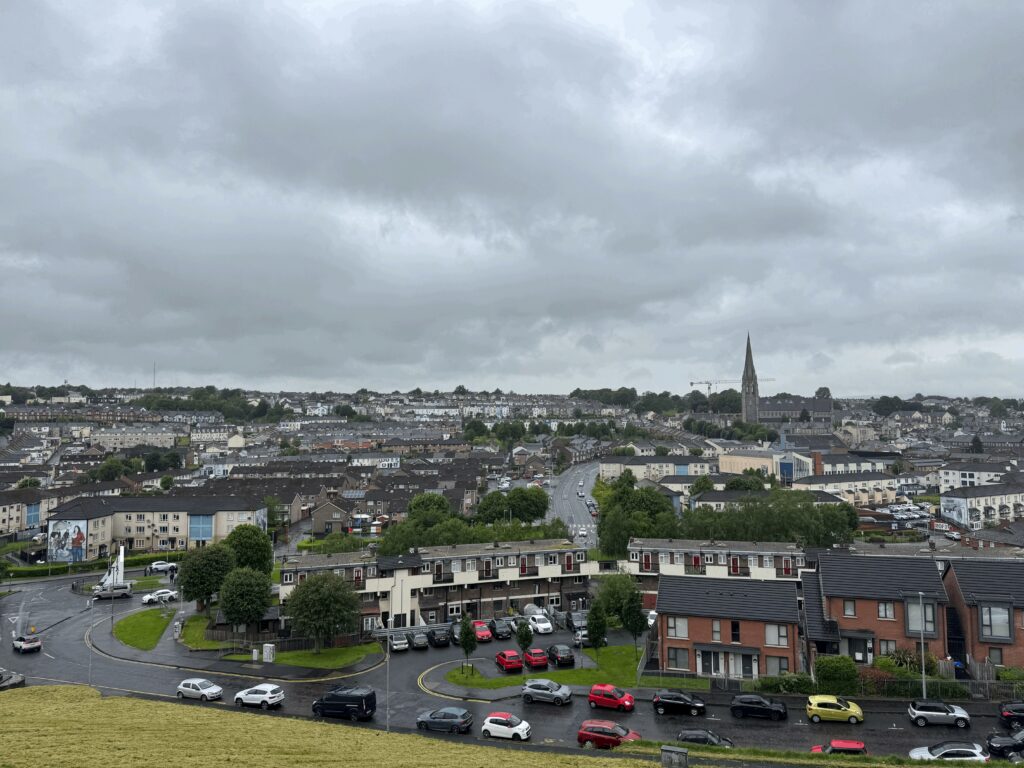
Above, an image of the bog side from the walled city, taken by me.
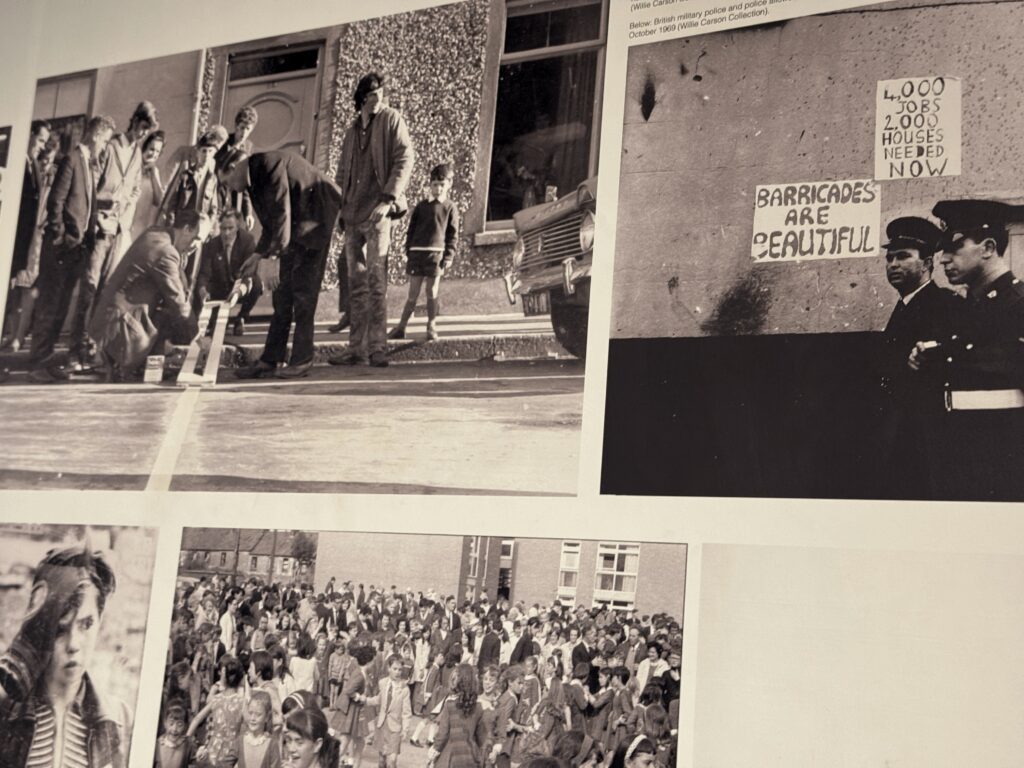
Above, an image from the Free Derry Museum, showing scenes of protest and policing, among other scenes.
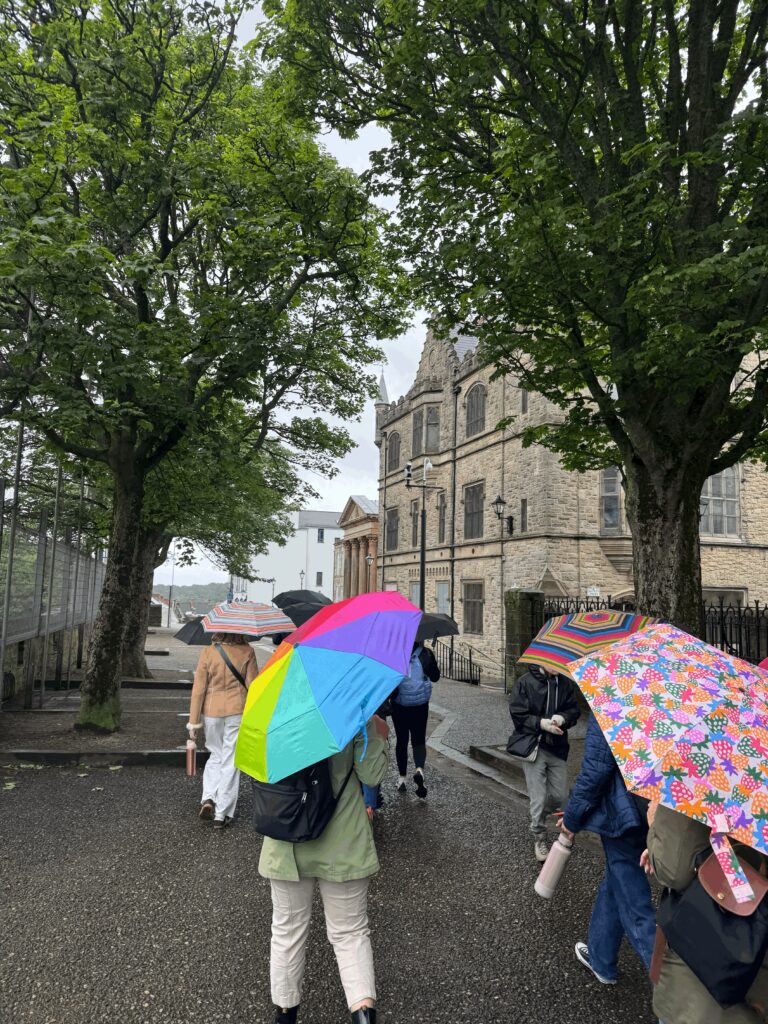
Above, an image of our group walking through the streets of Derry, learning about the city’s history and groups like the Apprentice Boys.
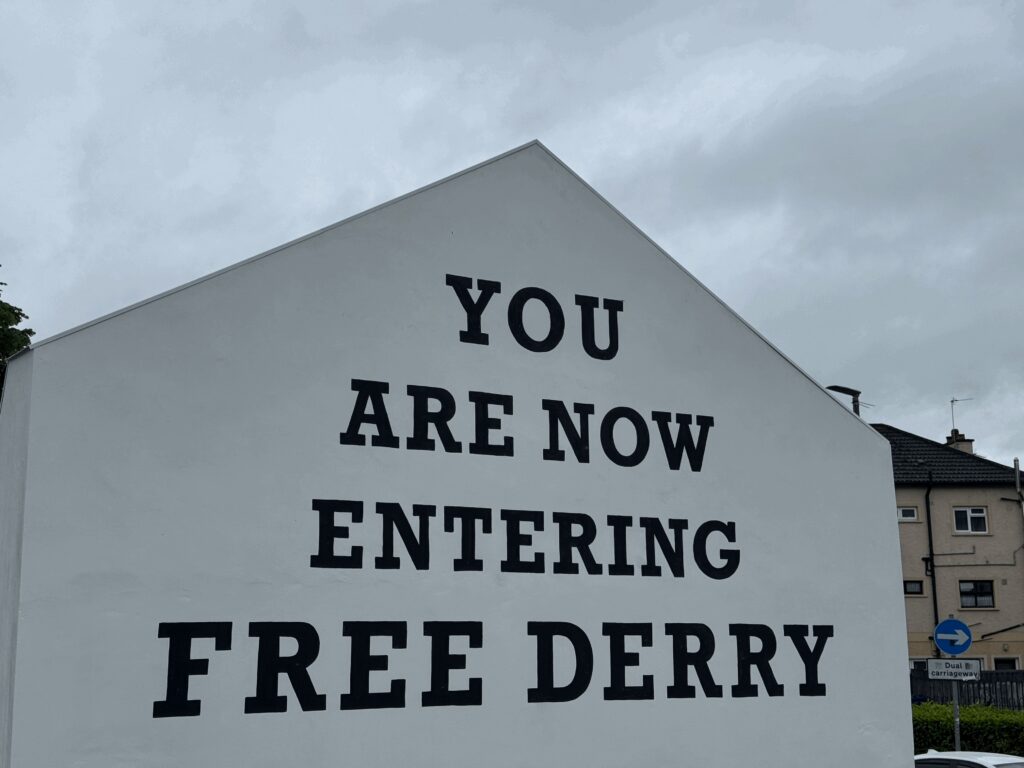
Above, an image of the sign welcoming us to Derry, standing tall all of these years later and reminding us of the history that has shaped the town.
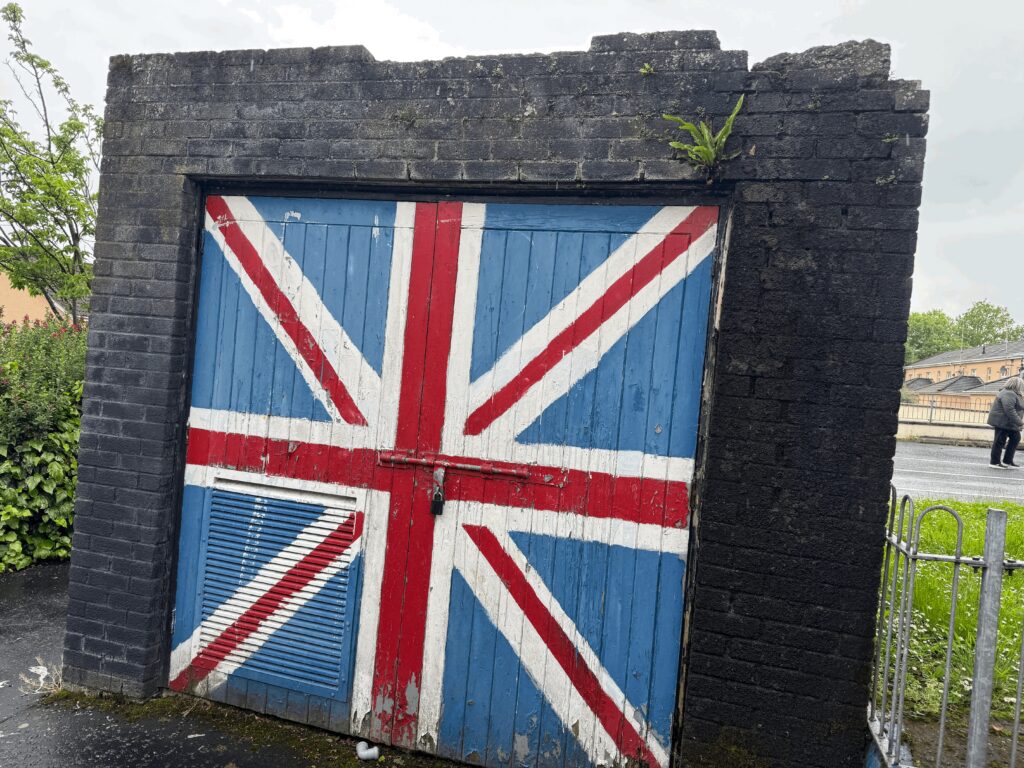
Above, an image of a building close to Glenn’s childhood community, representing loyalist patriotism.