Northern Ireland – Vic’s Reflection

It was my goal to travel to Northern Ireland this summer to study the Troubles and learn how the region is healing from and remembering the conflict. Joining Chapman’s Peace Communication class helped realize this goal, and I couldn’t wait for the trip to begin. I hoped it would transform my understanding of the world and of conflict, but I didn’t expect it to change my outlook on my own future. For a long time, I’ve had my sights set on being a professional theatre performer once I graduate from college, but on this trip I saw a potential future for myself in conflict resolution work. With each passing day, I grew more eager to engage with our speakers, hear new stories, and see new murals and memorials to explore the ways the conflict is remembered.

I declared my Peace and Justice Studies major after my Theatre major, and I wasn’t sure if I was going to stick with it. As I’ve learned more, I have absolutely fallen in love with it. The theory and case studies have fascinated me, and I wanted to go to Northern Ireland to apply what I’ve learned in the classroom. It was one thing to write theoretical analyses of fictional or historical conflicts, but it was another thing entirely to be in a post-conflict area, speaking with people who were directly involved or impacted by it, and observing the ripple effects in real time as anti-immigration riots broke out during our stay. It really made me think about my place in the world and what I eventually want to do with my degree and my knowledge. Before joining this class, like most Americans, I knew nothing about the Troubles. Now, after the trip, I am even more motivated to learn about other international conflicts and expand my worldview (which is still quite narrow). Next semester, I will be taking a class on intercultural conflict and communication, and I feel well-equipped now after learning about how intercultural dialogue is one of the most important methods for peace-building and healing from trauma. My experiences from this trip will help me contextualize what I learn about in this class and hopefully help me start to figure out what I want to study and write about for my thesis.

One of the most fascinating parts of the trip was something I realized right away in Belfast: the conflict is everywhere you look. It is reflected in the memorials, murals, artwork, graffiti, and tourism. I was not expecting it to be so present today, but it immediately gave me a little more context as to why learning about the Troubles is so important. Northern Ireland is still healing and working toward being a fully integrated society, another aspect of the trip that gave me many questions. Coming from an American perspective, hearing about segregation still being so prevalent in Northern Ireland was shocking to me, making the visit to Lagan College so impactful. It was inspiring to see an initiative taken during the conflict flourishing and providing an accepting, integrated space for Northern Ireland’s next generation to learn and eventually help to change the culture in a positive way.

Every single day of this trip was memorable, but my favorite experiences were the Ballycastle Traditional Music Trail, Corrymeela, our conversation with Derry community members Glen and Aiveen, and our talk with members of the Royal Ulster Constabulary (RUC). Music is my life, and I’ve always loved traditional Irish music when I’ve had the pleasure of listening to it. When I saw the traditional music trail on our itinerary, I knew it would be one of my favorite experiences, and I was right; getting to learn about how people resisted oppression through playing their traditional instruments and tunes was so inspiring. Staying at Corrymeela was magical. In Ballycastle’s countryside, surrounded by sheep pastures and a gorgeous coastline, we communed with people we’d never met before and will likely never see again- volunteers and folks from other universities- sharing meals and participating in trust activities. I wanted to stay so much longer, but the one day and night we spent in the Corrymeela community will stay with me. We didn’t spend a long time in Derry, but Glen and Aiveen were two of the most engaging speakers we got to have a conversation with. Their perspectives were so unique, and they gave us a glimpse into the lives of younger people raising children in Northern Ireland and how they are trying to improve their community.

The most surprisingly impactful experience for me was the talk at the RUC museum. In my activism, I tend to have a very critical view of the police, so I did not go into this talk expecting to be so moved. However, I was ready with an open mind, and I am so glad I was. The presentation they gave impressed me so much, particularly in the ways the government enacted systemic change in the aftermath of the Troubles in order to better serve Northern Irish communities. It gave me hope for a less corrupt policing system in America in the future. I left the presentation feeling humbled, having reexamined my own biases and assumptions. I was pleased to learn about the demilitarization of the police in Northern Ireland, and spent a long time thinking about and comparing it to the U.S. So often, I feel the appeal of the police in America is sold on the basis of militarization, and it gave me hope to learn that other countries have been able to move past that.

Academically, one of the most exciting things for me on this trip was seeing what I had previously learned in person. Before leaving for the trip, I did a lot of research in preparation, even writing my final paper for my mediation and conflict resolution class on the Good Friday Agreement and the Northern Ireland peace process. There was a lot I learned about that I saw reflected in museums and conversations with people on the trip. One example of this was learning more about the back-channel negotiations between the IRA and British government. I had hoped to hear more about Brendan Duddy and his involvement, but it was nice to add to my foundation from my own research. Another fascinating thing that came out of this particular experience was the lack of information on Bloody Friday that I found throughout most of the trip. In my research, I learned about Bloody Sunday, when the British Army killed 14 innocent Catholic civilians at a civil rights march in 1972. I also learned about Bloody Friday, an event where, later that same year, 9 innocent Protestant civilians were killed and 130 were injured by 26 IRA bombs. While Bloody Sunday was rightfully heavily memorialized, Bloody Friday seemed to be almost completely absent from the memorialization I saw. That was until our visit to the Ulster Museum, which presented what I found to be one of the most balanced stories of the Troubles we saw on our trip. Being able to recognize things from my prior research helped my understanding of those events and expand upon them in new ways, which made my previous research feel more legitimate.

One of my challenges on this trip was trying to be aware of my own biases and assumptions, a side-effect of this previous research. I have my own personal political beliefs and opinions that naturally formed while learning about the Troubles, and I knew I had to try my best to set them aside and have as open of a mind as I possibly could in all of our encounters. Reading articles, watching documentaries, and writing papers from across an ocean about a conflict I was not involved in or affected by is completely different from interacting with people who were directly involved in and impacted by the conflict in the very place it happened, and I knew I had to be sensitive to everyone’s experience. I was worried about knowing the right words to say to the right people, but quickly found that everyone was highly approachable and understanding, and I adapted to the language and culture in a way that allowed me to be comfortably sensitive.

Having been home now for a few weeks and writing my assignments reflecting on the trip, I almost can’t believe it happened. It was my first time in Europe, with a group of people I did not know well, and that made me worry a bit in the days leading up to our departure. I had no reason to worry, though, because I was with the kindest group of open and intelligent people who gave me new perspectives and insights. I learned so much on this trip that I have already started sharing with my family and friends, engaging in interesting conversations with my new knowledge and learning even more through them. I won’t be forgetting my time in Northern Ireland any time soon, and I hope to continue using what I learned there for the rest of my years at Chapman and beyond.
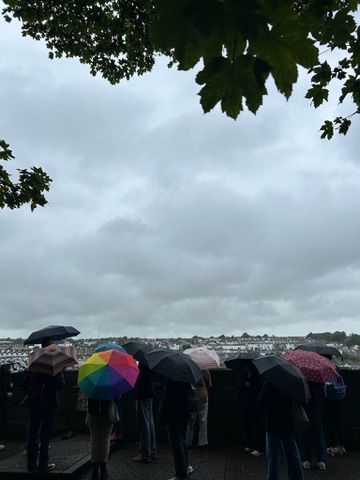
On the Derry Walls, photo by Sara LaBelle
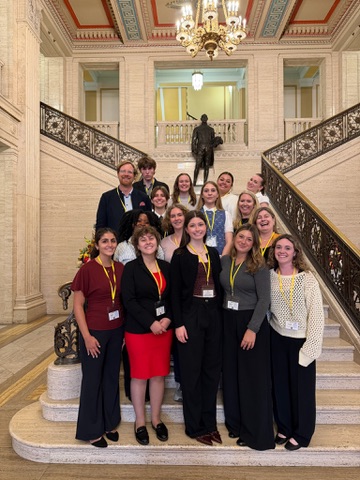
The Stormont parliament building, photo from Daniel Wehrenfennig
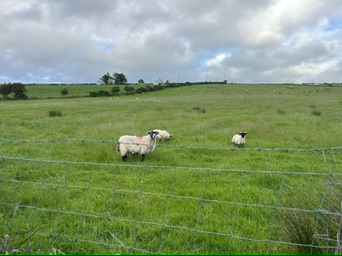
Sheep in the countryside, photo by Leia Fidel
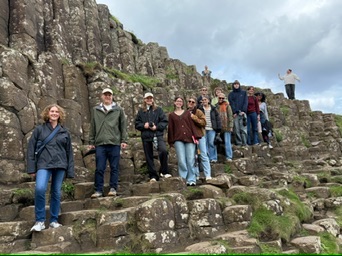
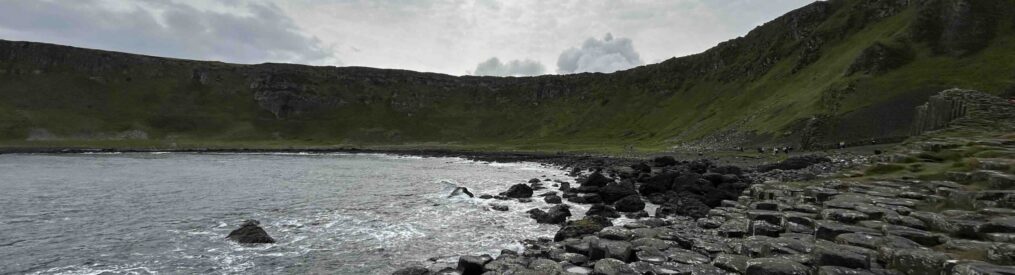
Giant’s Causeway, photo by Daniel Wehrenfennig
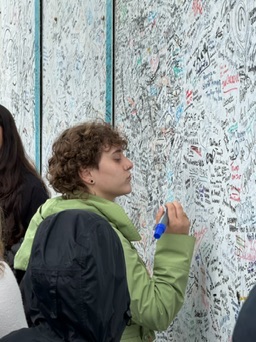
Me signing the peace wall, photo by Daniel Wehrenfennig.

June 2-3, Community Panel & Lagan College: The Importance of Intergroup Contact in Reconciliation

June 2nd – Community Panel

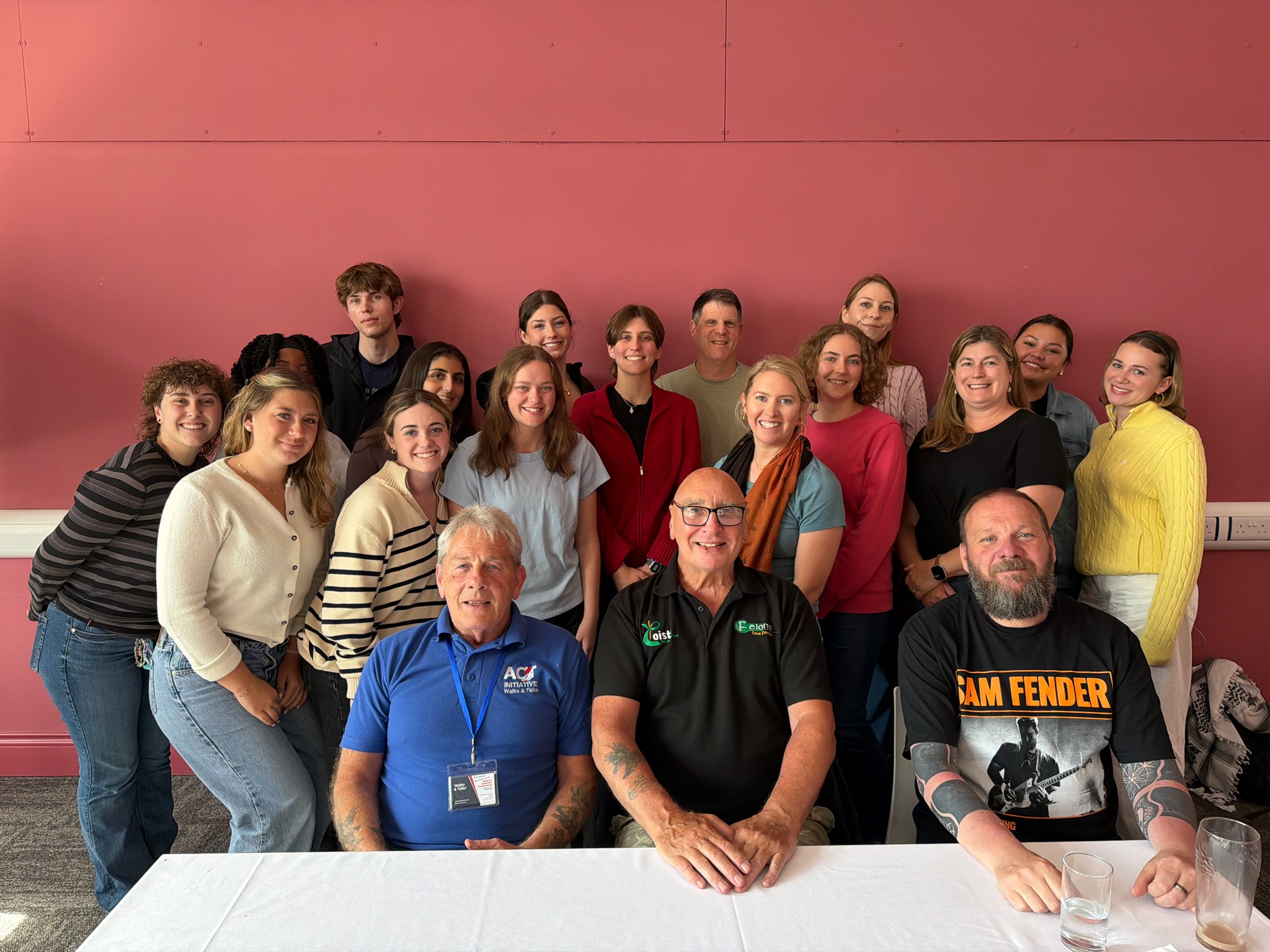
On June 2nd, after a day of walking tours and conversations with ex-combatants, the Peace Communications class came back from lunch for a community panel with people from all sides of The Troubles. The panel was led by Garod, a former Republican prisoner; Richard, a former loyalist paramilitary member; and Lee, a former British Army soldier. Each member of the panel gave their story of their experience during the conflict, and they each gave their answers to the questions from the class. Their combined perspectives provided an interesting, nuanced picture of the conflict, including how people become involved and how they are affected in the aftermath of violent conflict.

Garod began the panel by telling his story, framing the conflict not as a sectarian (or religiously motivated) one, but as a constitutional fight to unite Ireland. As an Irish Republican, he faced internment multiple times and ended up spending over 23 years in prison in total throughout the conflict. Internment affected many people on both sides of the conflict, when British Army soldiers arrested and imprisoned people, including Republican activists, without due process or evidence of paramilitary involvement. Garod was involved in the blanket protests in the Long Kesh prison, started by Kieran Nugent, which began once paramilitary prisoners were no longer given political status, so they refused to wear their prison jumpsuits and wore only blankets instead. Garod faced violence in prison from the guards, and successfully escaped from Long Kesh in 1983, before getting caught and facing a life sentence. He was released on the terms of the Good Friday Agreement in 1998 and began giving similar talks to the one we attended. He is a part of Coiste, an organization through which ex-political prisoners give walking tours of Belfast and educate people about the history of the city and the conflict.

Richard told his story as an ex-loyalist paramilitary prisoner, explaining his past with the conflict as growing up in a community where he did not learn about Irish history, but was surrounded by loyalist groups such as the Orange Order, an international fraternal group of Protestant men based in Northern Ireland. His father and brothers were in the military, and he eventually became involved in the Ulster Defense Association (UDA). He was injured by a bomb in 1972, and was eventually arrested. He spoke about how he and his fellow prisoners tried to address the conditions they were living under in the prisons, and how they were concerned about the food being laced, so they refused to eat it. When he was released from prison, he worked, and then after retirement became involved with the ACT initiative, an organization which supports former loyalist political prisoners and gives walking tours of Belfast.

Lee’s story was highly reflective, and he spoke about the ways he was changed by the conflict as a former British Army soldier. Coming from a working class family, he joined the military as a teenager out of high school, and decided to join the infantry, influenced by the narratives of glory and heroism perpetuated by the military, and a “romantic notion of conflict.” Lee spoke very critically about the tactics that the British Army used in order to desensitize and radicalize teenagers and young people into being okay with using violence against other people, create obedience, and forge an “us vs. them” mentality in their minds. In 1994 after the Irish Republican Army (IRA) declared a ceasefire, he began to reflect and question what he had been taught about the Catholic/Nationalist/Republican (CNR) community, and after being invited to a football match in 1995 in a CNR community, he began to unlearn the stereotypes he’d been taught and humanize the people he had learned to view without nuance or humanity. He left the Army in 1996, and faced struggles with drug addiction in the aftermath of the conflict. He eventually went back to school and received a PhD in history, and now tells his story in many talks like the one we attended.

All three of these perspectives were very enlightening to hear about and led to very interesting questions from the class which invited us into their differing perspectives on the conflict’s impact on relationships, trans-generational trauma, and current tensions within the communities in Northern Ireland that remain in the post-conflict era. The panel was especially impactful because of its cross-community nature. The importance of the panel was hearing all of these perspectives together rather than separately. Seeing the way these men, who previously considered each other to be enemies, interacted and shared friendship with one another helped to physically exemplify the importance of intergroup contact and communication in conflict resolution and reconciliation. As Northern Ireland remains a highly divided and segregated society, it is important to encourage dialogue and contact between members of these divided groups in order to move from negative peace, defined as “the absence of personal violence,” to positive peace, defined as “the absence of structural violence” (Galtung, 1969, 183). Hewston and Hughes highlighted the importance of intergroup contact, both direct and indirect, and its positive impact on “attitudes, trust, and even forgiveness” in a paper about intergroup contact and its impact in Northern Ireland (2015, 65).

Garod, Richard, and Lee are living proof that intergroup contact is a key tool in conflict resolution, as people formerly both involved and impacted by violence. It can be incredibly impactful to hear directly from those who were involved in the violence about their dedication to demilitarization and nonviolence. In a paper exploring the role of former combatants in the Northern Ireland peace process and reconciliation, Ferguson and Flack emphasize that organizations like Coiste and the ACT initiative are highly important for transforming their attitudes and activism, particularly in their willingness to engage with the “other” and working toward improving their communities (2024, 161). To see those once so motivated to use violence as a means to achieve political ends engaging with the “other” could be a very useful example to the rest of their communities of how to move forward after the Troubles and encourage cross-community reconciliation. As an outsider in Northern Ireland, the panel was very impactful for me for these reasons, inspiring me to believe that the future does not have to remain violent and divided, and people can come together in transformative ways to encourage peace building.

PCST/SCC 393 Class with Richard, Garod, and Lee. Photo by Daniel Wehrenfennig.

After this panel, we were able to explore the Falls museum, which details the story of the start of the violence during the Troubles from August 1969 to July 1970. The exhibit provided a lot of background on the colonization and discrimination Irish Catholics faced in Northern Ireland in the hundreds of years leading up to the Troubles, and insight into the violence and destruction that the people of the Falls road faced. There were many personal testimonies from those impacted that we were able to listen to, which made the experience more impactful than if the exhibit only included written and narrated third-person histories. The day ended after this tour with a debrief and discussion on everything we’d learned and talked about that day, which was quite a lot, and we prepared to go to Lagan College the next day!

June 3rd – Lagan College

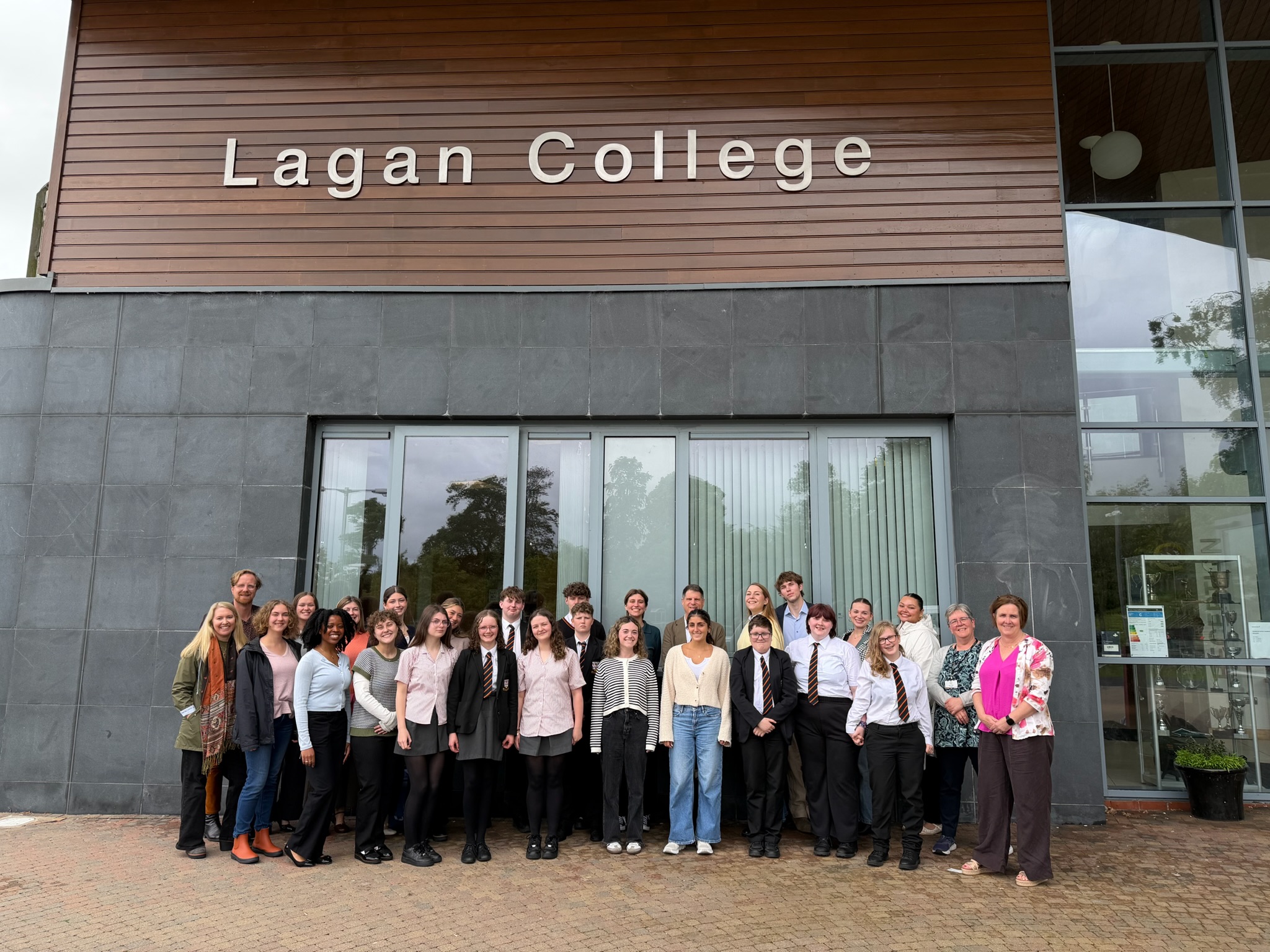
On June 3rd, we started the day with a bus ride out of Belfast’s city center to Lagan College, the first integrated school in Northern Ireland. It opened 1981 and was established by a community of parents who came together to create a cross-community learning environment for their children. Northern Ireland currently has 70 integrated schools, meaning only about 8% of all schools in the region are integrated across religious lines. Not only do most schools in Northern Ireland segregate by religion, but they also segregate based on ability, with most children taking placement tests to be put into either a secondary school or a grammar school after primary school. Lagan, however, is not a secondary or primary school, and doesn’t segregate on ability in this way. The school is highly focused on inclusion, community, dialogue, equality, justice, and reconciliation. Lagan has a certain proportion of demographics that they must maintain legally: 40% Catholic, 40% Protestant, and 20% other. Amanda, Lagan’s Principal, told us that the school tends to be comprised of about 1/3 of each of these groups. It has a quiet meeting space called the Croi, which means heart in the Irish language, where students can pray, or simply enjoy the peace and quiet. In this room, we met with students and faculty from the school and learned about its history and values.

After this briefing in the Croi, Lagan students led the students of our class on tours, and we were able to get their perspectives on the school and ask them questions about what they learn and what the environment is like. The students I spoke to mentioned that they chose Lagan because siblings went there, but also because of its friendliness and acceptance of neurodivergent and LGBTQ+ students. I was very impressed by how advanced their curriculum seemed to be- I spoke with a 15 year old drama student who is writing a Brechtian play for an assignment, a concept I did not learn about until my first year of university as a theatre major! Another aspect of the school that impressed me was the way student’s issues seem to be very well listened to and supported at Lagan. Some students I spoke to in the Queer Student Alliance (QSA) told me about how they receive a lot of support from the school, and how the staff are well educated and involved in social justice initiatives that matter to the students.

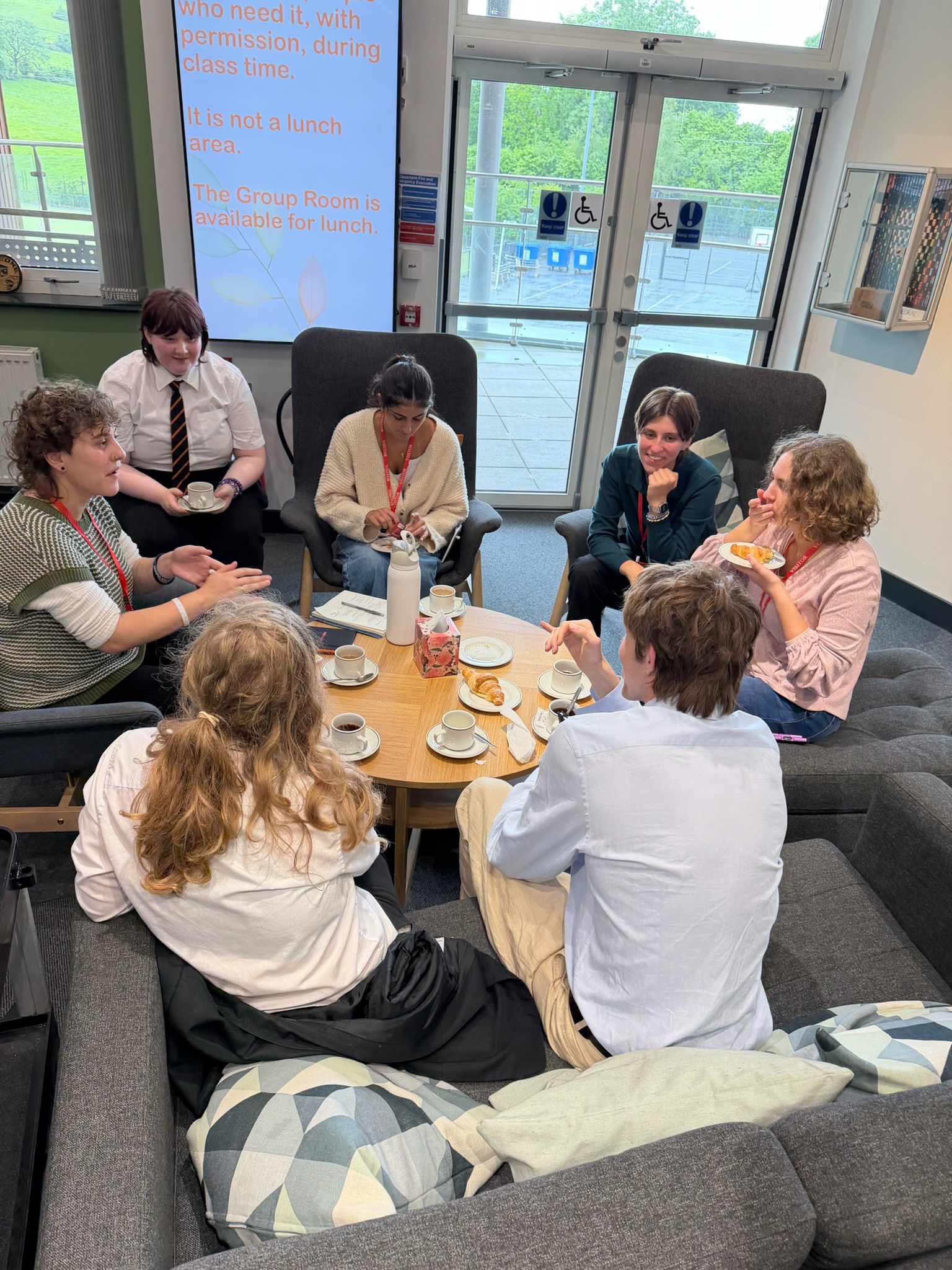
Some PCST/SCC 393 students chatting with Lagan College students. Photo by Daniel Wehrenfennig.

After the tours (and some tea and croissants) we had a panel with all of the students who led the tours, as well as the Principal and one of the school’s Chaplains, Helen, where we were able to ask them all of our questions. They gave wonderful insight into how being in an integrated school has impacted their learning and every day experiences, especially for students who are not religious, and those who grew up in segregated schools. Hewstone and Hughes have found in a study that students in integrated schools have more interactions with and more positive attitudes toward the “outgroup” than those in Catholic or Protestant schools (2015, 66). I observed this first hand from the students at Lagan, who spoke openly about the cross-community friendships they have, within and outside Lagan. I can see how this school’s open environment can directly contrast the culture in Northern Ireland of keeping quiet and not talking about controversial issues that many people we spoke to on the trip talked about. The leaders of the school encourage tough conversations and choose words wisely rather than avoiding what needs to be talked about for fear of offending somebody. Teaching young people to engage in hard conversations is a powerful way to begin to change a culture of silence and move toward conflict transformation.

PCST/SCC 393 Students with students and faculty of Lagan College. Photo by Daniel Wehrenfennig.

The community panel and visit to Lagan College were two of the most impactful events on the Northern Ireland trip, illustrating not only the importance of learning histories and perspectives from different sides of the Troubles, but how the synthesis of these histories and perspectives is highly important to helping Northern Ireland continue to heal.

Learn More

Coiste: https://www.coiste.ie/

ACT initiative: https://www.act-ni.co.uk/

The Falls Exhibit: https://wherethetroublesbegan.com/

Lagan College: https://lagancollege.com/about-us/

Works Cited

Ferguson, N., & Flack, P. (2024, December 15). The Role of Former Northern Irish Combatants in Building Peace and Preventing Violence: Community and Combatant Perspectives. Former Extremists: Preventing and Countering Violence, 157-176.

Galtung, J. (1969). Violence, Peace, and Peace Research. Journal of Peace Research, 6(3), 167-191.

Hewstone, M., & Hughes, J. (2015, August). Reconciliation in Northern Ireland: the value of inter-group contac. BJPsych International, 12(3), 65-67.