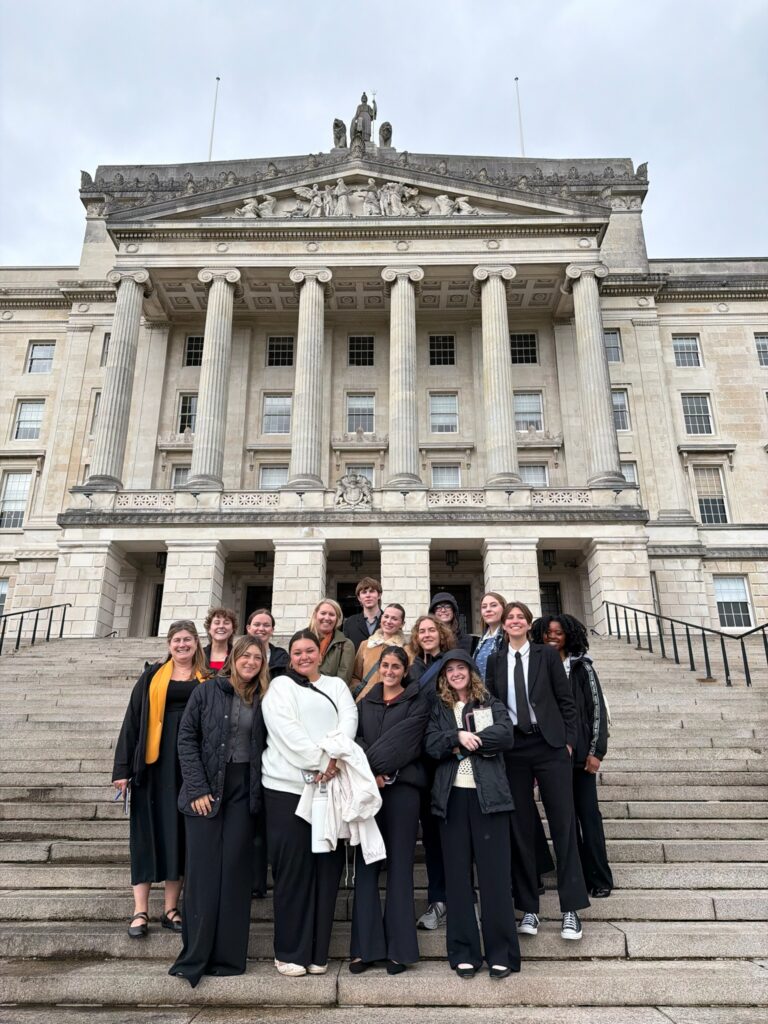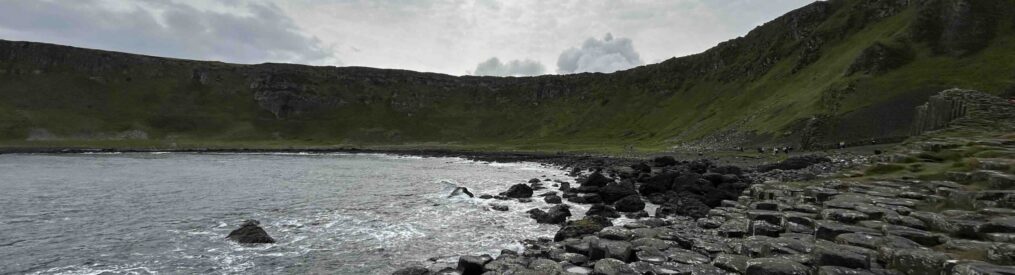
Northern Ireland Reflection: Uche’s Thoughts

The journey through Northern Ireland was one of the most remarkable learning experiences I have ever had. As an individual who is neither a communications or peace studies major, it offered a particularly unique opportunity to immerse myself in a topic that is not available in my normal line of study.
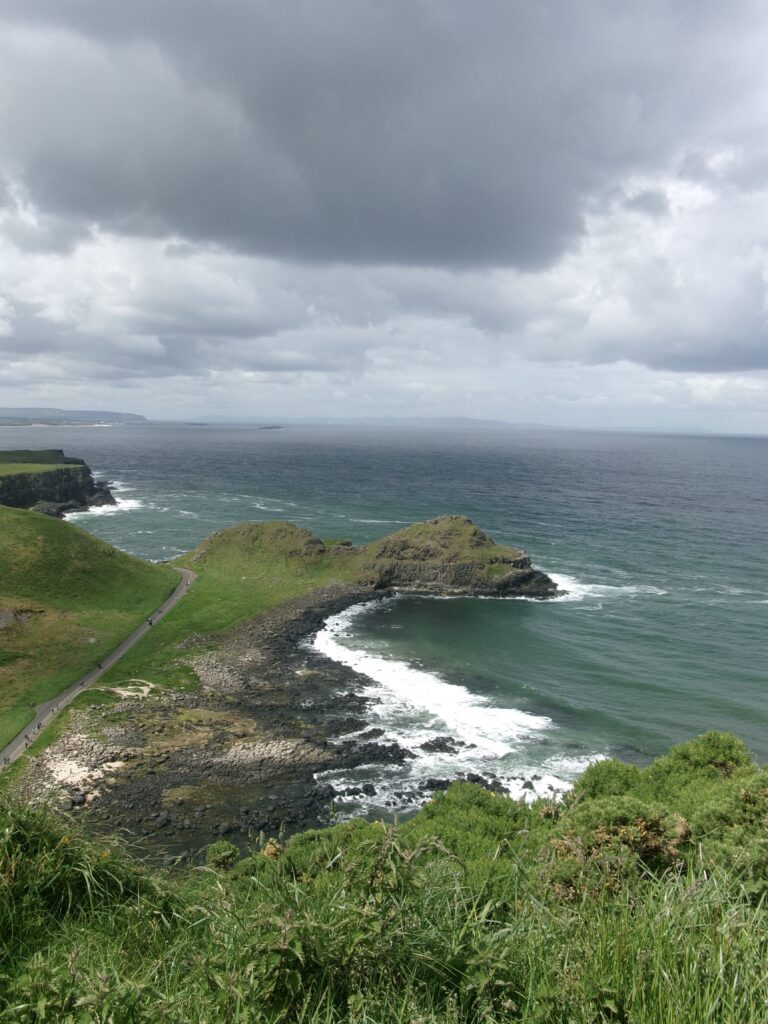
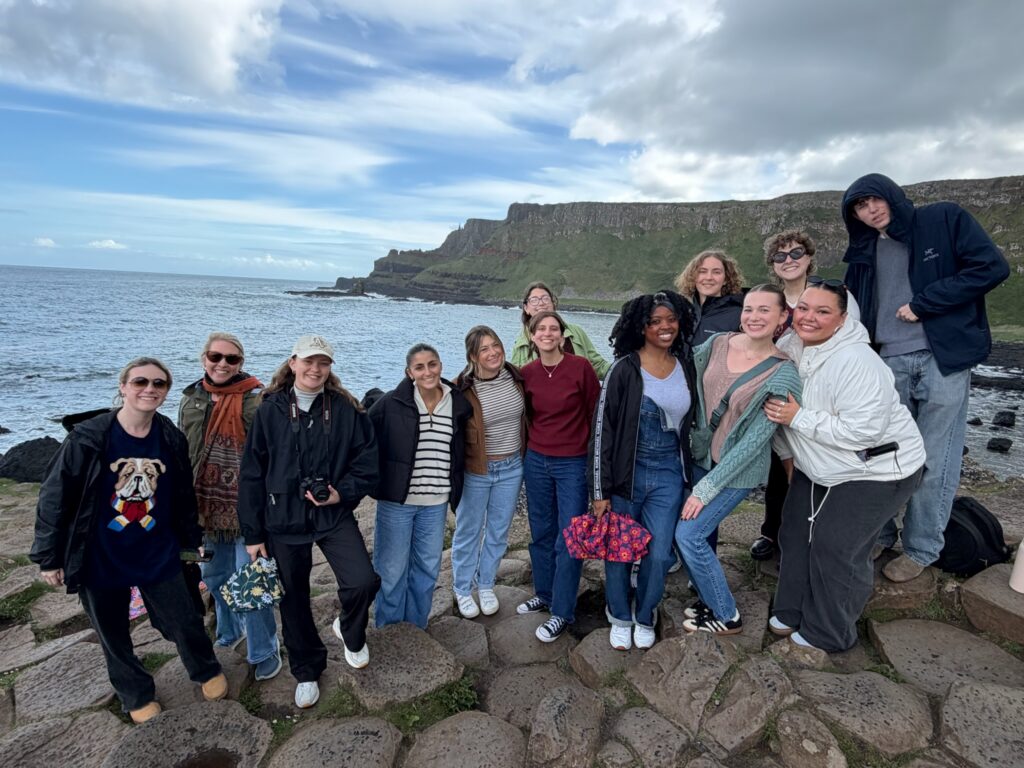
View at Giant’s Causeway

 One of the most interesting points of this trip for me was realizing how most of the incredible peace movements and organizations in Northern Ireland were put together by ordinary people that simply wanted to see change. I feel as if I often see large social or political change as something that can only be spearheaded by a handful of exceptional people. But this trip taught me that there is nothing particularly different about the people who intact such lasting change, except that they have the faith that their actions and work will reap benefits. I noticed this continuous motif of “ordinary resistance,” in the stories of many of the individuals we interacted with. It was “ordinary resistance” for a former British soldier and RUC cops to denounce the violence of the past despite being so deeply entrenched in it. It was also commonplace resistance for so many individuals to set aside decades of strife and hatred and instead choose to treat long standing enemies with respect. But without these seemingly ordinary acts of resistance against societal norms or even our own human nature, peace would be impossible. 

This is a line of thinking I can take with me to my own field of study. As I hope to work in healthcare and also work on the legislative side of healthcare inequity, the consistent systemic inequity and the never ending conveyor belt of the sick and dying can begin to feel like the insurmountable burdens of Northern Ireland. But as I have learned from this course, it is only by the consistent efforts of individuals, who initially seem too insignificant to make a difference, that true systematic change can be felt. 

 Additionally, this course has taught me the importance of listening to people and their stories. Particularly in healthcare where it can be so easy to begin to see patients as bodies to patch up and push along, or it can be even easier to judge them for seemingly poor health choices, it is of eminent importance that you truly listen to people. Hearing people and their stories can not only be healing to the patients themselves, but it may also serve as inspiration for programs and initiatives to be created to help aid individuals in similar situations. 
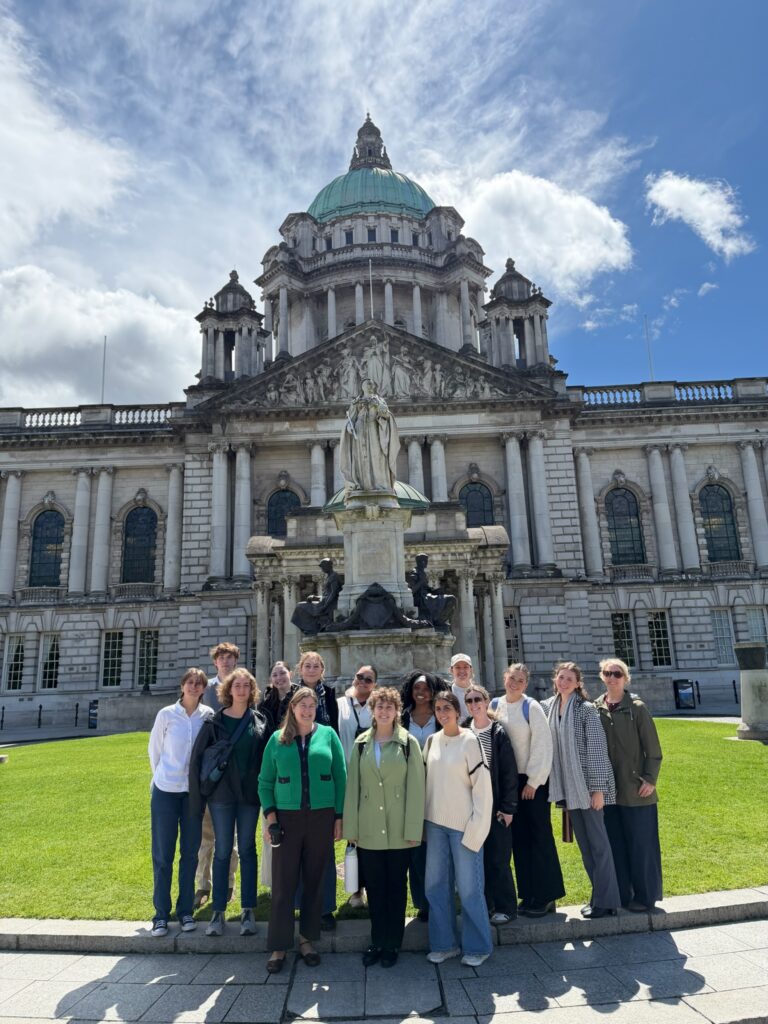
Belfast City Hall

One of the highlights of this trip was having the opportunity to hear the story of Irish resistance being told through the medium of music. Our day of traditional music bar hopping was by far my favorite experience. Being able to simply sit and listen to the beautiful music and hear how its prominence today is a testament to those who refused to have their culture silenced was incredibly inspiring. In addition, it was a reminder to pursue methods or artistic expression in my own life. As a busy college student pursuing a field in no way related to the arts, I often forget to remember the joy music and the arts bring. But while we were listening to the traditional music, particularly the harp, I remembered how calming and healing it is to hear music, and I hope to seek out more opportunities to feel the joy of music in my life. 

One of the most difficult parts of this course was the feeling of Northern Ireland being so close to true peace but yet so far at the same time. In our meeting with the director of the Commission for Victims and Survivors, we were told that true peace is not simply the absence of violence, but also the presence of justice and truth. And it is particularly the point of  “truth” that felt heavily contested throughout our trip. Almost everywhere we went we saw murals or memorials that seemed to present wholly juxtaposing opinions on the conflict. Aside from the official Ulster museum, we did not view many other exhibits that seemed aimed at presenting a holistic view of the troubles. Additionally, despite how we saw communities actively mingling and peace walls even having perpetually open gates in some areas, less than 10% of schools in Northern Ireland are integrated to this day despite there being a growing demand for them. At times it was frustrating to view how certain fields are progressing at such a slow rate. But at the same time, this was a very poignant lesson in the reality of peace building. When reading a list of dates in a textbook it is easy to feel like peace happened overnight in many societies, but by stepping into a society that is still actively working towards peace I was able to understand how lengthy and tedious of a process peace truly is.
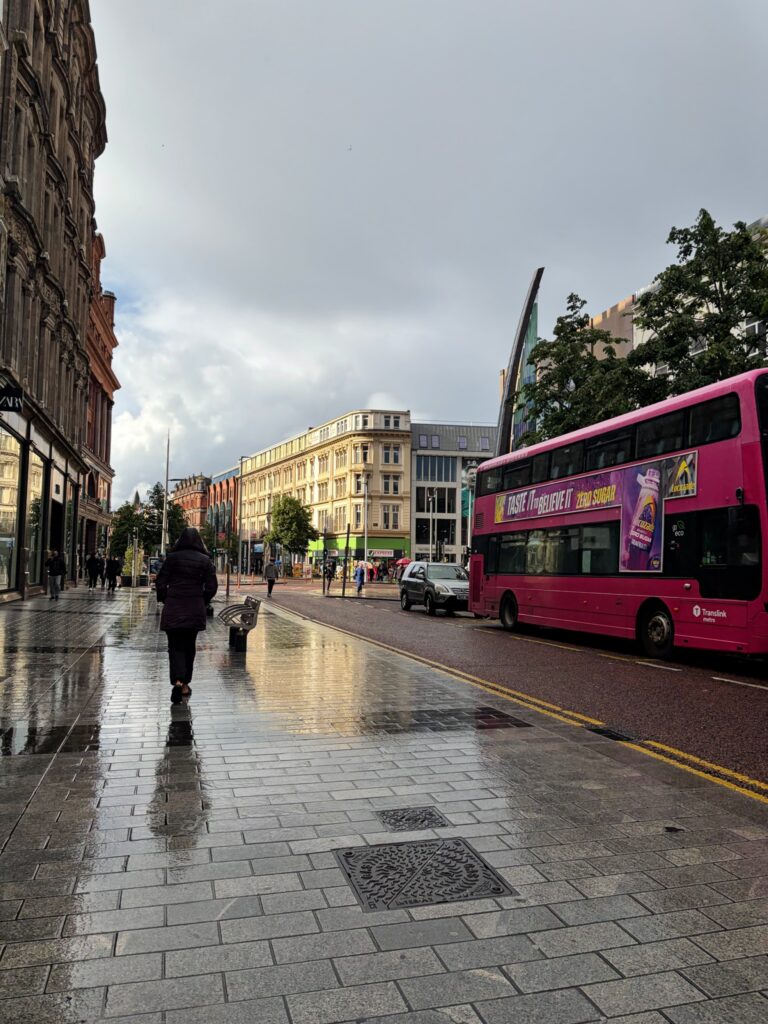
Pink bus in Belfast
Giant’s Causeway

June 10th- Ulster Museums & Exhibit of Everyday Objects

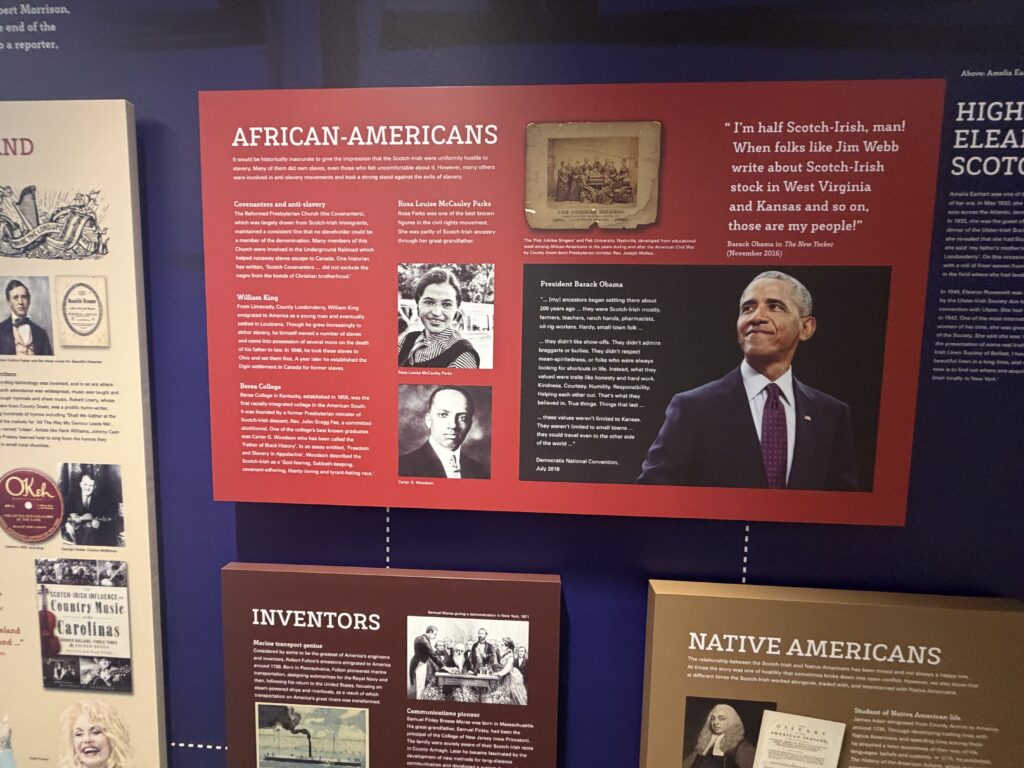
On Day 10 of our course, we began our day at the Ulster-Scots Centre in Belfast. This museum was rather different from the museums we had explored on previous days of our trip. Instead of being centered around the period of the troubles, the exhibit instead told the story of the cultural group of the Ulster-Scots, and their influence in Northern Ireland and the United States.

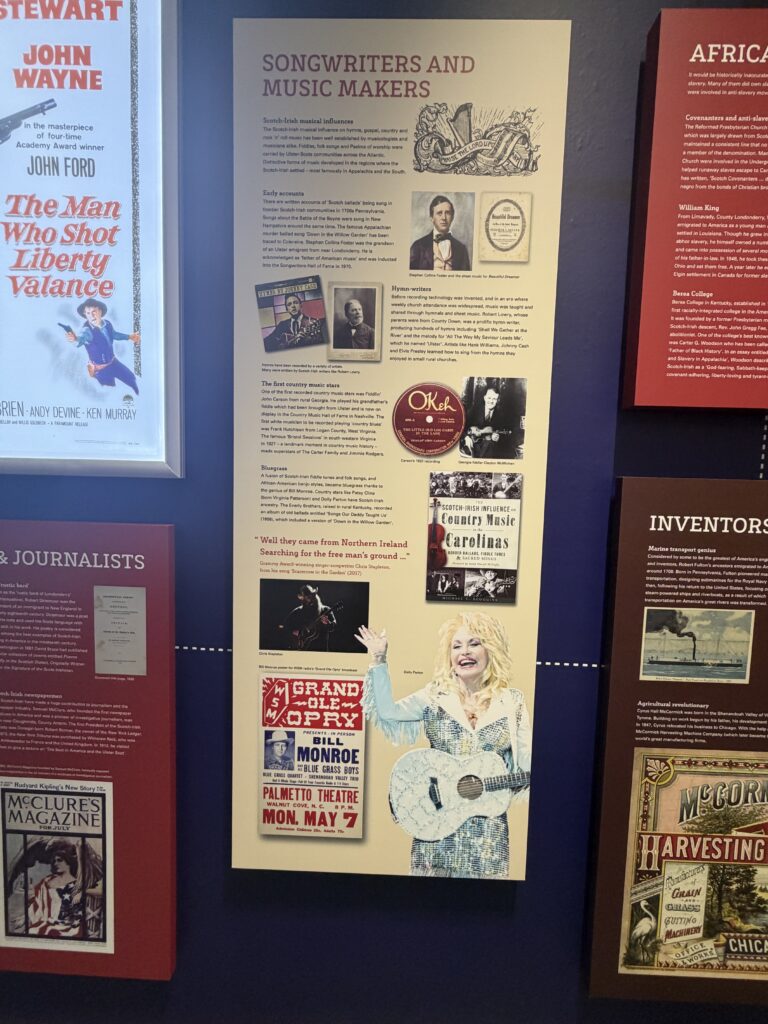
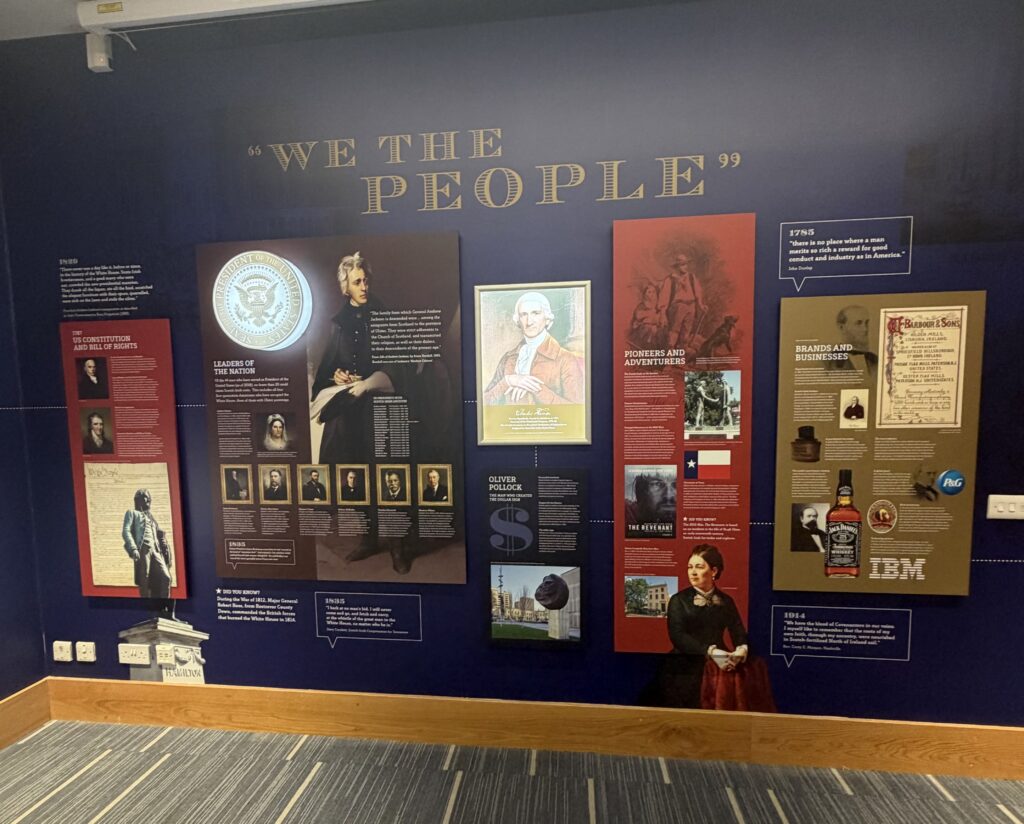
Our guide, William Welford, an Ulster-Scot himself, provided us with an extensive history of the Ulster-Scots arrival from Scotland and their subsequent settlement in the Irish region of Ulster (hence the name Ulster-Scots). William explained how over the years, the group took on its own unique culture and its own language with more Germanic roots than Irish’s Celtic ties. Despite their longstanding influence in the Ulster region, they remain an underrepresented minority. William also allowed us to tour the museum where we explored the deep ties Ulster-Scots have to the United States through notable unionist and confederate generals, U.S Presidents like Barack Obama, and notable celebrities like Dolly Parton. 

Photo taken by Uche Nwadiashi (6/10)

This museum utilized distinct framing in its depiction of the Ulster-Scots. Framing can be defined as “schemata that enable individuals “to locate, perceive, identify, and label” occurrences within their life space and the world at large,” (Goffman, 1974). Unique methods of framing could be seen in the museum’s description of Ulster-Scots involvement in the confederate side of the American Civil war. Instead of questioning the somewhat obvious moral failure of Ulster-Scots who fought to maintain slavery in the American south, the museum simply discusses to the novelty of having Ulster-Scots who rose to such high positions of power in the US army and how exceptional it is for such a small minority population to have accomplished such a feat. This museum greatly utilized strategic framing to focus the viewers attention to specific parts of the Ulster-Scots history and narrative. 

Photo taken by Uche Nwadiashi (6/10)

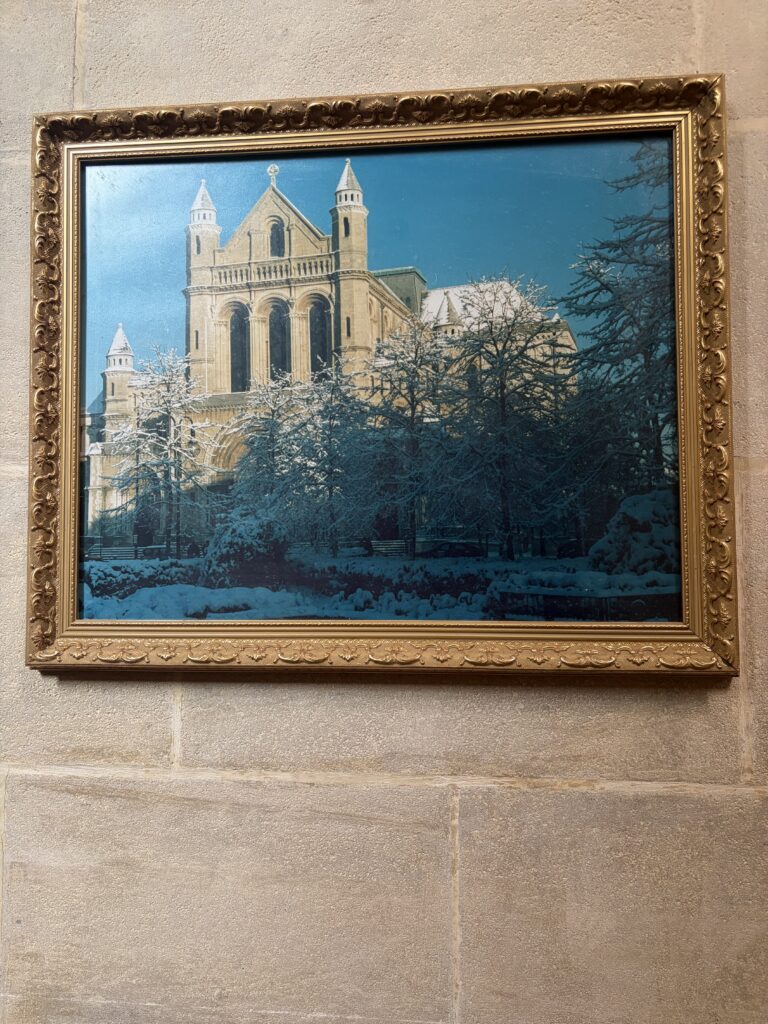
Following the visit to the Ulster-Scots Museum, we walked to the museum of “Everyday Objects Transformed by the Conflict,” currently on display at Saint Anne’s Cathedral in Belfast. 

Photo taken by Uche Nwadiashi (6/10)

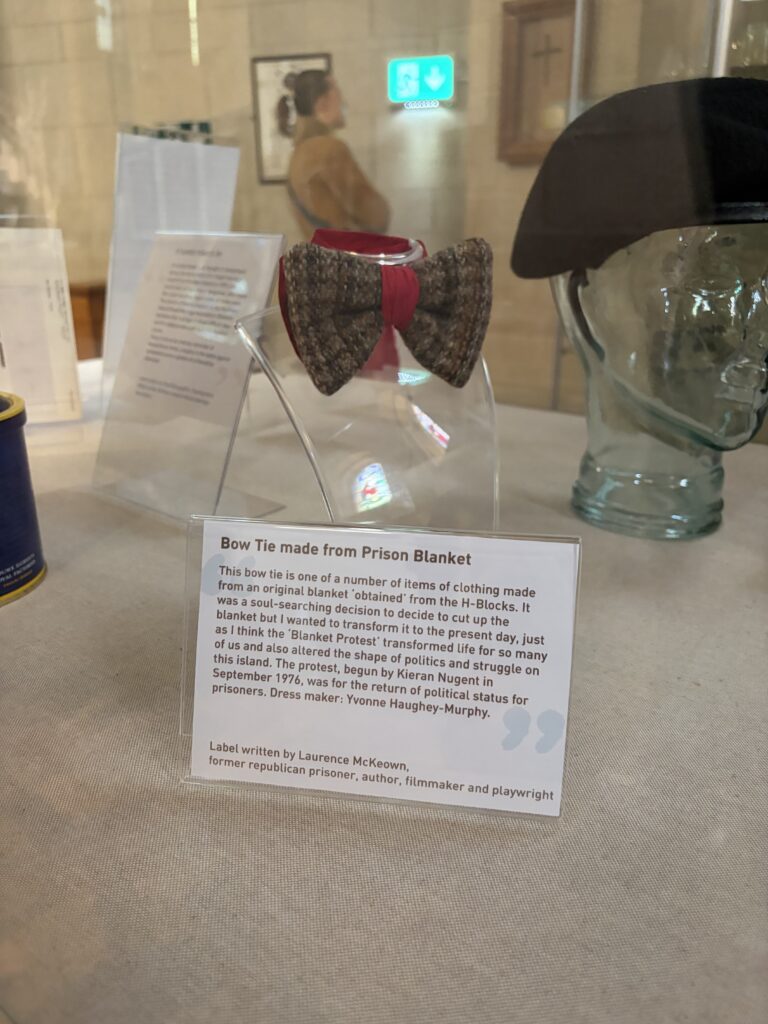
This museum was particularly interesting for how deeply it explored the principles of intergroup communication. The museum displayed a plethora of ordinary and seemingly insignificant objects that told incredibly unique and vulnerable stories of the troubles from the perspectives of individuals on both sides of the conflict. The museum as a whole allows for the exchange of both thoughts and memories between individuals from both sides of the conflict through symbolic interaction, one of the cornerstone principles of intergroup communication (Giles et al, 2012).  In this museum, we were able to see objects like a bowtie made from the hunger strike blanket of Laurence McKeown, a former republican prisoner. 

Photo taken by Uche Nwadiashi (6/10)

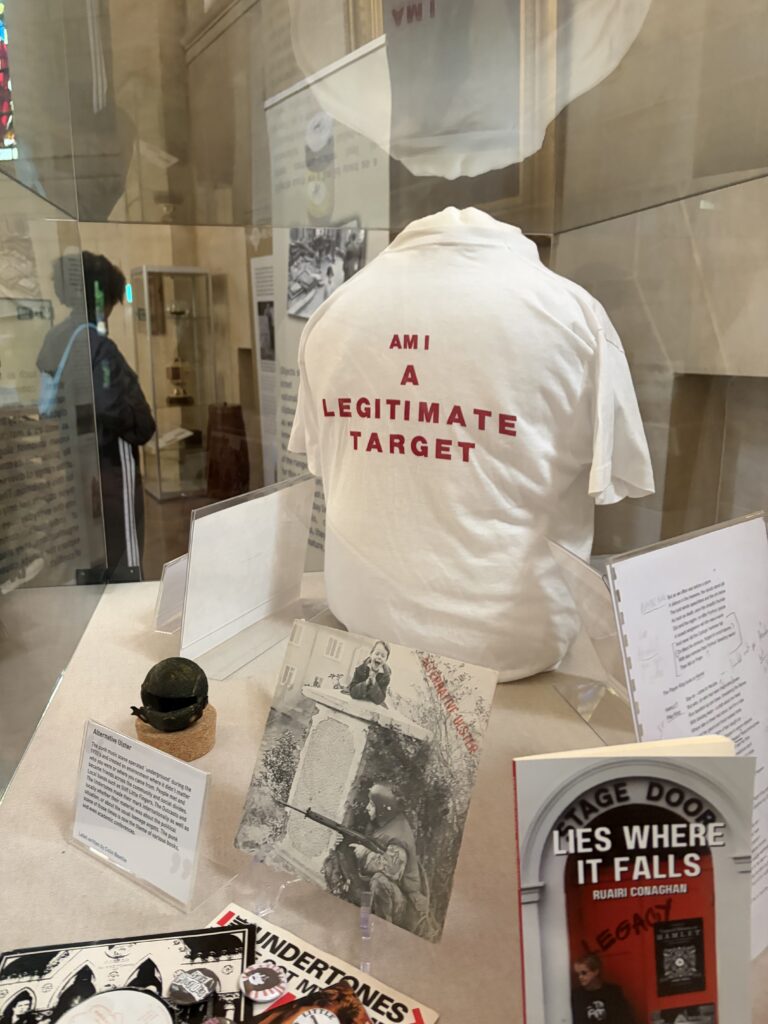
We also saw other objects like a tennis ball that was used by UVF prisoners to communicate in Long Kesh prison and a shirt from the “Am I a Legitimate Target” protest that questioned the term used by paramilitaries to justify their widespread violence.

Photo taken by Uche Nwadiashi (6/10)

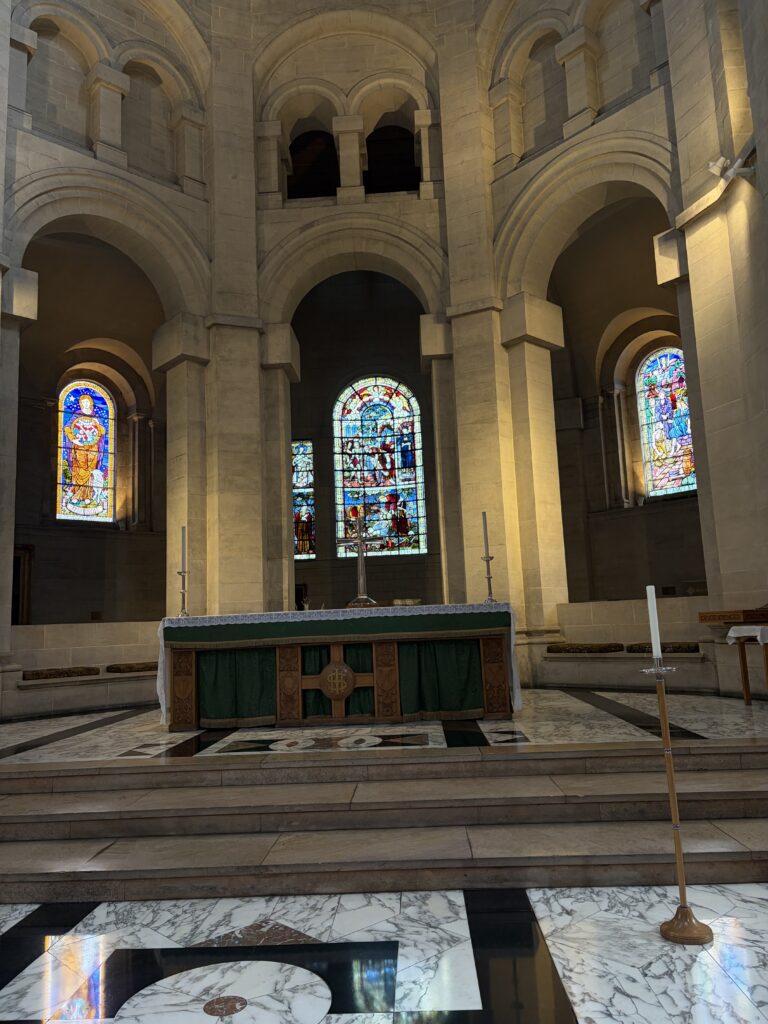
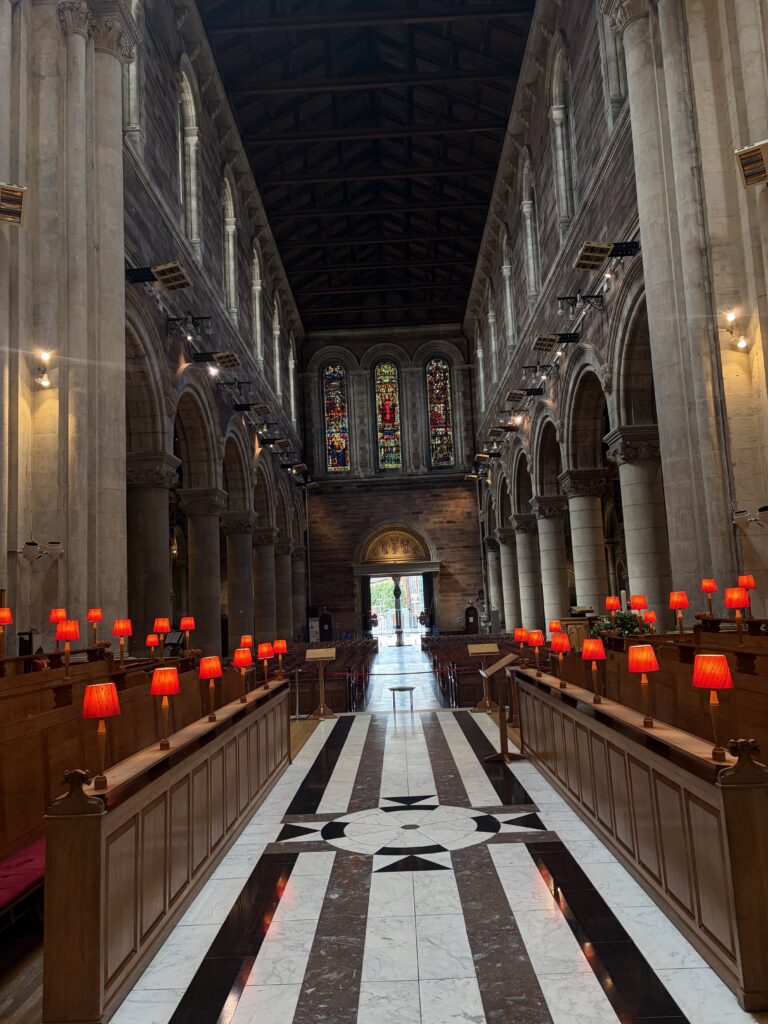
Additionally, the exhibit currently (as it moves around) being held in Saint Anne’s Cathedral, the official Anglican church of the state only further adds to the intertextuality of the entire exhibit. In an institution of both faith and the state, individuals from both sides of a conflict, divided purposefully by the state and partially by religion are able to come together to share their stories of hardship, strife, and also just everyday life during the troubles.  

Photo taken by Uche Nwadiashi (6/10)

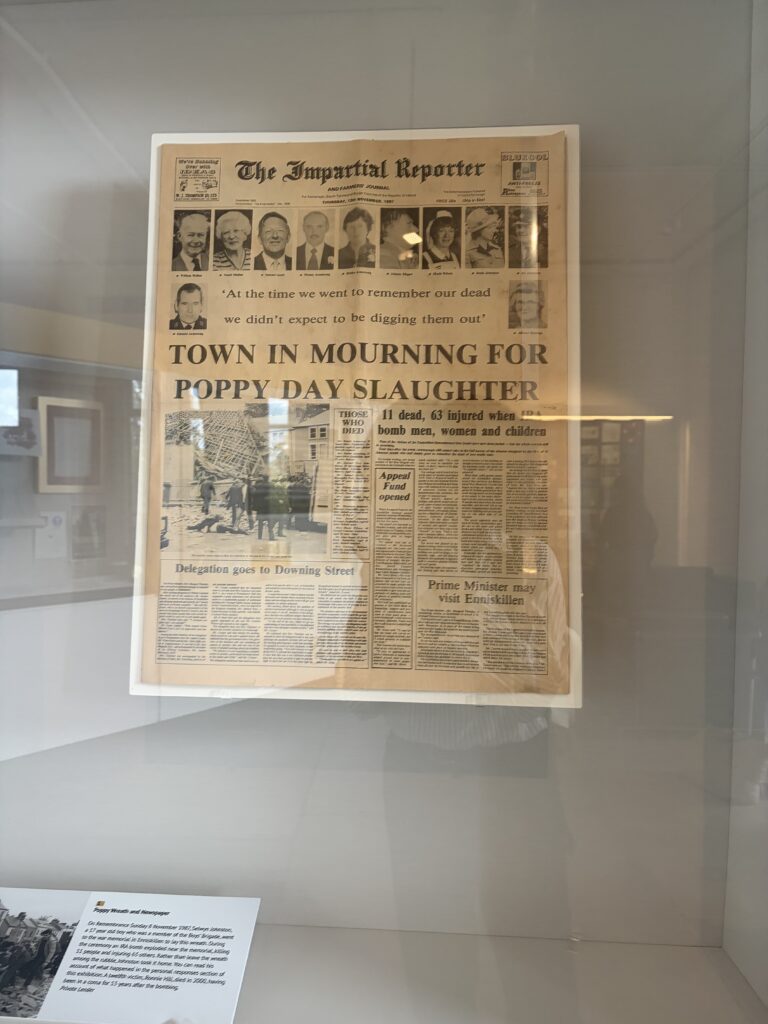
Following the everyday objects exhibit, we ended our morning at the official Ulster Museum. Although this museum included many exhibits relating to fashion, paleontology, and more, we focused our time on the portion of the museum dedicated to the troubles. This portion of the museum explored the principals of truth and reconciliation. Because it is not affiliated with either side of the conflict, the museum instead aims to create a shared and collective truth of the conflict. In this work it is able to illuminate certain truths of the past, a necessary step in peace building (Borer, 2006). The museum does so through telling of the losses experienced by both sides, but also by sharing the stories of the amazing things ordinary citizens accomplished during the times of the troubles. In the museum, the massacre of Bloody Sunday (a republican casualty) and  the Poppy Day Slaughter (a unionist casualty) are told side by side, which only emphasizes the shared loss felt by both sides during the conflict.

Photo taken by Uche Nwadiashi (6/10)

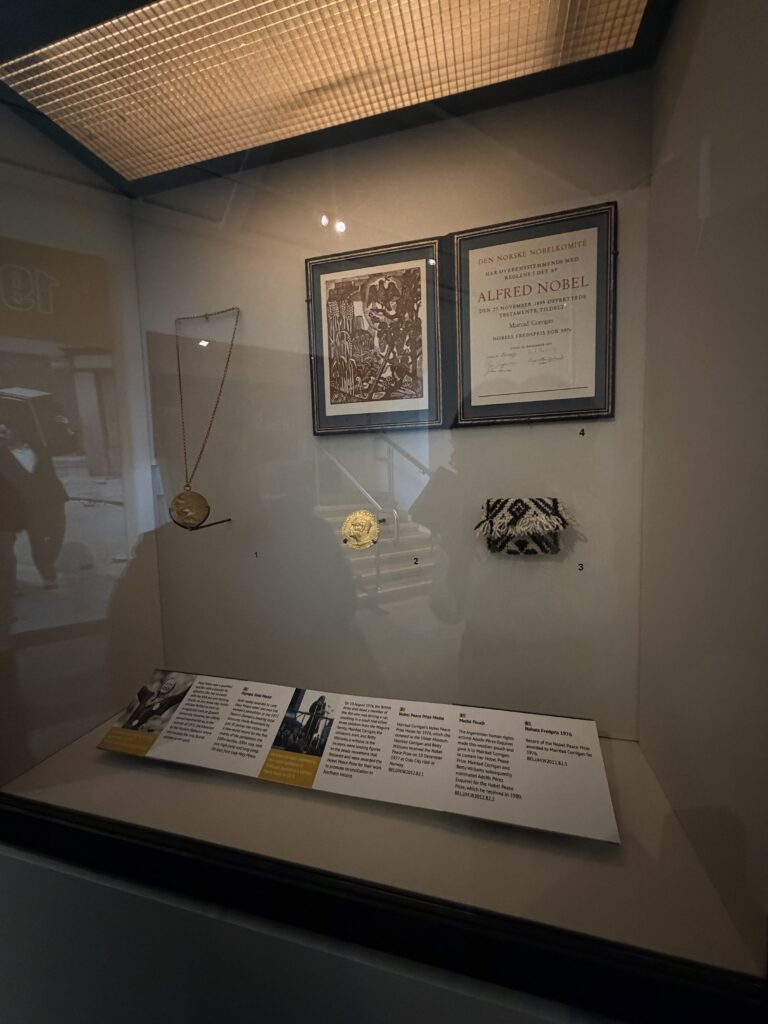
 The museum also tells the story of Mary Peters, a Northern Irish athlete who won the Olympic gold medal in women’s pentathlon in 1972, in the midst of the troubles. These stories of ordinary citizens pursuing greatness can also be seen through the stories of Betty Williams and Mairead Corrigan, two women who won the Nobel Peace Prize in 1976. After Corrigan’s nieces and nephews were killed during the conflict, she alongside Wilimas turned to peace activism.

Photo taken by Uche Nwadiashi (6/10)

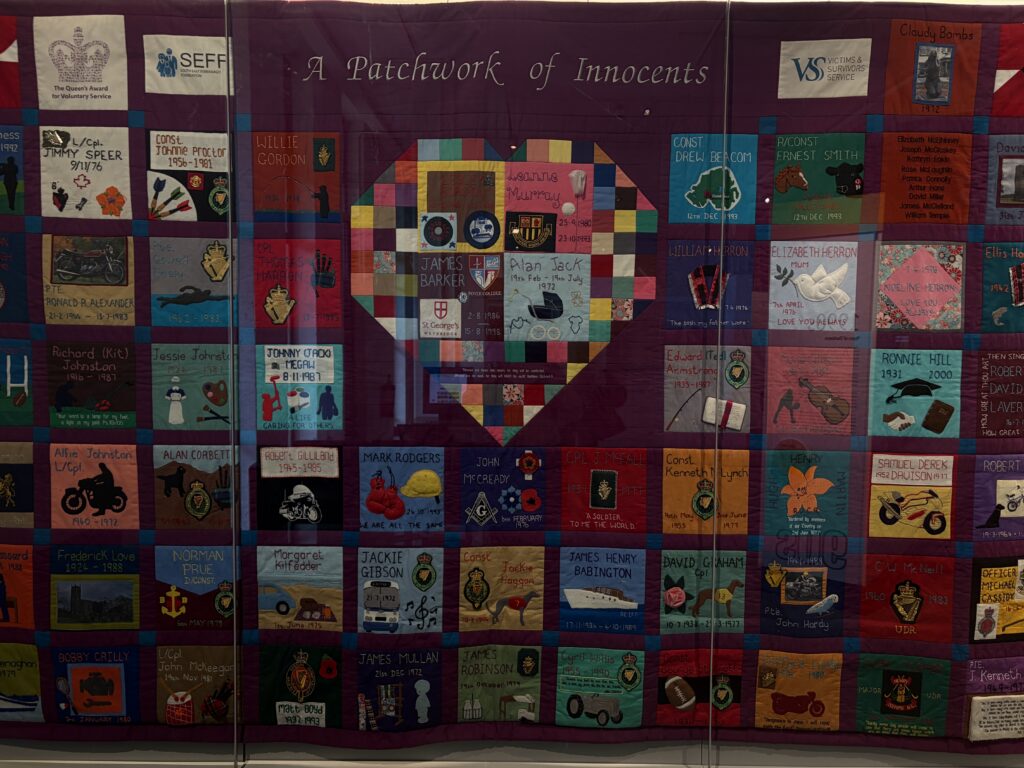
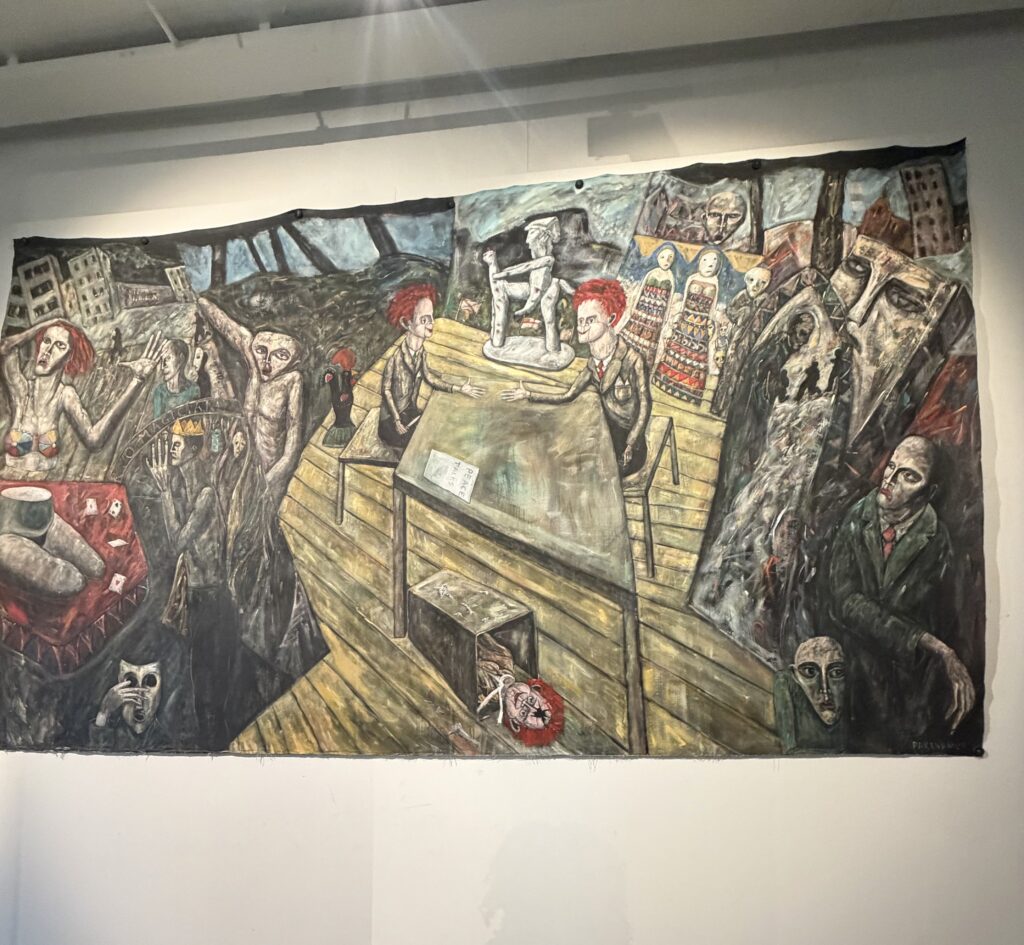
Choosing to highlight stories like that of Peters, Williams, and Corrigan while also featuring losses from both sides help to further expand the notion of truth held by all. Walking through the exhibit pushes one to confront the great losses suffered by both sides while also remembering that despite the overarching nature of the conflict, ordinary people, particularly women, still accomplished extraordinary things in spite of the conflict. Interestingly, the museum also included remembrance of the innocent through a patchwork quilt that remembers the children and 600 innocents lost as a result of the conflict. In addition, the museum included various pieces of art like a piece by Jack Pakenham that depicted the distorted and grotesque nature of the conflict. 

Photo taken by Uche Nwadiashi (6/10)

The tours of the various museums showed us the views of the forgotten, the overlooked, and the ordinary people and aspects of the life so often omitted during study of both Northern Ireland and the troubles. These museums, unlike those we visited on previous days, were about so much more than just the armed conflict. It was about the innocents, the peacebuilders, the artists, and the athletes. It explored the people both behind and within the terrible atrocity. It is a reminder that so much life still existed outside paramilitary organizations. Individuals still had hopes and dreams, drew pictures, and ran races. And it is all these individuals together that truly represent the troubles of Northern Ireland.

Photo taken by Daniel Wehrenfennig (6/10)

Learn More

References

Benford, R. D., & Snow, D. A. (2000). Framing Processes and Social Movements: An Overview and Assessment. Annual Review of Sociology, 26, 611–639. https://www.jstor.org/stable/223459?seq=4

Borer, T. A. (2006). Telling the Truths: Truth Telling and Peace Building in PostConflict Societies. University of Notre Dame Press; JSTOR. https://doi.org/10.2307/jj.39514171

Discover Together | Ulster Museum. (n.d.). Www.ulstermuseum.org. https://www.ulstermuseum.org/

Discover Ulster-Scots Centre. (2026). Ulsterscotsagency.com. https://www.ulsterscotsagency.com/about-us/discover-ulster-scots-centre/

Everyday Objects Transformed By The Conflict – Healing Through Remembering. (2026). Healingthroughremembering.org. https://healingthroughremembering.org/everyday-objects-transformed-by-the-conflict/

Giles, H. (Ed.). (2012). The Handbook of Intergroup Communication (1st ed.). Routledge. https://doi.org/10.4324/9780203148624