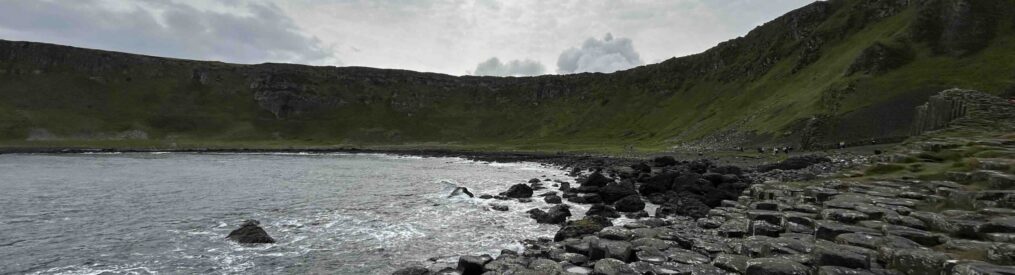
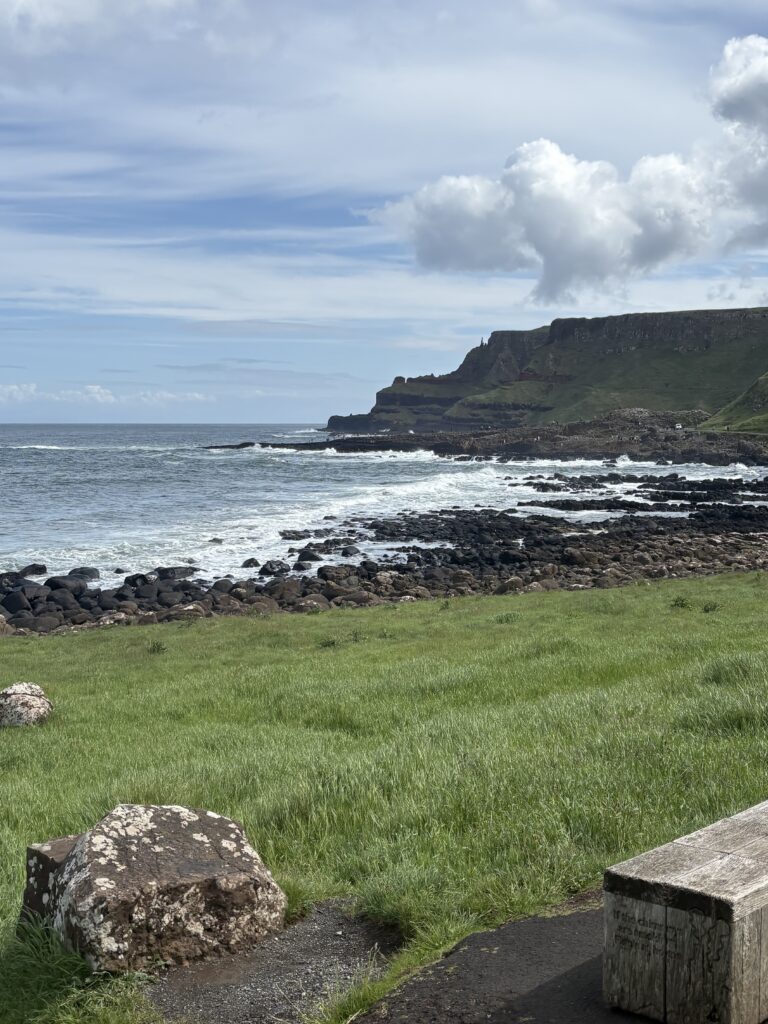
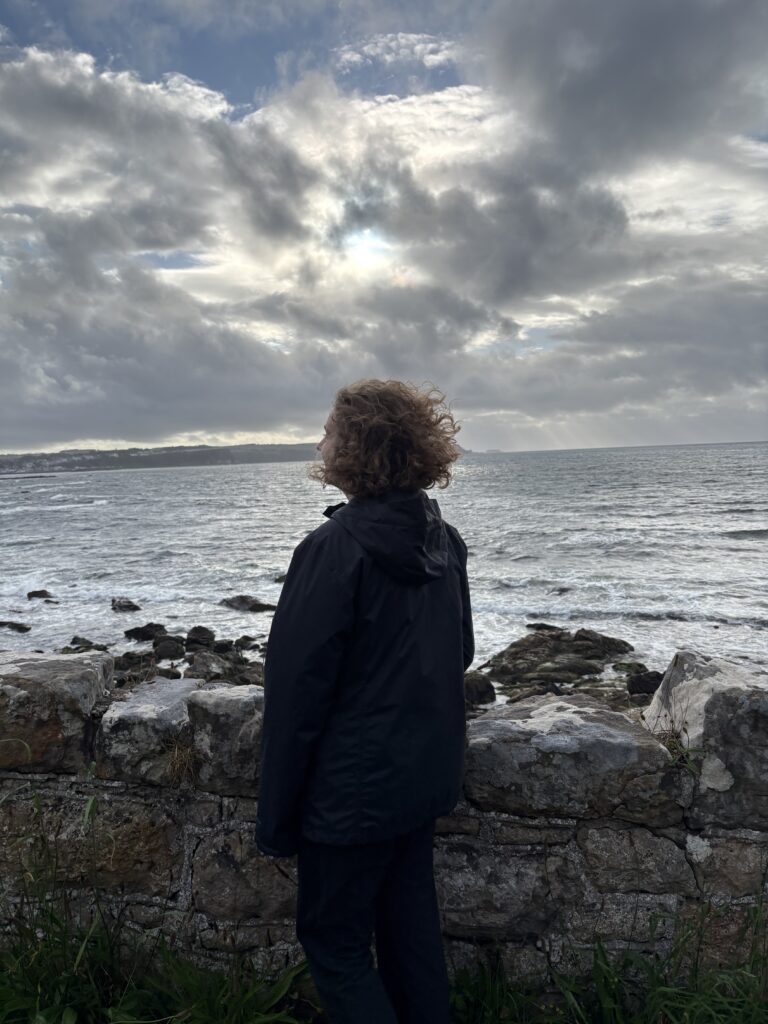
The biggest highlight of the trip, personally, was spending about a day and a half on the coast. I’m not a big fan of cities, so getting to spend some time out on the coast was really nice. Going from the beautiful Corrymeela to stunning Giant’s Causeway was so much fun, and learning about the myth behind the creation of Giant’s Causeway satisfied the mythology-lover part of me (https://www.nationaltrust.org.uk/visit/northern-ireland/giants-causeway). Speaking of Corrymeela, playing the zero-sum game with my classmates was an experience to say the least (https://www.corrymeela.org/). Beyond the fact that none of us are likely to forget the chaos that was playing that game, it made me realize just how close we’d all gotten in just four days. Some people knew each other coming into the trip and others, like me, didn’t really know anyone. But over the course of 12 days we came together and became a close-knit little group of friends. Another highlight was when Susana, Dr. LaBelle, and I were able to help rescue a pigeon that had been hit by a car. Unrelated to why we were in Northern Ireland, being able to contribute to the saving of a life, no matter how small, is incredibly rewarding. Academically, one of the highlights was when I was able to recognize a pattern of facework management amongst the people we were talking to. I learned about facework management in an intercultural communication class, and being able to recognize that what the former paramilitary members and police officers were doing was facework has made me more confident in my ability to apply the concepts I’m learning in classes to practical, real-life situations. Going on this trip also gave me the opportunity to learn more about Northern Ireland’s history, and the country’s major conflict, from people who lived through the conflict and whose lives and work are still influenced by it today. It was mentioned several times by my classmates that our history classes didn’t teach us about the conflict in Northern Ireland or really anything about the country’s history. Having this opportunity to learn about Northern Ireland’s history makes me more curious to learn about the histories of other countries; Northern Ireland’s conflict and process to peace has taught me much already, I’m sure there are many more lessons to be learned from countries around the world.
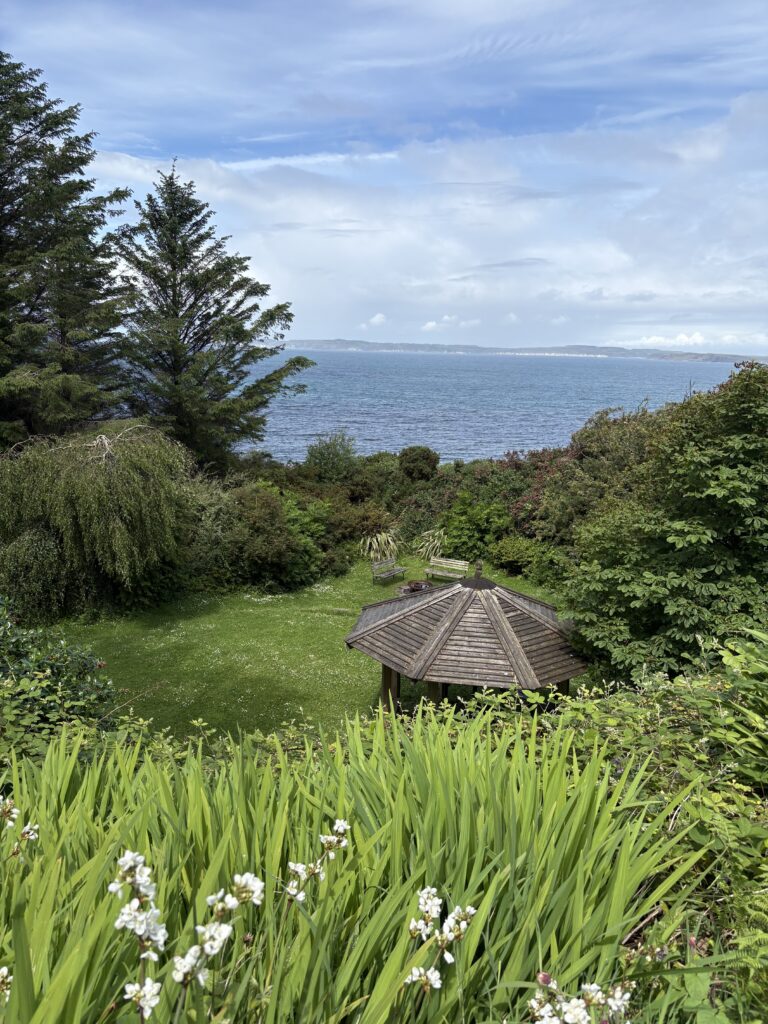
And it’s more important now than ever that we look to individuals and communities across the world for the solutions to humanity’s ever growing problems. One of such problems is a rise in anti-immigration and racist sentiment that, if Northern Ireland’s recent protests are any indication, is leading to violence and growing global tensions. The evening of June 9th, our last week in Northern Ireland, was the start of anti-immigration rioting across Northern Ireland in response to a stabbing the prior day (https://www.cbsnews.com/news/belfast-immigration-protest-stabbing-attack/). While the days of rioting culminated in a peaceful anti-racism counterprotest on June 13th, several homes were burned, and many lives and businesses were disrupted by the riots. While the riots contributed to our group’s discussions of persisting division and violence in Northern Ireland, it is in the country’s response to these riots that I find evidence of the enduring impact of the past conflict on Northern Ireland today. The first night of rioting, our group observed businesses closing early and security at our hotel. By the next day, public transportation systems were being shut down for the evenings. Many in our group found these measures to be a bit over the top. After all, we’re relatively used to riots and protests in the United States, and shutting down entire cities because of rioting isn’t something we’re very familiar with. The point was also raised that by shutting down the country the government was playing into the rioters hands by adding to the fear that many were already feeling. I believe this response is an example of the nationwide trans-generational trauma born of the past conflict or the Troubles. Trans-generational trauma is when generations who didn’t directly experience the trauma still experience symptoms of traumatization (O’Neil et al., 2015). I think that, in the case of the race riots, the government and the public saw the riots through the combined lens of the direct and trans-generational trauma of Northern Ireland’s past conflict. Whether or not this is part of the reasoning behind the response to the riots, I believe it’s important to address the trans-generational trauma in Northern Ireland in order for the country to be able to move further into a peaceful and cooperative future.
As a Global Communication & World Language (Spanish emphasis) and a Peace & Justice Studies double major, this trip reaffirmed my choices of majors as the best paths towards my future goals. Part of why I had chosen to go on this trip to Northern Ireland was because we were studying peace communication–a perfect combination of my double majors. And I’m so grateful I went, for so many reasons. One being that I learned how the cultural differences between communities in Northern Ireland led to conflict and division that still exists today. And, perhaps most importantly, I learned that the way those cultural differences have been and are being communicated play a role in the past, present, and future state of Northern Ireland. With an interest in going into international non-profit or diplomatic work, it’s important for me to understand that the way people communicate across different types of borders has an impact on the state of positive, peaceful progress. And, on a more practical level, this trip gave me the opportunity to speak with Bebhinn McKinley, a former good relations officer in Northern Ireland. Bebhinn advised me that, if I’m interested in going into the work that I am, I should pursue a certification in mediation. I’ve known that getting certified in mediation is possible through a Peace & Justice Studies class at Chapman, but I’ve never had strong feelings about getting it. That’s changed. This trip has shown me that the resources I have at my fingertips, from my majors to my classes to my professors, are exactly what I need to chase my goals.
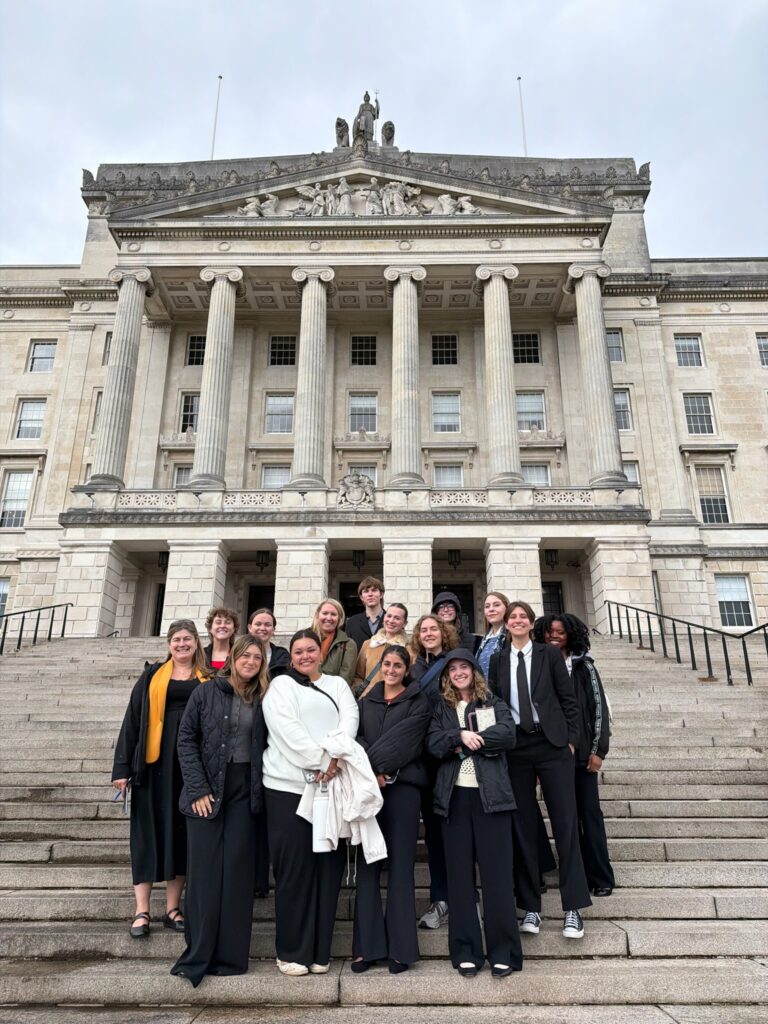
And it’s not just the people and information I have access to that will help me in the future. The challenges I faced on this trip are their own form of resources for me to take and grow from. I think the biggest challenge I faced was staying motivated and organized. From the moment we arrived in Belfast on our first day, we were on the move and learning. While we had one break-day when we went to Giant’s Causeway and Ballycastle, our time in Belfast and Derry/Londonderry was constantly filled with walking around the cities and meeting with various different community members and leaders. We packed so much into just under two weeks, and while everyone we spoke to had important stories and information to impart upon us, it was mentally exhausting at times. Keeping track of the different perspectives and biases we came across made keeping the facts straight rather difficult. Powering through the mental overload was more tiring than I had thought it would be. Looking back on it, I think it was a positive experience for me. If in the future I’m in a similar situation, now I know that I can make it through the confusion and tiredness, and come out having had an amazing experience in the end. A challenge of equal difficulty was navigating how to travel–and internationally, no less–by myself for the first time. It was nerve-racking, and I’m not sure my anxiety calmed down until I was with the group at the hotel in Belfast, but I made it through without any hiccups, and I already felt more confident navigating the airport on my way back home. The challenges I faced on this trip have only made me stronger and more confident as I look to a future filled with possibility.
Reference
O’Neill, S., Armour, C., Bolton, D., Bunting, B., Corry, C., Devine, B., Ennis, E., Ferry, F., McKenna, Á., McLafferty, M., & Murphy, S. (2015). Towards a better future: The trans-generational impact of the Troubles on mental health. Belfast: Commission for Victims and Survivors. https://www.cvsni.org/wp-content/uploads/2022/11/2015-Research-Towards-A-Better-Future-The-Trans-generational-Impact-of-the-Troubles-on-Mental-Health.pdf