
Before traveling to Northern Ireland, I tended to think of peacebuilding as primarily a matter of political negotiations and formal agreements. However, our experiences throughout the course demonstrated that peace is also sustained through everyday interactions, shared spaces, and intentional dialogue.
On June 7, our group spent the day in Derry/Londonderry. We walked across the Peace Bridge, which physically connects the predominantly nationalist Cityside with the predominantly unionist Waterside. While the bridge serves a practical purpose, it also symbolizes efforts to encourage connection between communities historically divided by the Troubles. Later that day, we visited the Barracks, a former British military site that has since been repurposed for community use. We listened to Lee share stories and memories from his time on the base. For example, he pointed out where helicopters would land and described how the layout of the base reflected the hierarchy of the British military. The buildings used by higher-ranking officials were noticeably more ornate than the barracks where ordinary soldiers lived. Experiencing these spaces firsthand challenged my assumptions about what peacebuilding looks like in practice. Rather than simply removing reminders of conflict, communities can transform them into places that encourage reflection, interaction, and shared experiences.
We also got to see the memorials implemented to help promote peace on both sides. The main one being the Pathway to Peace, a student-led initiative with metal leaves inscribed with quotes from various Youths pledging peace. The inscriptions are integrated with regular English and Gaelic to emphasize the bridging of the communities.
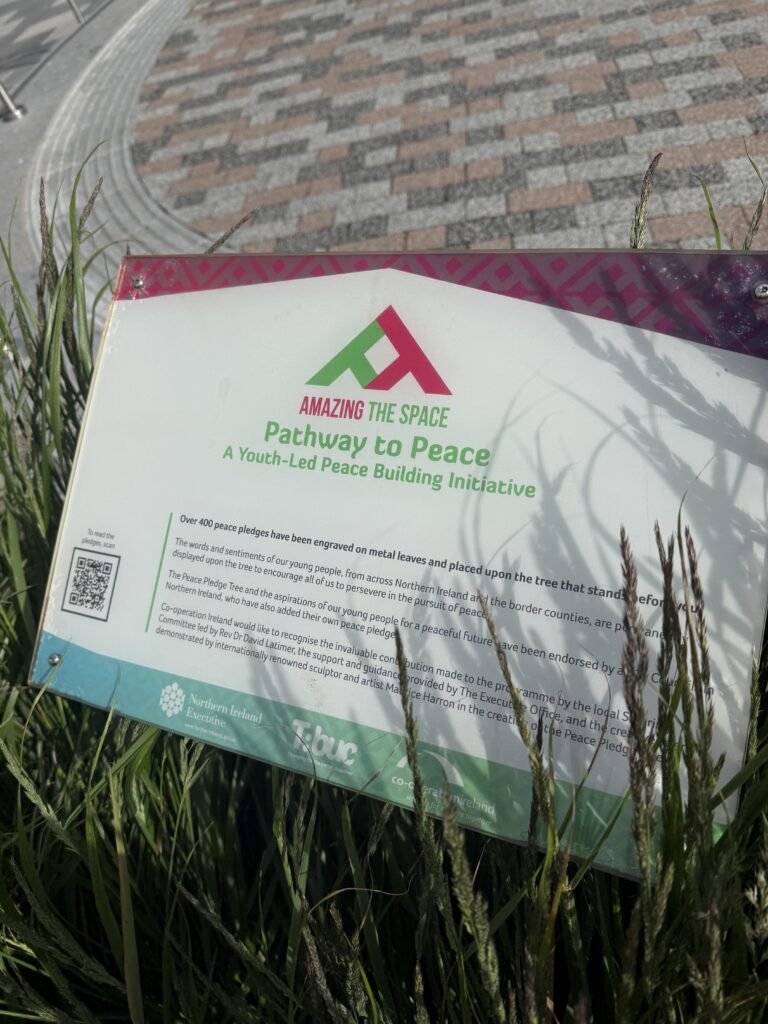
Photo of the description of the Initiative taken by Avery Gourvitz
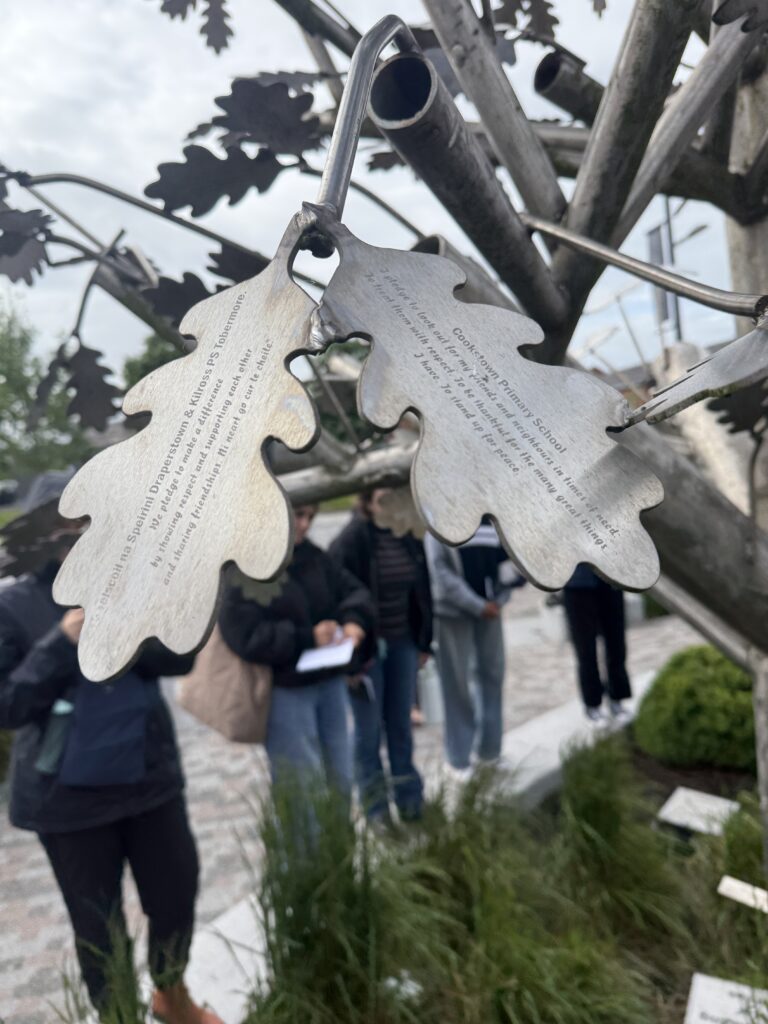
Photo of two leaves of pledges from students taken by Avery Gourvitz
Reflecting on our experiences in Derry/Londonderry, I was reminded of Voci et al.’s (2015) discussion of intergroup contact in Northern Ireland. The authors argue that meaningful contact between members of different groups can contribute to forgiveness and improve intergroup relations (Voci et al., 2015). The Peace Bridge and the Barracks represent more than physical structures; they create opportunities for individuals from different backgrounds to occupy the same spaces and engage with one another in everyday life.
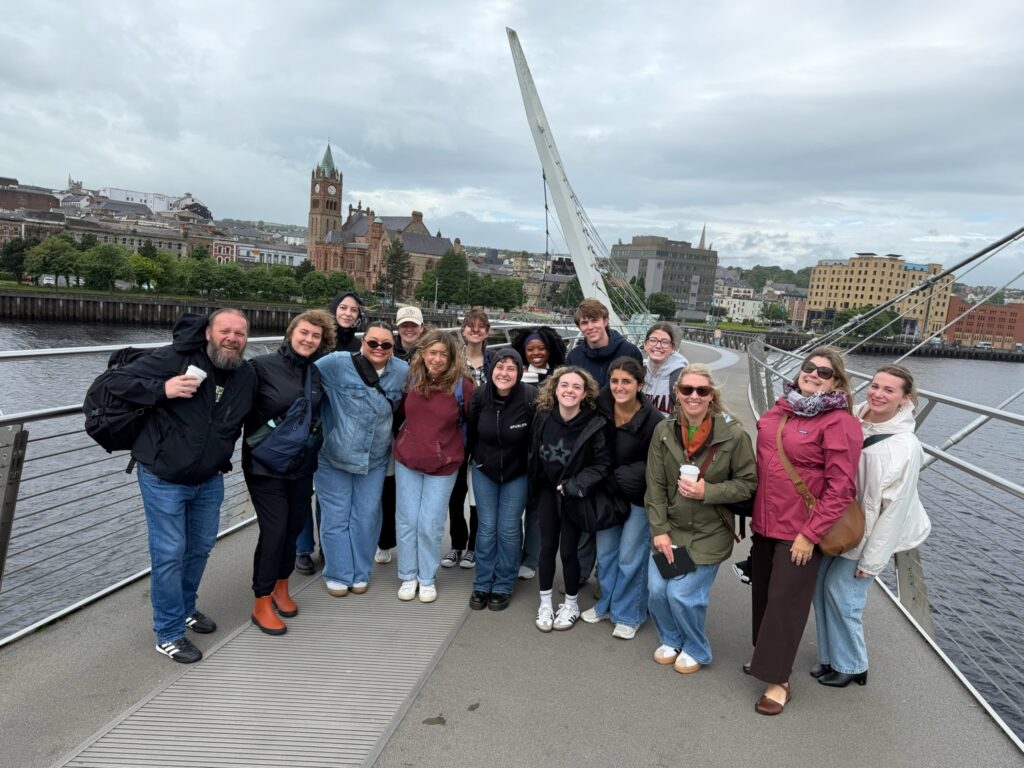
Photo on Peace Bridge taken by Daniel Wehrenfennig
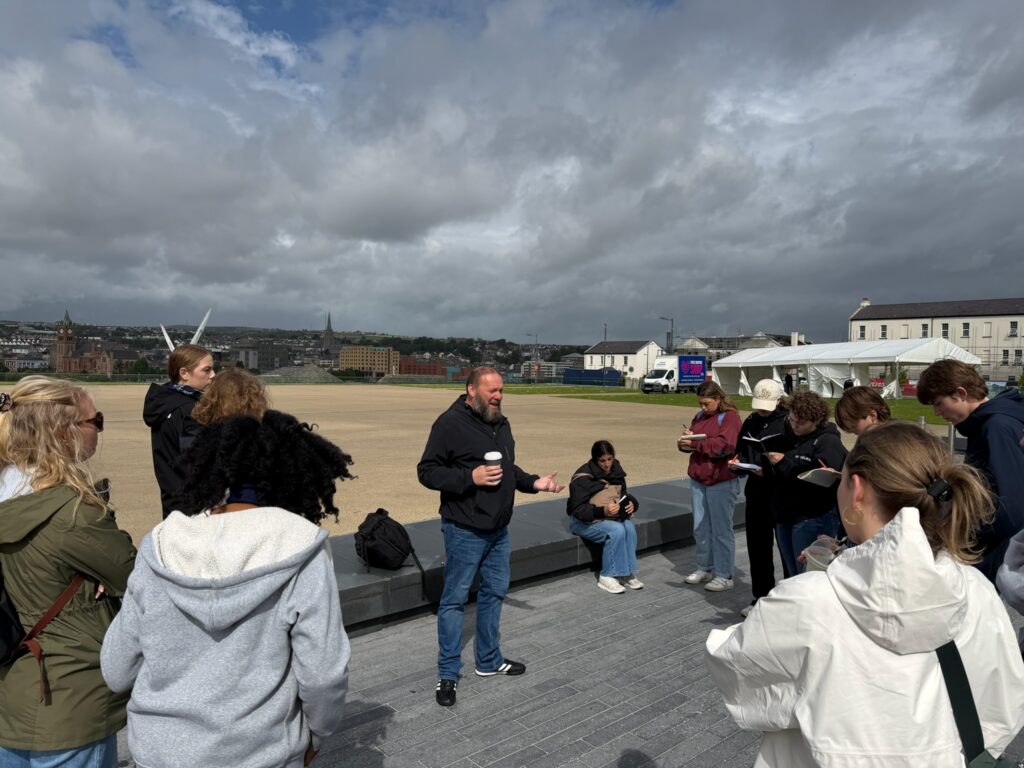
Photo of Lee Lavis telling our group about his experiences with the former Barracks taken by Daniel Wehrenfennig
On June 11, our group met with Lori from the JoinHer Network, whose work further expanded my understanding of peacebuilding. Hearing Lori discuss the importance of creating supportive communities and fostering dialogue reinforced the idea that peace requires ongoing effort from people at all levels of society. One point that particularly stood out to me was her emphasis on intersectionality and the importance of recognizing the many identities that shape people’s experiences. Caputo (2016) argues that dialogue is a critical component of peacebuilding because it allows individuals to understand experiences different from their own and build relationships across lines of difference. The work of JoinHer demonstrated how these principles continue to shape Northern Ireland today.
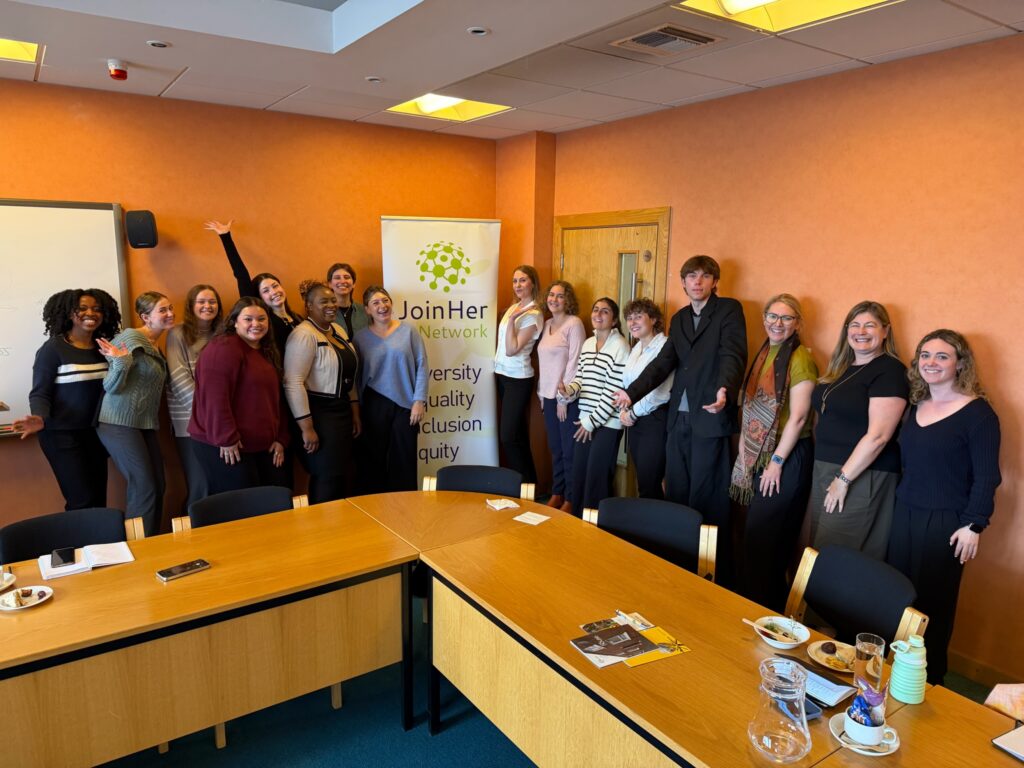
Photo of our group with Lori from the JoinHer Network taken by Daniel Wehrenfennig
One of my biggest takeaways from this course was recognizing that peace is not a static outcome achieved once an agreement is signed. Instead, it is an active process that requires communication, trust, and opportunities for people to connect with one another. Whether through crossing a bridge, repurposing a historically significant space, or participating in conversations that foster understanding, the people and organizations we encountered illustrated that peace is something communities must continually create together.
Learn More
- JoinHer Network: https://joinher.co.uk
References
Caputo, J. S. (2016). Peacebuilding through dialogue in Northern Ireland. In Communicating differences: Culture, media, peace and conflict negotiation (pp. 54–67). Palgrave Macmillan. https://doi.org/10.1057/9781137499264_4
Voci, A., Hewstone, M., Swart, H., & Veneziani, C. A. (2015). Refining the association between intergroup contact and intergroup forgiveness in Northern Ireland: Type of contact, prior conflict experience, and group identification. Group Processes & Intergroup Relations, 18(5), 589–608. https://doi.org/10.1177/136843021557700