
Cyril Rakovski received his Ph.D. from Harvard University and completed his postdoctoral training at the USC Keck School of Medicine. He is currently a professor of statistics and data science at Chapman University’s Schmid College of Science and Technology. His research interests include causal inference, predictive modeling, forecasting, and large language models (LLMs). He has supervised 13 Ph.D. students and is actively engaged in advancing both methodological research and interdisciplinary applications of data science.
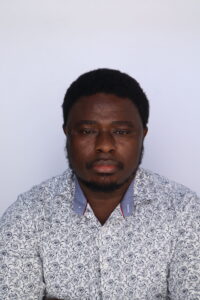 Eric Adams
eradams@chapman.edu
Eric is a Ph.D. candidate in Computational and Data Science, with a focus on clinical AI and multilingual NLP, including large language models. He utilizes MIMIC-IV data and causal inference to investigate the clinical outcomes associated with various ADHD treatment strategies over time.
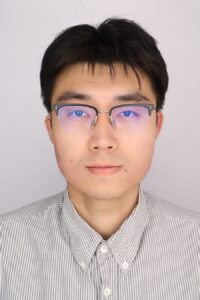 Wenxuan (Oliver) Gu
wgu@chapman.edu
Research interests: Artificial general intelligence, Computational precision health, digital immortality.
Wenxuan Gu received his B.A. in Econometrics from the University of California, Davis, and M.S. in Data Science from DePaul University, Chicago. His research integrates synthetic intelligence and computational biomedical intelligence, applying causal inference to model complex disease dynamics with Dr. Rakovski. His vision advances digital consciousness toward the concept of “perpetual life,” the virtual preservation of selfhood through computational embodiment.
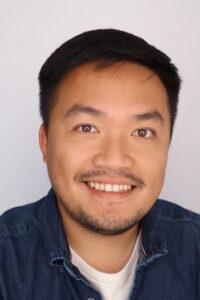 Howard Huang
minhuang@chapman.edu
Research interests: Diabetes data and targeted learning.
MS Computational and Data Science, Chapman University,
MS Thesis: A Novel Correction to the Multivariate Ljung-Box Test
BS Electrical Engineering, Cal State Fullerton
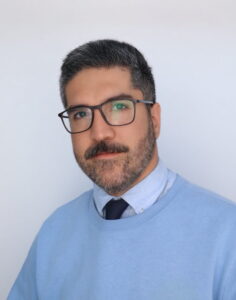 Reza Rezaei
mrezaei@chapman.edu
Mohammadreza’s research interests lie at the intersection of data science, health informatics, and applied machine learning, with a focus on using large scale real world healthcare data to understand disease patterns, outcomes, and disparities. He is particularly interested in causal inference, predictive modeling, and reinforcement learning using structured data such as claims, diagnoses, procedures, and socioeconomic indicators, as well as unstructured clinical text, medical notes, images, and videos. His work explores longitudinal and cross-sectional analyses to capture disease progression, multimorbidity, and survival outcomes, with applications in cancer research and chronic disease modeling. Mohammadreza is also interested in leveraging ensemble methods, modern machine learning models, large language models, and vision language models to extract clinically meaningful features that are not well captured by traditional coding systems, with the broader goal of improving risk stratification, decision support, and population level health insights.
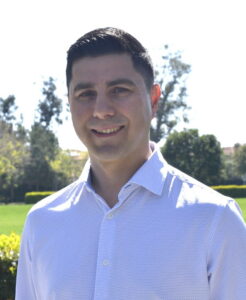 Omer Odabas
odabas@chapman.edu
Omer Odabas is a Ph.D. candidate in Computational and Data Sciences at Chapman University. His primary research interests lie in the fields of causal inference and targeted learning. He is focused on developing and applying novel statistical methods to analyze complex, high-dimensional data, such as electronic health records (EHR), to evaluate causal treatment effects and improve health outcomes. In addition to his doctoral studies, Omer is a Senior Cybersecurity Data Scientist at USAA , where he leads the development of enterprise-wide MLOps architectures and designs advanced machine learning models for anomaly detection. His professional experience in applied AI and large-scale model deployment complements his academic research in computational statistics. Omer also is a Lecturer at Cal Poly Pomona and Irvine Valley College. He holds a Master of Liberal Arts in Information Management Systems from Harvard University and a Master of Science in Chemistry from the University of Utah.